Films People Pull a Fast One Night Beat Reading Room On TV Shop
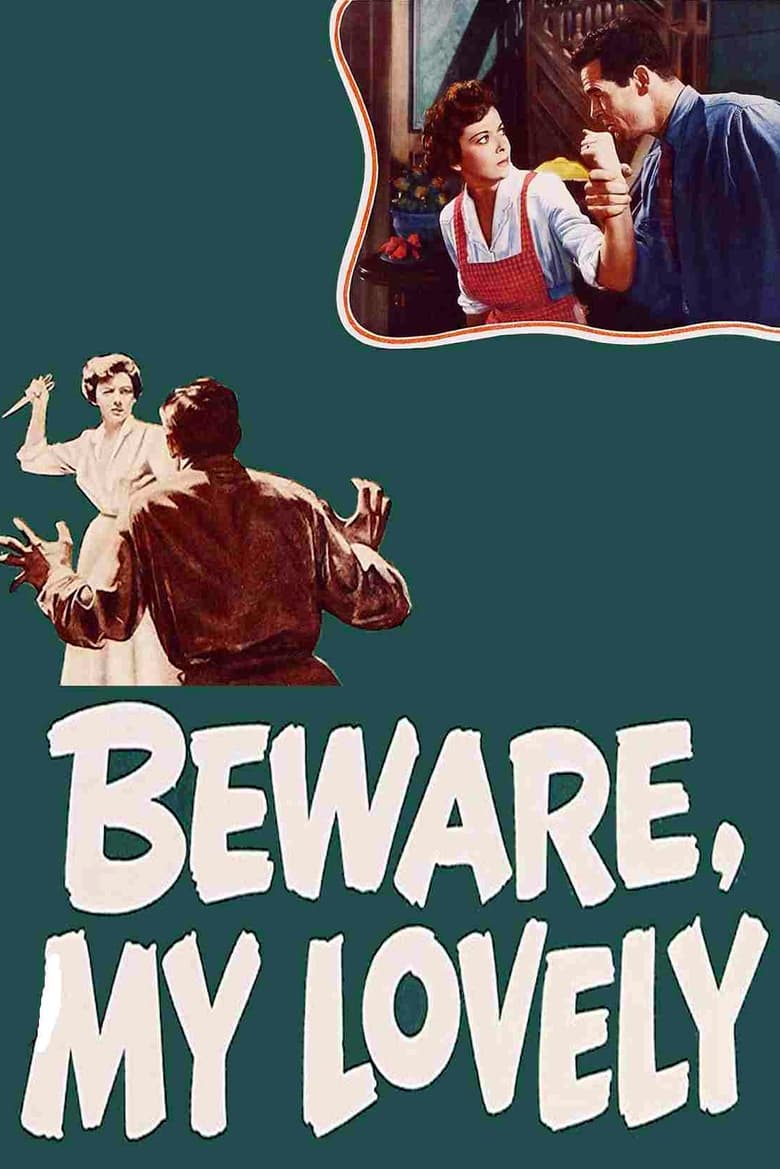
Beware 1952
1952 RKO Radio Pictures
★★☆☆☆ Curio
Film Noir · 16 minutes · Black & White

Beware

Directed by Harry Horner
Year 1952
Runtime 16 min
Studio RKO Radio Pictures
TMDB 6.1 / 10
"Three men in pursuit of comfort find only the walls closing in."

Professor Shemp Howard, a bumbling academic of no particular distinction, arrives home to discover that his domestic arrangements – along with those of his two associates, Larry and Moe – are about to become considerably more complicated. The three men share the kind of long-suffering companionship that looks, from a certain angle, like mutual entrapment. Their wives, formidable women with little patience for masculine incompetence, represent the domestic order these men have repeatedly failed to uphold.

The situation escalates through a series of confrontations in which the men attempt to conceal prior romantic entanglements and past indiscretions. Archive footage of Lulu Hopkins, played by Christine McIntyre, surfaces as evidence of a prior connection to Shemp, forcing the group into increasingly desperate improvisations. Allegiances shift with comic speed, but underneath the slapstick machinery runs a genuine current of anxiety about accountability and the inescapability of one's past.

Beware operates on the fringes of the domestic noir mode – less concerned with crime than with the slow suffocation of men who have exhausted their options. The film uses the short-subject format to compress that pressure into sixteen minutes, arriving at its conclusion with the blunt efficiency of a tribunal.
Classic Noir

Beware is a Columbia short directed by Jules White, one of the more mechanically efficient operators in the studio's comedy unit, and it arrives in 1956 at a point when the Stooges' theatrical short career was within two years of its close. The film is not noir in any conventional sense, yet its inclusion in a genre survey is defensible on structural grounds: the domestic space here functions as a trap, the past returns as incriminating evidence, and the male subject is caught between forces he cannot negotiate. White's direction is perfunctory by design – his instinct was always toward velocity rather than atmosphere – but the film inadvertently captures something about postwar masculine anxiety that more self-conscious genre entries sometimes overstate. The wives are not femmes fatales in the classical sense, but they exercise the same narrative function: they know, and that knowledge is power. Archive footage spliced from earlier productions gives Beware an odd temporal texture, as though the characters are haunted by prior versions of themselves.

– Classic Noir
2 ★★☆☆☆ Curio
Credits

The Crew

DirectorHarry Horner
ScreenplayMel Dinelli
CinematographyGeorge E. Diskant
MusicLeith Stevens
EditingPaul Weatherwax
Art DirectionAlfred Herman
CostumesMichael Woulfe
ProducerCollier Young
Performances

The Cast

Close Reading

The Signature Scene

Beware – scene
The Living Room Confrontation Wives at the Door

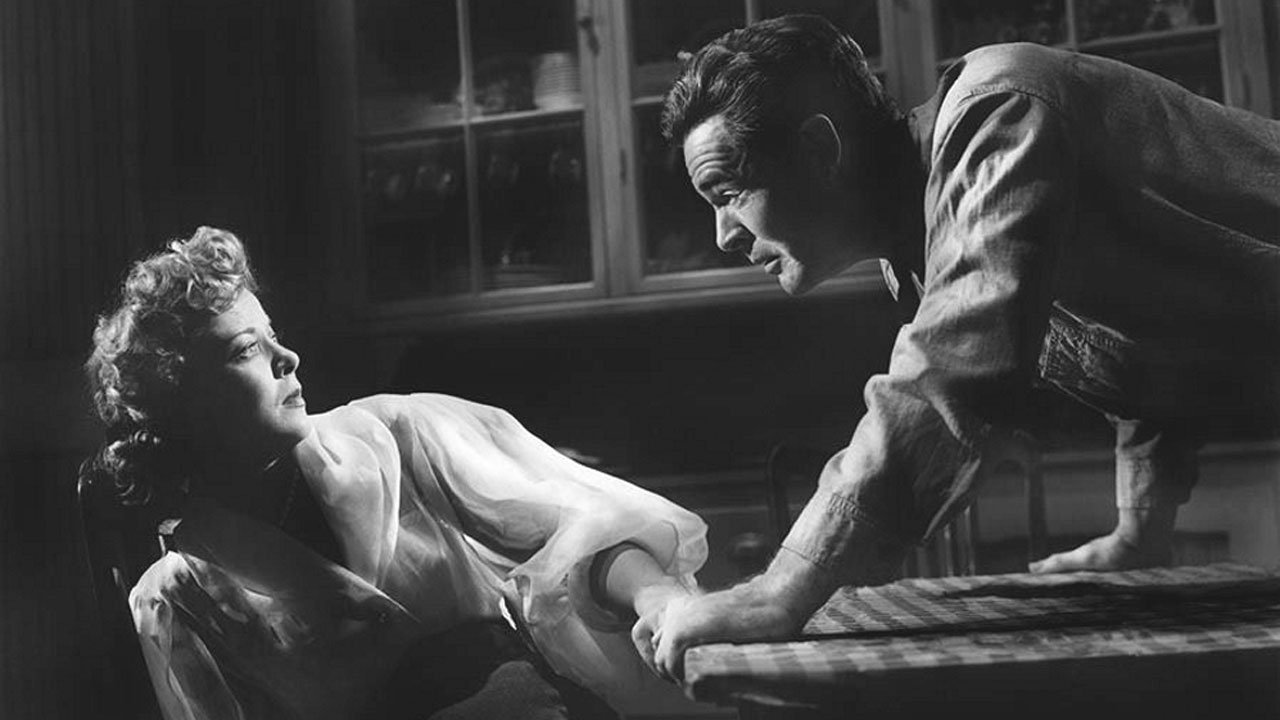
Henry Freulich's camera holds a flat, institutional two-shot as the three wives position themselves across the room from their husbands. The lighting is high-key and undifferentiated – standard for Columbia's short-subject unit – but the composition places the men against a bare wall, the frame offering them no depth to retreat into. There is no shadow work here, no expressionist angle; the effect is closer to a police lineup than a domestic interior.

The scene makes visible what the film's comedy has been circling: these men have nowhere to go. The archive footage of Lulu Hopkins, cut in from a prior production, functions as documentary evidence of an earlier life that cannot be disowned. The wives do not need to raise their voices. The geometry of the room has already delivered the verdict.

Visual Language

The Cinematography

🎞️
George E. Diskant – Director of Photography

Henry Freulich shot the majority of Columbia's Three Stooges shorts across two decades, and his approach to Beware reflects the unit's production realities: standing sets, flat studio lighting, minimal setup time. Freulich was not given the latitude for noir shadow work here, and he does not attempt it. What he does accomplish is a consistent use of frontal, mid-range framing that denies the subjects any spatial ambiguity – every room reads as a closed system. In the context of a genre survey, this bluntness carries meaning: the moral logic of the film is one of total visibility, of men who have no dark corners left to occupy. The splice of archive footage from earlier Stooge productions introduces an unintended visual discontinuity – different contrast levels, slightly different grain – that reads, against the flat present-tense photography, as the intrusion of an irrecoverable past into a present that would prefer to forget it.

In the Catalogue

Themes & Motifs

Availability

Where to Watch

Also in the Directory

See Also