Films People Pull a Fast One Night Beat Reading Room On TV Shop
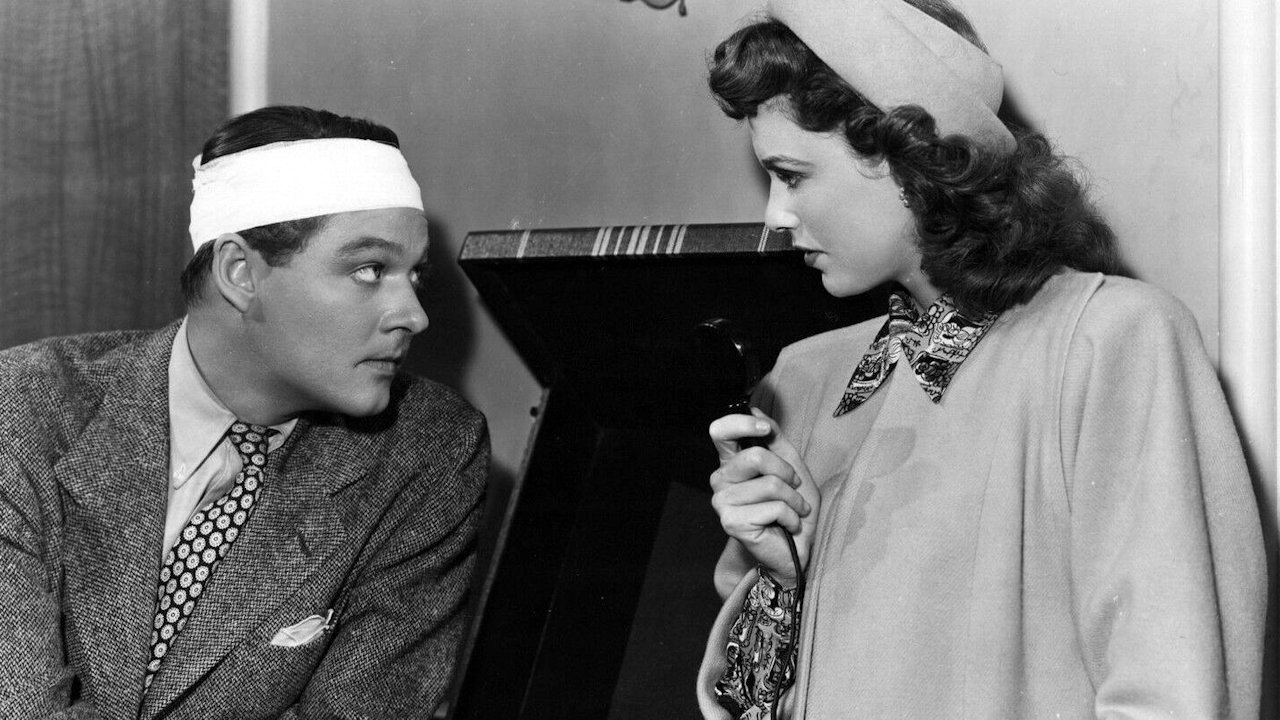
Mysterious Mr. Valentine 1946
1946 Republic Pictures
★★★☆☆ Notable
Film Noir · 56 minutes · Black & White

Mysterious Mr. Valentine

Directed by Philip Ford
Year 1946
Runtime 56 min
Studio Republic Pictures
TMDB 4.4 / 10
"A dead man's name opens doors that should have stayed shut."

In a mid-sized American city, insurance investigator Steve Morgan is drawn into a case surrounding the identity of a man known only as Valentine – a figure whose death, or apparent death, has left a trail of competing claims and concealed motives. Janet Spencer, a young woman with a direct stake in the outcome, enlists Morgan's help when she suspects the official account of Valentine's fate is a fabrication designed to protect someone with money and influence.

As Morgan presses deeper, the investigation pulls in Lola Carson, a woman whose connection to Valentine is intimate and dangerous, and Sam Priestly, whose loyalties shift with the available profit. Police Lieutenant Milo Jones watches from the institutional margins, neither fully obstructing nor assisting, while Rita Armstrong's appearance introduces the possibility that more than one person has reason to keep Valentine's true history obscured. The question of who Valentine actually was begins to matter less than who needs him to remain a mystery.

Produced at Republic Pictures within the tight constraints of a B-unit budget and a 56-minute running time, Mysterious Mr. Valentine works the formula of identity-obscured crime with functional economy. The film belongs to that strand of mid-1940s noir in which the dead exert more pressure on the living than the living can easily manage – a preoccupation the era returned to repeatedly as the postwar world settled into unease.
Classic Noir

Mysterious Mr. Valentine is a competent minor entry in Republic's mid-decade crime output, neither ambitious enough to transcend its B-picture origins nor careless enough to squander them entirely. Philip Ford directs with the workmanlike efficiency the studio demanded, keeping the narrative moving through its lean running time without pausing for atmosphere that the budget could not sustain. William Henry carries the investigator role with credible restraint, and Virginia Christine brings the necessary weight to Lola Carson, a character the script treats with more complexity than the genre often afforded women in secondary positions. What the film captures, almost incidentally, is the postwar suspicion around concealed identity – the sense that a man's past could be retrofitted to serve anyone's present need. That anxiety, diffuse but persistent in American crime films of 1945–1948, gives Mysterious Mr. Valentine a period texture that outlasts its narrative mechanics. It is not a film that demands repeated viewing, but it repays a single attentive one.

– Classic Noir
3 ★★★☆☆ Notable
Credits

The Crew

DirectorPhilip Ford
ScreenplayMilton Raison
CinematographyAlfred S. Keller
MusicMort Glickman
EditingRichard L. Van Enger
Art DirectionHilyard M. Brown
CostumesAdele Palmer
ProducerDonald H. Brown
Performances

The Cast

Close Reading

The Signature Scene

Mysterious Mr. Valentine – scene
The Confrontation at the Spencer House Light Through Venetian Slats

Alfred S. Keller positions his camera at a low angle as Morgan faces Lola Carson across a sitting room, the practical lamp behind her reduced to a single harsh source. Venetian blind shadows fall in parallel bars across both figures, the geometry of confinement imposed on the scene without flourish. Keller holds a medium two-shot long enough for the viewer to read the spatial tension before cutting to individual close-ups in which each face is half-consumed by shadow – the lit half controlled, the dark half withheld.

The composition argues visually what the screenplay is only beginning to articulate: that both characters are divided, presenting one version of themselves while concealing another. The shadow bars function not as decoration but as a visual correlate of the film's central concern with hidden identity. Neither figure is fully legible, and the frame refuses to resolve that illegibility, which is as close as a 56-minute Republic programmer comes to a sustained thematic statement.

Visual Language

The Cinematography

🎞️
Alfred S. Keller – Director of Photography

Alfred S. Keller's work on Mysterious Mr. Valentine reflects the disciplined economy of Republic's in-house cinematography during the mid-1940s. Shooting on studio-built interiors with limited set depth, Keller relies on hard single-source lighting to generate contrast rather than spatial complexity – a practical adaptation that also serves the film's moral logic, in which characters are either illuminated or concealed, rarely both simultaneously. His shadow work on the sitting-room sequences draws on the established noir vocabulary of venetian blind patterns and raking side-light without overstating either. Lens choices stay conventional for the period, with little deviation from standard focal lengths that keep figures grounded rather than distorted. What Keller achieves within these constraints is a consistent tonal register: the frame always feels slightly pressurized, as though the available light is insufficient for comfort. That low-grade visual unease, maintained across the runtime without a single bravura shot, is the cinematography's genuine contribution to the film.

In the Catalogue

Themes & Motifs

Availability

Where to Watch

Also in the Directory

See Also