Films People Pull a Fast One Night Beat Reading Room On TV Shop
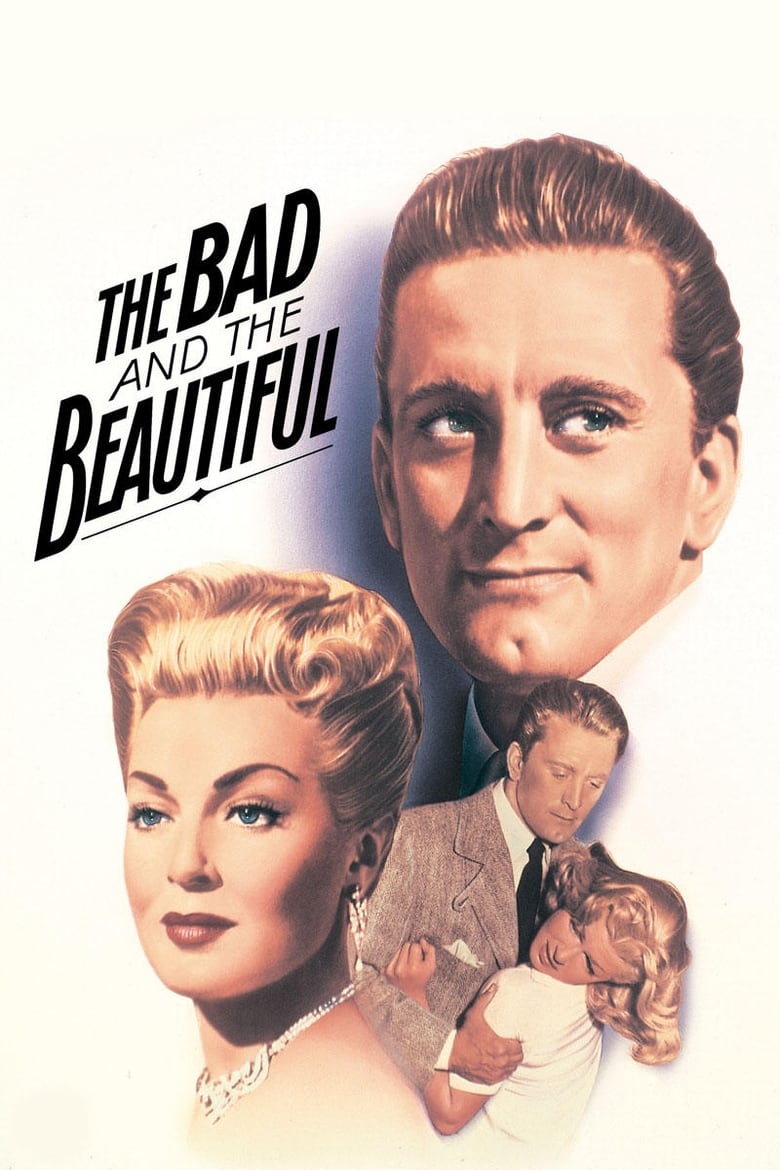
Bad and the Beautiful 1952
1952 Metro-Goldwyn-Mayer
★★★☆☆ Notable
Film Noir · 118 minutes · Black & White

Bad and the Beautiful

Directed by Vincente Minnelli
Year 1952
Runtime 118 min
Studio Metro-Goldwyn-Mayer
TMDB 7.3 / 10
"Three witnesses, one predator, and the wreckage Hollywood leaves behind."

Studio executive Harry Pebbel summons three figures from the recent past – director Fred Amiel, actress Georgia Lorrison, and novelist James Lee Bartlow – to a late-night meeting at his office. Each has cause to despise the same man: Jonathan Shields, a ruthless and charismatic producer whose climb through the Hollywood system consumed everyone near him. Pebbel wants them to take a phone call from Shields, who is broke and needs their names attached to a new project. One by one, each refuses, and one by one, each begins to remember.

The film unfolds in three extended flashbacks, each a self-contained story of manipulation and partial betrayal. Amiel watches Shields steal his directorial ambitions. Georgia, a hard-drinking actress and daughter of a faded star, allows Shields to rebuild her and then discovers the terms of that rebuilding. Bartlow, the most clear-eyed of the three, loses something irreplaceable when Shields engineers a solution to the novelist's domestic entanglements – a solution both cynical and, in its own logic, not entirely without affection. The film refuses to resolve Shields into a simple villain; each account contradicts the last in tone if not in fact.

The Bad and the Beautiful sits at an unusual intersection: a studio film that turns the studio system into its own subject, using the conventions of noir – the retrospective narration, the morally contaminated protagonist, the weight of consequence – to examine ambition rather than crime. It belongs to a small group of Hollywood self-portraits made in the early 1950s, films that understood the machinery well enough to implicate themselves in the telling.
Classic Noir

The Bad and the Beautiful is less a noir thriller than a noir anatomy – a dissection of professional desire conducted in the vocabulary of the form. Vincente Minnelli, working from Charles Schnee's Oscar-winning screenplay, structures the film as a triptych of exploitation, and what holds it together is Kirk Douglas's performance as Jonathan Shields: a man who is never quite lying and never quite honest, whose genuine belief in film as an art form coexists without strain alongside his willingness to use people until they break. Robert Surtees's cinematography gives the Hollywood milieu a harder edge than the studio's promotional instincts might have preferred. The film also marks one of Gloria Grahame's most precisely observed performances, in a role that might have been peripheral but registers as something close to tragic. What the film reveals about its era is this: by 1952, the industry was capable of financing a portrait of its own moral architecture, provided that portrait was framed as entertainment.

– Classic Noir
3 ★★★☆☆ Notable
Credits

The Crew

DirectorVincente Minnelli
ScreenplayCharles Schnee
CinematographyRobert Surtees
MusicDavid Raksin
EditingConrad A. Nervig
Art DirectionCedric Gibbons
CostumesHelen Rose
ProducerJohn Houseman
Performances

The Cast

Close Reading

The Signature Scene

Bad and the Beautiful – scene
The Night Drive Georgia Unravels in the Rain

After Georgia discovers Shields's deception, she does not confront him in a lit room – she escapes into a car and drives. Surtees shoots the sequence largely from inside the vehicle, the windshield fragmenting the night into streaks of oncoming light and rain. The frame contracts around Lana Turner's face while the background dissolves into abstraction; reflected headlights drag across her features in irregular pulses, denying the viewer any stable image of her expression. The composition is deliberately claustrophobic, the car becoming less a means of escape than a container for a breakdown.

The scene argues that the film's real subject is not betrayal as an event but its physical aftermath – the way shock occupies a body before the mind can process it. Georgia is neither performing grief nor suppressing it; she is simply inside it, and the camera refuses to aestheticize what it records. For a film that is otherwise concerned with the manufactured nature of emotion, this sequence insists on something unmediated, and it stands as the clearest statement of what Georgia has lost: not Shields, but the version of herself she had only just begun to trust.

Visual Language

The Cinematography

🎞️
Robert Surtees – Director of Photography

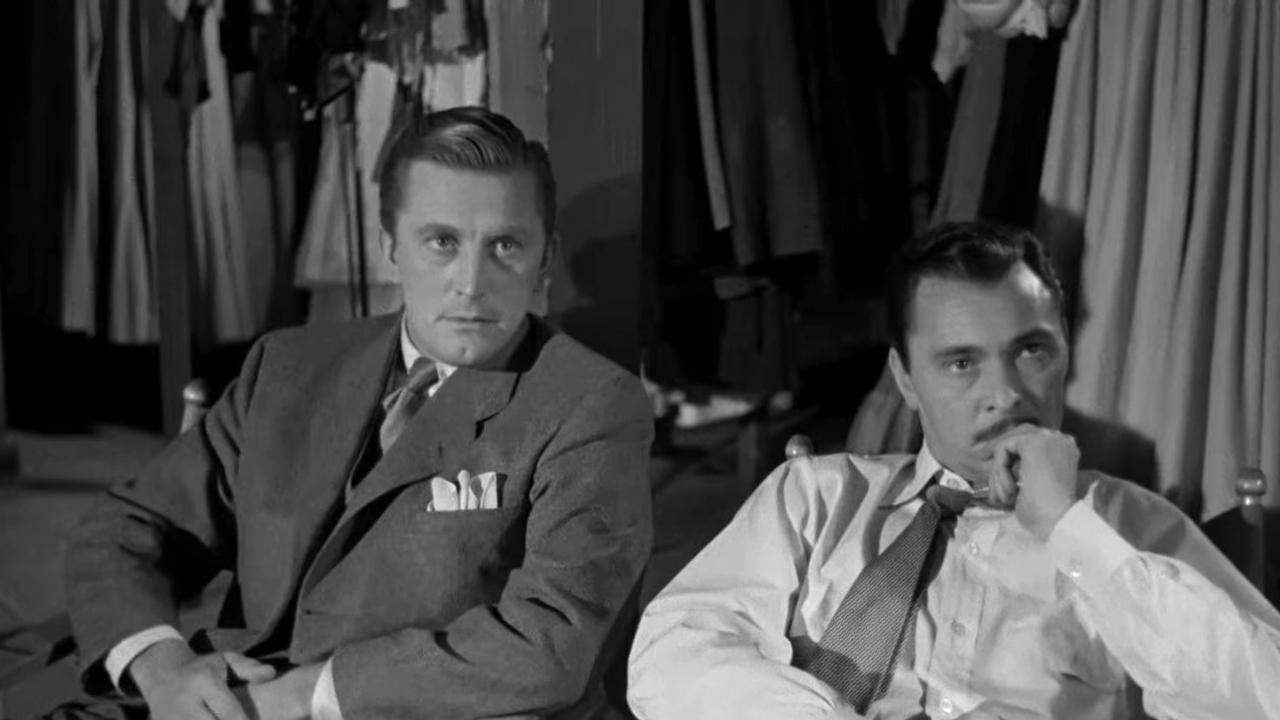
Robert Surtees, shooting in black-and-white on MGM's controlled studio stages, resists the flat promotional gloss the lot was capable of producing and builds instead a grammar of directed shadow and selective depth. His key-light setups tend to isolate faces against mid-range darkness, a technique that serves the film's interrogation structure – these are people being examined, not celebrated. In the flashback sequences, Surtees modulates contrast to distinguish emotional register: the early Shields scenes carry a harder, more graphic chiaroscuro that softens, slightly, in the Bartlow material, where the menace is subtler and the loss more domestic. The production confines itself almost entirely to studio interiors, and Surtees uses that constraint deliberately, keeping the world of the film sealed and self-referential. No exterior light enters that has not been engineered. It is an appropriate choice for a story about a man who controls every element of what the audience sees.

In the Catalogue

Themes & Motifs

Availability

Where to Watch

Also in the Directory

See Also