Films People Pull a Fast One Night Beat Reading Room On TV Shop
Death of a Scoundrel 1956
1956 Charles Martin Productions
★★★☆☆ Notable
Film Noir · 119 minutes · Black & White

Death of a Scoundrel

Directed by Charles Martin
Year 1956
Runtime 119 min
Studio Charles Martin Productions
TMDB 5.9 / 10
"A man builds an empire on other people's ruin, and waits for the bill to come due."

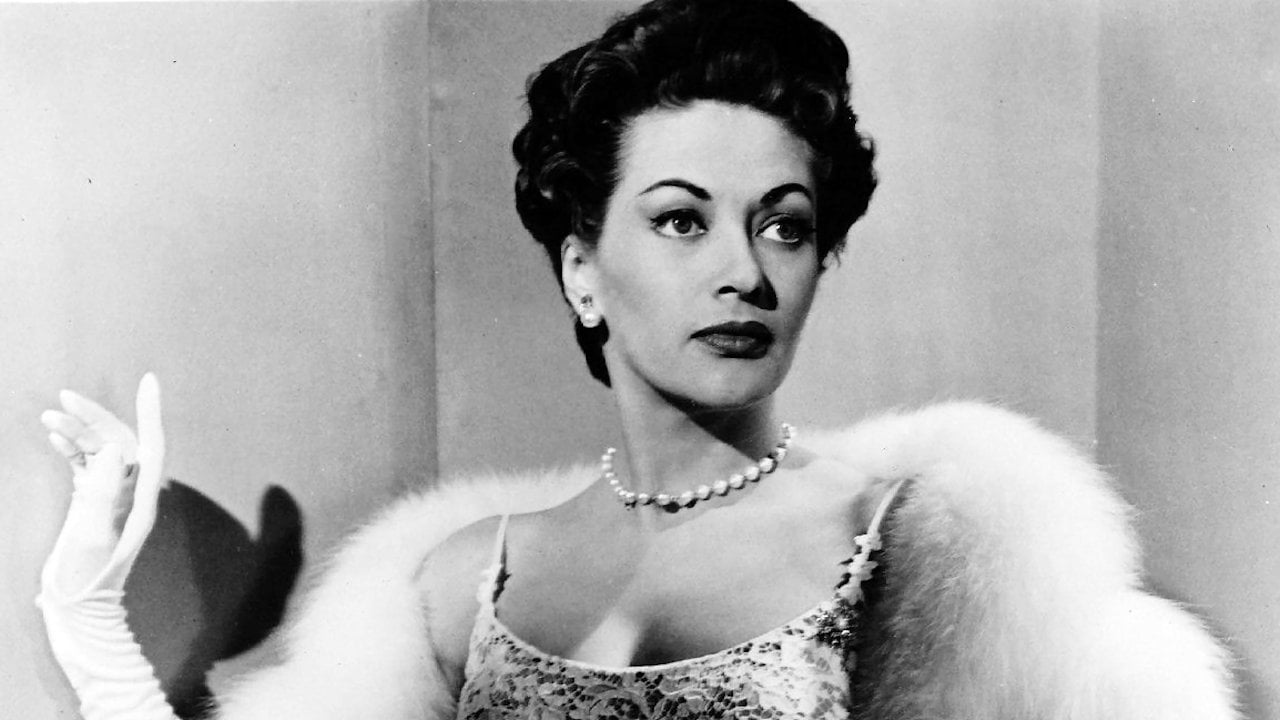
Clementi Sabourin, a Czech émigré of murky origins, arrives in postwar America with nothing but charm, nerve, and a talent for identifying what people want and what they fear. Through a calculated series of seductions and financial manipulations, he ascends from obscurity into the upper reaches of New York society, acquiring wealth, influence, and a succession of women who serve his ambitions even as they believe they are directing his affections.

His rise depends on the loyalty of Bridget Kelly, a secretary who understands him more clearly than anyone and remains bound to him by something harder to name than love. Around him orbit Mrs. Ryan, a socialite whose money fuels one of his schemes; the principled Leonard Wilson, who begins to see through the facade; and Stephanie North, whose own vulnerability makes her useful and then dangerous. As Sabourin consolidates his position, the alliances that built him begin to generate their own pressures, and the line between accomplice and victim blurs.

The film frames its story as a retrospective inquiry into Sabourin's death, a structure that allows it to examine the mechanics of predatory ambition without sentimentalizing its subject. It belongs to the cycle of noir films preoccupied with the self-made fraudster – figures who expose the porousness of American class boundaries even as they destroy themselves crossing them.
Classic Noir

Death of a Scoundrel occupies an underexamined corner of mid-decade noir, positioned somewhere between the psychological character study and the society melodrama. George Sanders brings to Sabourin the same cool, faintly contemptuous intelligence he deployed in All About Eve, but here the character is given more room – the film's 119 minutes allow his scheme to accrue detail and his self-deception to acquire weight. Charles Martin's direction is not especially inventive, but the retrospective frame structure is handled with discipline, and the film earns its length by keeping the moral accounting precise: Sabourin is not romanticized, nor is he simply demonized. The supporting cast, particularly Victor Jory and Coleen Gray, grounds the social world he exploits. What the film ultimately reveals about its era is the postwar anxiety around class fluidity – the fear that the markers of legitimacy could be faked, that charm and paperwork might substitute for character. For a 1956 production, that is pointed material.

– Classic Noir
3 ★★★☆☆ Notable
Credits

The Crew

DirectorCharles Martin
ScreenplayCharles Martin
CinematographyJames Wong Howe
MusicMax Steiner
Art DirectionRudi Feld
ProducerCharles Martin
Performances

The Cast

Close Reading

The Signature Scene

Death of a Scoundrel – scene
Sabourin's Office, Late Evening The Ledger Across the Desk

James Wong Howe frames Sabourin behind a wide desk in a pool of directed lamplight that falls sharply across the documents between him and his visitor, leaving his upper face in controlled shadow. The camera holds at a slight low angle, giving the desk an almost architectural weight – it is less furniture than fortification. The background dissolves into darkness, so that the two figures exist in a kind of isolated transaction, the rest of the world irrelevant until the moment it intrudes.

The scene crystallizes the film's central argument about power: Sabourin is most dangerous when he appears most reasonable. The ledger, the lamp, the measured distance across the desk – all of it performs legitimacy, and Howe's framing makes the viewer complicit in accepting it, at least briefly. The shadow that falls across Sabourin's eyes is not decoration; it is a statement about what cannot be seen and what those around him choose not to look for.

Visual Language

The Cinematography

🎞️
James Wong Howe – Director of Photography

James Wong Howe was among the most technically rigorous cinematographers working in Hollywood, and his contribution to Death of a Scoundrel – one of his less-discussed credits – reflects his consistent instinct for using light as moral commentary rather than mere atmosphere. Shooting largely on controlled studio sets, Howe employs tight, directional key lighting that carves faces into zones of revelation and concealment, consistent with a story about a man whose public surface is always managed. He avoids the extreme low-key expressionism that had become a period cliché by 1956, opting instead for a colder, more precise chiaroscuro that suits Sabourin's boardroom world better than any rain-slicked alley would. Compositions tend toward formality – centered figures, symmetrical blocking – which gives the occasional disruption of that geometry real unease. The widescreen frame is used to isolate characters within social spaces that should connect them, turning the drawing rooms and offices of wealth into environments as alienating as any back street.

In the Catalogue

Themes & Motifs

Availability

Where to Watch

Also in the Directory

See Also