Films People Pull a Fast One Night Beat Reading Room On TV Shop
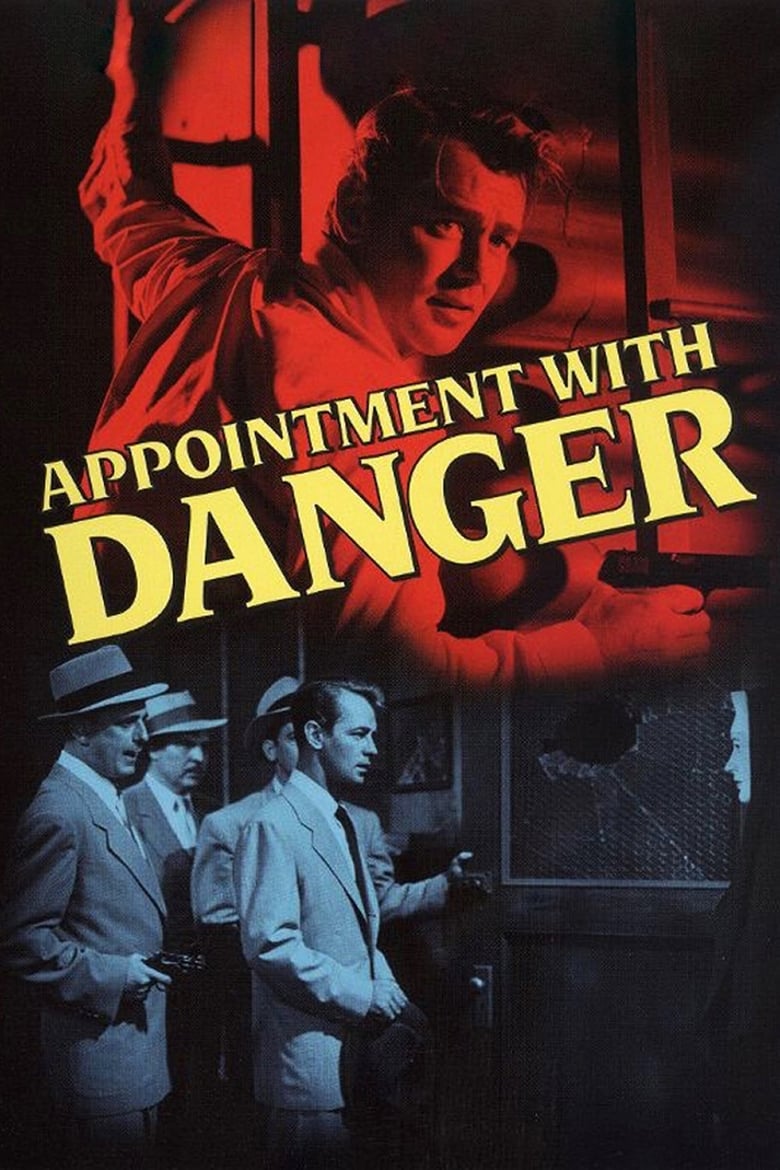
Appointment With Danger 1950
1950 Paramount Pictures
★★★☆☆ Notable
Film Noir · 89 minutes · Black & White

Appointment With Danger

Directed by Lewis Allen
Year 1950
Runtime 89 min
Studio Paramount Pictures
TMDB 5.7 / 10
"A postal inspector follows a murder into the one place his badge cannot protect him."

When a U.S. postal inspector is found dead in Gary, Indiana, the Postal Inspection Service sends Al Goddard – a cold, methodical agent with little patience for sentiment – to determine what happened. The only witness is Sister Augustine, a nun who glimpsed the killers' faces before being left at the scene. Goddard, operating with the quiet authority of a federal bureaucrat who has seen enough violence to stop being surprised by it, takes the nun into his confidence and begins working the case from the industrial margins of the Midwest.

The trail leads to Earl Boettiger, a calculating syndicate figure planning a major mail robbery, and to his associates: the edgy, volatile Joe Regas and Dodie, a cigarette girl whose loyalty is less fixed than Boettiger assumes. As Goddard moves closer to the operation, he is drawn into a web of competing pressures – the gang's internal fractures, Sister Augustine's continued exposure to danger, and his own professional detachment straining against the moral weight of what surrounds him.

Appointment with Danger uses the postal robbery as a framework for examining institutional resolve against organized crime – a theme that runs through much of the procedural noir of the early 1950s. The film maintains its tension not through romantic fatalism but through the slow accumulation of professional risk, making it an unusually disciplined entry in the genre.
Classic Noir

Appointment with Danger occupies an instructive position in the postwar procedural cycle, sitting closer to the semi-documentary tradition of House on 92nd St. than to the expressionist noir of the same decade. Lewis Allen keeps the film's temperature low: Goddard is not a haunted man but a functional one, and the screenplay uses that flatness deliberately, placing institutional competence against syndicate ruthlessness without inflating either. Alan Ladd's characteristic stillness, sometimes read as limitation, works here as a credible rendering of a man whose job has cauterized normal emotional response. Phyllis Calvert's Sister Augustine provides the film's moral register without becoming a symbol, and Paul Stewart's Boettiger is among the more convincingly banal villains in the cycle – dangerous not because he is theatrical but because he is organized. The film is less interested in damnation than in the daily mechanics of crime and its containment, which makes it a useful document of how noir absorbed the procedural impulse as the 1950s progressed.

– Classic Noir
3 ★★★☆☆ Notable
Credits

The Crew

DirectorLewis Allen
ScreenplayRichard L. Breen
CinematographyJohn F. Seitz
MusicVictor Young
EditingLeRoy Stone
Art DirectionHans Dreier
CostumesMary Kay Dodson
ProducerRobert Fellows
Performances

The Cast

Close Reading

The Signature Scene

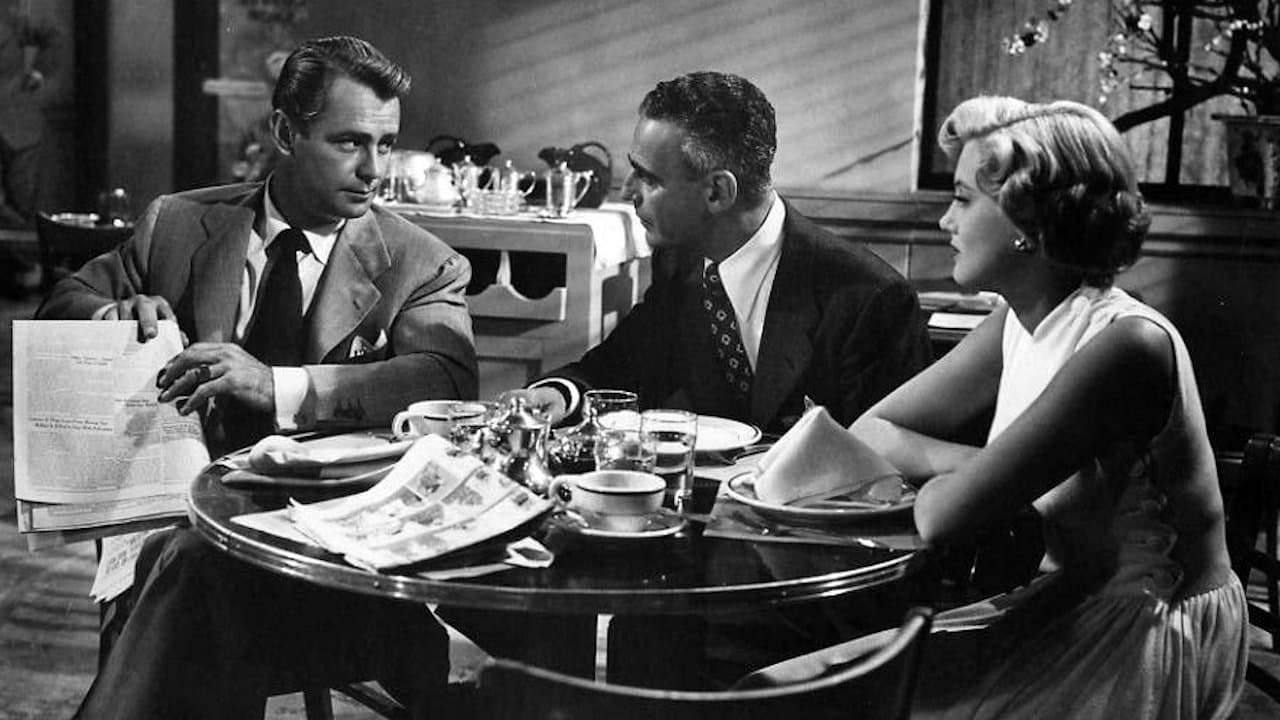
Appointment With Danger – scene
The Garage Confrontation Light Across the Oil Floor

In a cavernous garage interior, John F. Seitz lights the scene from overhead industrial fixtures that leave the upper frame in institutional grey while dropping hard shadows beneath the vehicles and along the floor. The camera holds at a medium distance, refusing the close-up pressure that would tip the scene into melodrama. Goddard stands in partial light at one side of the frame; the gang members are distributed across the depth of the space, their positions geometrically deliberate – each figure isolated, none offering cover to the others.

The composition externalizes the scene's argument: Goddard's authority is structural, not physical. He is one man in a hostile space, and the frame does not pretend otherwise. What sustains him – and what the scene makes visible – is the calculation that the men arrayed against him are more afraid of exposure than he is of them. It is the film's central proposition rendered in blocked space and available light.

Visual Language

The Cinematography

🎞️
John F. Seitz – Director of Photography

John F. Seitz, whose work on Double Indemnity and Sullivan's Travels had already established him as one of Hollywood's most versatile cinematographers, brings a notably restrained approach to Appointment with Danger. Rather than saturating the film in the wet-street expressionism common to the period, Seitz leans into the industrial Midwest's natural severity – flat light, utilitarian interiors, spaces that resist glamour. The lighting setups favor hard sources placed to model faces without dramatizing them, consistent with the film's semi-documentary register. Location elements, including the Gary, Indiana exteriors, are integrated against studio interiors with enough tonal continuity that the geography feels coherent. Shadow work is present but functional rather than decorative – darkness marks danger rather than existential condition. The result is a visual language that serves the story's procedural logic: a world where crime is not romantic and the investigator's advantage is institutional rather than existential.

In the Catalogue

Themes & Motifs

Availability

Where to Watch

Also in the Directory

See Also