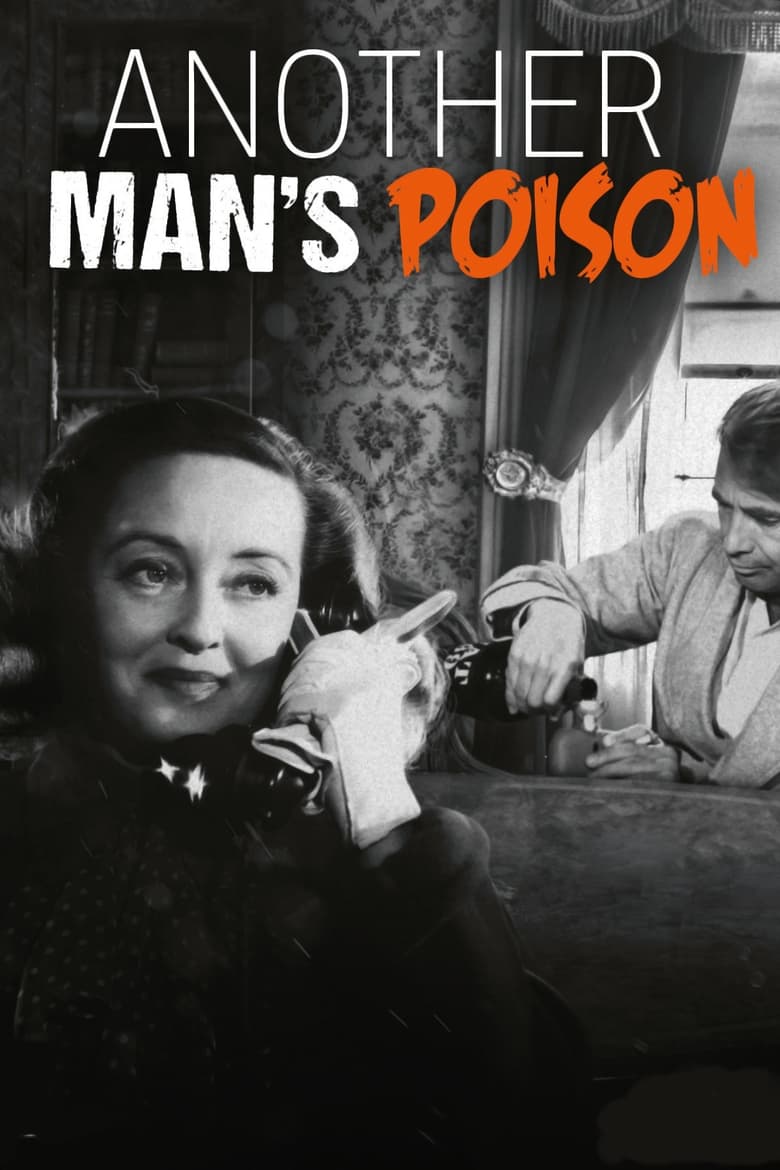
In a remote moorland farmhouse in Yorkshire, Janet Frobisher – a crime novelist of some reputation – lives in deliberate isolation, her marriage a secret she keeps from her lover, the younger Larry Stevens. When her husband's criminal associate, George Bates, arrives at the house on the run after a botched robbery in which Janet's husband was killed, Janet sees not a threat but an opportunity. She tells no one the man is dead. Bates, brutal and shrewd, quickly grasps the leverage this silence gives him.
Bates installs himself in the household, gradually displacing Larry and pressing Janet into an arrangement that resembles less a negotiation than a slow strangulation. The arrival of Dr. Henderson, a mild-mannered local physician who suspects more than he admits, and Chris Dale, Larry's former girlfriend, complicates the web of concealment Janet is spinning. Allegiances shift as each character's private interest pulls against every other, and Janet – who controls the narrative of her own fiction – finds the real story escaping her management entirely.
Another Man's Poison is a British production shot largely on location and on studio sets in England, carrying the claustrophobic moral logic of postwar noir into decidedly domestic terrain. Its central figure belongs to a particular noir lineage – the intelligent woman whose capacity for decisive violence is both her power and her undoing – and the film's narrow geography, a farmhouse surrounded by fog and open moorland, transforms landscape itself into a form of entrapment.
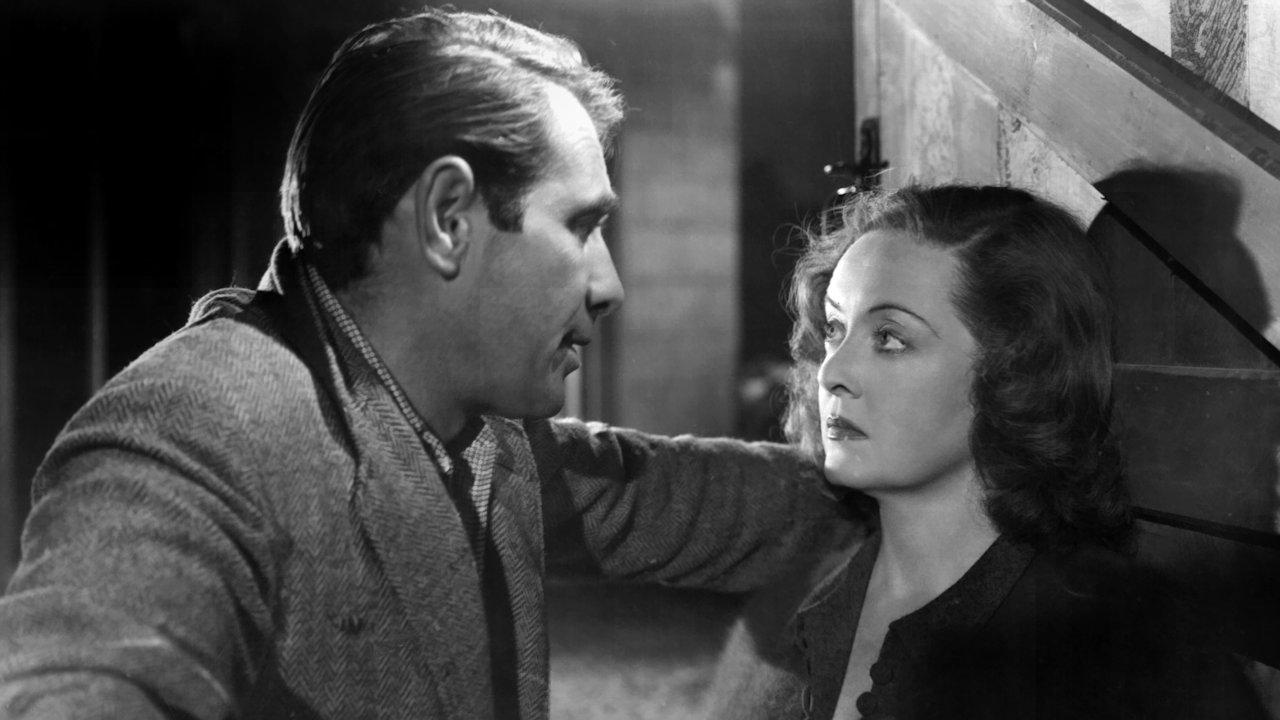
Another Man's Poison occupies an awkward but instructive position in the noir canon: a transatlantic production that imports the genre's moral architecture into the English countryside, where it sits with a certain deliberate discomfort. Adapted by Val Guest from Emlyn Williams's stage play Deadlock, the film is theatrical in construction – chamber drama more than procedural – and makes no particular effort to disguise its origins. What rescues it from mere curiosity is the performance at its center. Bette Davis, by 1951 navigating a difficult moment in her Hollywood career, commits to Janet Frobisher with an intensity that borders on the defiant, and that quality of controlled excess is precisely what the role requires. The film is less interested in suspense mechanisms than in the psychology of a woman who regards murder as a practical instrument rather than a transgression. In that respect it anticipates the domestic poison-pen noirs of the mid-decade, even as it remains formally indebted to the stage. Gary Merrill, Davis's husband at the time, provides useful counterweight: blunt, physically present, and entirely without sentiment.
– Classic Noir
Robert Krasker frames Janet at the edge of the stable, her figure caught between the hard white source of a single overhead lamp and the unresolved dark of the yard beyond. The camera holds at a slight low angle, lending her physical authority even as her hands perform a domestic task – the preparation of a drink – that the audience has already learned to read as lethal. Shadow pools along the ground in long diagonals; the horse in the background is barely visible, its breathing audible on the soundtrack. The composition isolates Janet completely: no one else shares the frame.
What the scene argues is that Janet's danger is inseparable from her composure. There is no trembling, no theatrical hesitation of the kind the genre sometimes permits its killers. Krasker's refusal to melodramatize the lighting – no expressionist excess, just a working light in a working space – makes the act feel embedded in the ordinary world rather than elevated out of it. That placement is the film's central moral observation: that calculation of this kind does not require the extraordinary.
Robert Krasker, who had brought the distorted wide-angle chiaroscuro of The Third Man to Vienna only two years earlier, works in a more restrained register here, and the contrast is instructive. Shooting for Angel Productions on a limited budget, Krasker uses the Yorkshire location material and Nettlefold Studios interiors to construct a visual argument about enclosure. The farmhouse rooms are lit with practical sources pushed to their limits – overhead lamps, firelight, a single window in overcast daylight – giving the interiors a texture that is worn and inhabited rather than composed. Krasker avoids the deep-focus geometry of his expressionist work; instead he favors tighter focal lengths that compress the space between characters, making the farmhouse feel smaller as the film progresses. Shadow work is present but functional: it marks exclusion and concealment rather than announcing moral corruption. The fog-bound exterior shots, brief but recurring, operate as visual punctuation – the world outside the house is formless and without exit. Cinematography and story share the same logic.
Tubi has carried this title in a serviceable standard-definition print – confirm availability before viewing as catalog rotation applies.
Archive.orgFreeA public domain print is available on Archive.org; quality varies by upload but it remains the most reliably accessible version.
Amazon Prime VideoRentalA rental option has appeared periodically via Prime Video's third-party suppliers; check current availability.