Films People Pull a Fast One Night Beat Reading Room On TV Shop
World for Ransom 1954
1954 Plaza Productions
★★★☆☆ Notable
Film Noir · 82 minutes · Black & White

World for Ransom

Directed by Robert Aldrich
Year 1954
Runtime 82 min
Studio Plaza Productions
TMDB 5.2 / 10
"In Singapore's humid dark, loyalty is the first thing sold."

Singapore, the early 1950s. Mike Callahan is a freelance operative – part bodyguard, part fixer – working the margins of a port city where colonial authority and criminal enterprise share the same humid air. When his old friend Julian March resurfaces after a long absence, Callahan is drawn back into a world of competing allegiances. March is now entangled with the shadowy Alexis Pederas, a broker of dangerous men and dangerous information, and with a plot that reaches well beyond the usual waterfront commerce.

The scheme at the center of the film involves the kidnapping of a nuclear scientist – a ransom demand leveled not at any single party but at the geopolitical order itself. Callahan's position grows more precarious when it becomes clear that March, whose wife Frennessey carries her own history with Callahan, is not merely a victim of circumstance but a willing instrument. The question of who is using whom multiplies across every scene, and Pederas proves a more patient and dangerous figure than his cultivated manner suggests.

World for Ransom operates as a Cold War thriller filtered through the noir sensibility Aldrich was refining in the same period. The foreign setting allows the film to externalize the moral dislocation that American noir typically projects inward – corruption here is systemic, almost climatic, and Callahan's investigation carries the doomed quality of a man trying to impose personal codes on a world that has long since abandoned them.
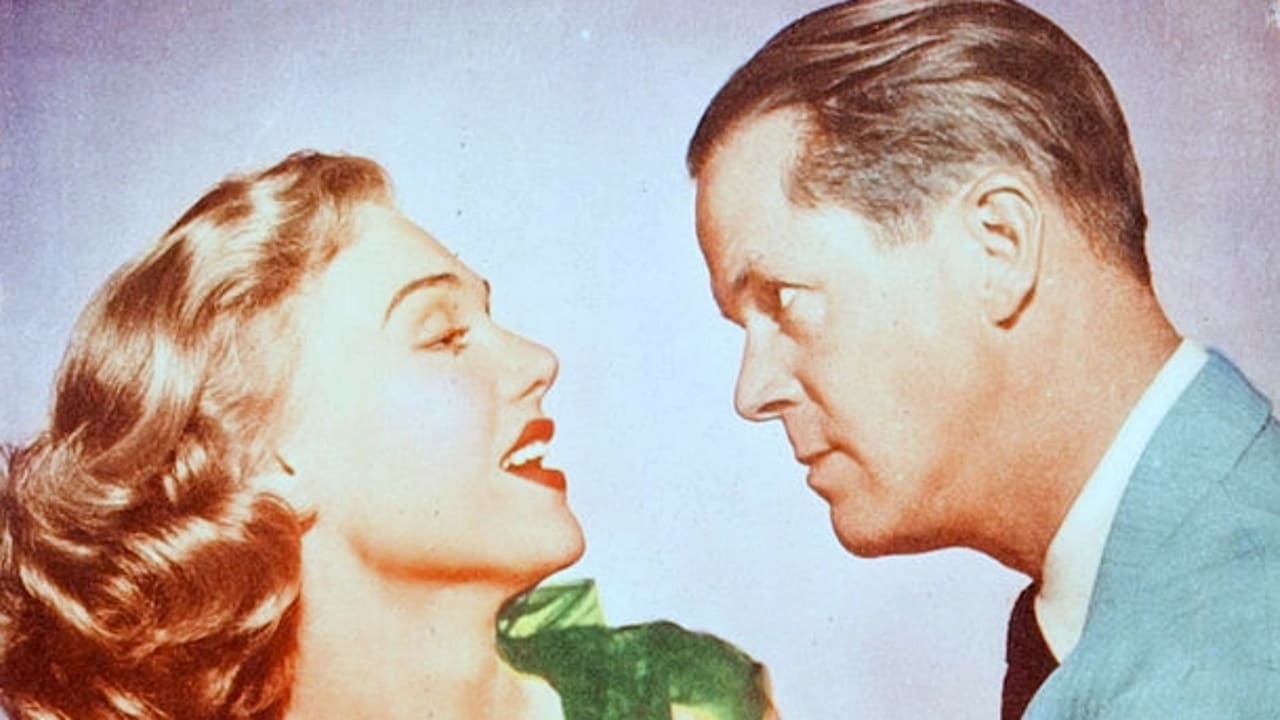
Classic Noir

World for Ransom occupies an instructive position in Robert Aldrich's early career, arriving the same year as Apache and preceding Kiss Me Deadly by one year. Shot on a tight budget using sets recycled from the television series China Smith – in which Duryea played a related character – the film converts its limitations into a kind of claustrophobic consistency. Aldrich and cinematographer Joseph F. Biroc keep the frame compressed, the geography uncertain, the escape routes perpetually blocked. Dan Duryea, so often cast as a sneering villain in the 1940s, earns a more ambiguous register here: Callahan is decent by instinct but compromised by attachment, a man whose loyalties are the very mechanism of his undoing. The Cold War scaffolding – the kidnapped scientist, the unnamed superpower bidder – gives the film a topicality that most B-noir of the period avoids, and Aldrich handles it without ideology, treating geopolitical threat as simply another form of the institutional corruption noir had always anatomized. The film is not without awkwardness, particularly in its supporting characterizations, but as a document of a director finding his register, it is worth sustained attention.

– Classic Noir
3 ★★★☆☆ Notable
Credits

The Crew

DirectorRobert Aldrich
ScreenplayLindsay Hardy
CinematographyJoseph F. Biroc
MusicFrank De Vol
EditingMichael Luciano
Art DirectionWilliam Glasgow
ProducerRobert Aldrich
Performances

The Cast

Close Reading

The Signature Scene

World for Ransom – scene
The Waterfront Confrontation Two Men, One Light

Biroc frames the exchange between Callahan and March in a narrow dockside corridor where a single overhead source cuts hard shadows across both faces, leaving the lower halves of each man in near-total darkness. The camera holds at a slight low angle, compressing the ceiling against the figures and denying any sense of open space or exit. Neither man is allowed a clean read: light catches an eye here, a jaw there, and the editing between close-ups refuses to resolve which figure the film asks us to trust.

The scene does the central argumentative work of the picture in purely visual terms. March's partial illumination signals not villainy exactly but occlusion – he is a man whose motivations are never fully available. Callahan, nominally in the brighter portion of the frame, is not vindicated by the light; he is merely more exposed, more readable, and therefore more vulnerable. The staging proposes that in this world, visibility is liability rather than moral clarity.

Visual Language

The Cinematography

🎞️
Joseph F. Biroc – Director of Photography

Joseph F. Biroc brings to World for Ransom the disciplined economy he had developed across a string of low-budget productions in the early 1950s, and the constraints of the Plaza Pictures shoot appear to have focused rather than limited him. Working predominantly on interior studio sets dressed to suggest Singapore without attempting to replicate it, Biroc relies on deep shadow fills and selective key lighting to create spatial ambiguity – rooms feel larger or more labyrinthine than their physical dimensions allow because the camera rarely confirms where a wall ends. His lens choices favor moderate wide angles that keep figures in relation to their environments, reinforcing the sense that Callahan is always being watched, always positioned within a geometry he did not design. Practical light sources – lanterns, street lamps glimpsed through shuttered windows – are used as narrative anchors, and when they fail or are blocked, the frame's moral logic shifts accordingly. The result is a visual scheme that makes thematic argument through light placement rather than dialogue.

In the Catalogue

Themes & Motifs

Availability

Where to Watch

Also in the Directory

See Also