Films People Pull a Fast One Night Beat Reading Room On TV Shop
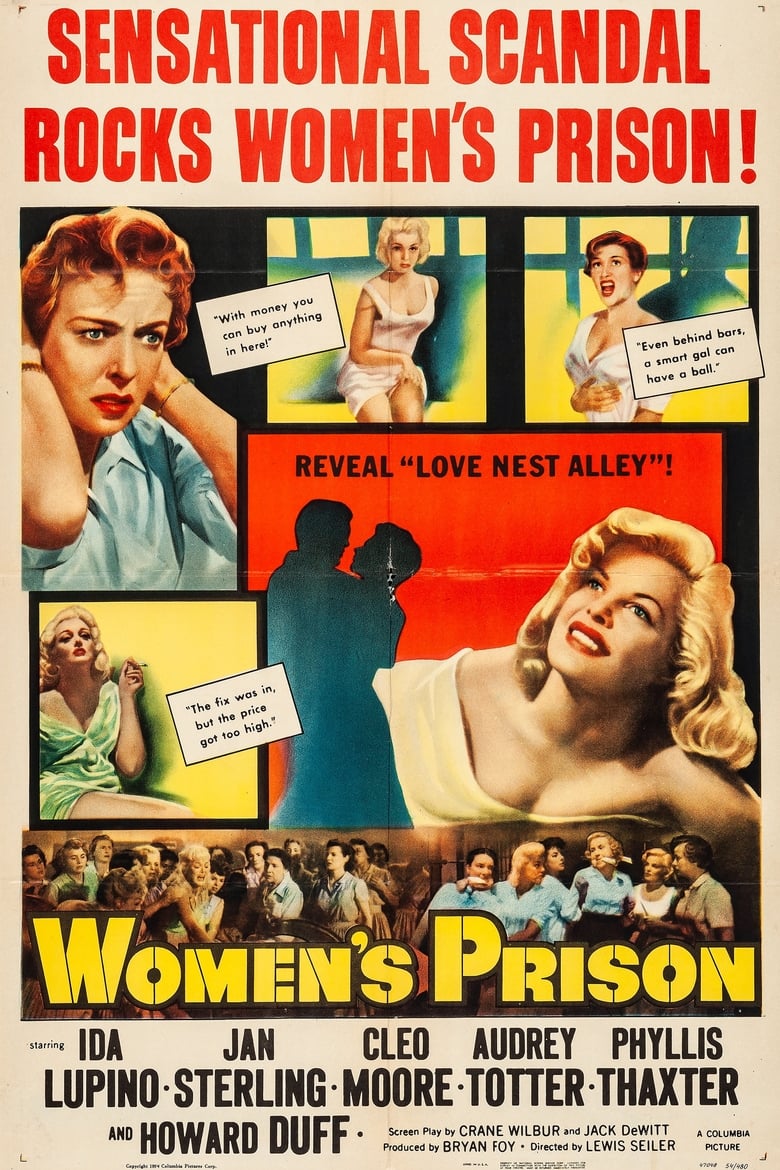
Women's Prison 1955
1955 Columbia Pictures
★★★☆☆ Notable
Film Noir · 79 minutes · Black & White

Women's Prison

Directed by Lewis Seiler
Year 1955
Runtime 79 min
Studio Columbia Pictures
TMDB 5.8 / 10
"Behind the walls, the real sentence is cruelty wearing a uniform."

At a women's correctional facility in California, superintendent Amelia van Zandt runs her domain with a rigidity that has long since curdled into sadism. When Brenda Martin arrives to serve time for a vehicular manslaughter conviction her circumstances barely warranted, she enters a world where punishment bears no relationship to justice. Van Zandt's authority is absolute, her methods deliberately punishing, and her contempt for the women in her charge is visible in every exchange. The prison's physician, Dr. Crane, observes the conditions with growing unease, representing an institutional conscience that has so far lacked the will to act.

The tension fractures along several lines at once. Joan Burton, whose husband Glen waits outside, is caught between desperation and the slow erosion that confinement works on a person's sense of self. Mae, harder-edged and more knowing, reads the institution's logic clearly and refuses to be broken quietly. When Helene Jensen, newly arrived and fragile, becomes the focus of van Zandt's particular attentions, the ward's collective resentment moves toward a breaking point. Dr. Crane finds himself unable to maintain professional neutrality, while Warden Brock remains either unwilling or unable to check the superintendent's conduct.

Women's Prison belongs to a mid-fifties cycle of social-problem pictures that borrowed noir's visual grammar to examine institutional failure. The film works within the confines of the women-in-prison genre while pressing against them – less interested in sensation than in the mechanics of authority turned pathological. The question it poses is not whether the system will break but which bodies it will break first, and whether anyone with power to intervene will choose to use it.
Classic Noir

Women's Prison arrives at the precise intersection of social melodrama and noir procedural, and its most significant contribution is Ida Lupino's performance as van Zandt – a portrait of bureaucratic sadism that refuses easy psychiatric shorthand. Lupino, who had directed five films herself by this point, brings a structural intelligence to the role: van Zandt's cruelty is systematic, rooted in institutional power rather than personal pathology alone, which makes her more disturbing than a simple villain. Lewis Seiler keeps the direction functional rather than expressionistic, a choice that suits the material – the horror here is administrative, not atmospheric. The film sits alongside Riot in Cellblock 11, released the previous year, as evidence that Columbia and Allied Artists were willing to let the prison picture carry genuine critical weight. What the film reveals about its era is a postwar anxiety around female authority and deviance that the narrative simultaneously exploits and interrogates. It is not a tidy film, but its discomfort is purposeful.

– Classic Noir
3 ★★★☆☆ Notable
Credits

The Crew

DirectorLewis Seiler
ScreenplayCrane Wilbur
CinematographyLester White
MusicSidney Cutner
EditingHenry Batista
Art DirectionCary Odell
ProducerBryan Foy
Performances

The Cast

Close Reading

The Signature Scene

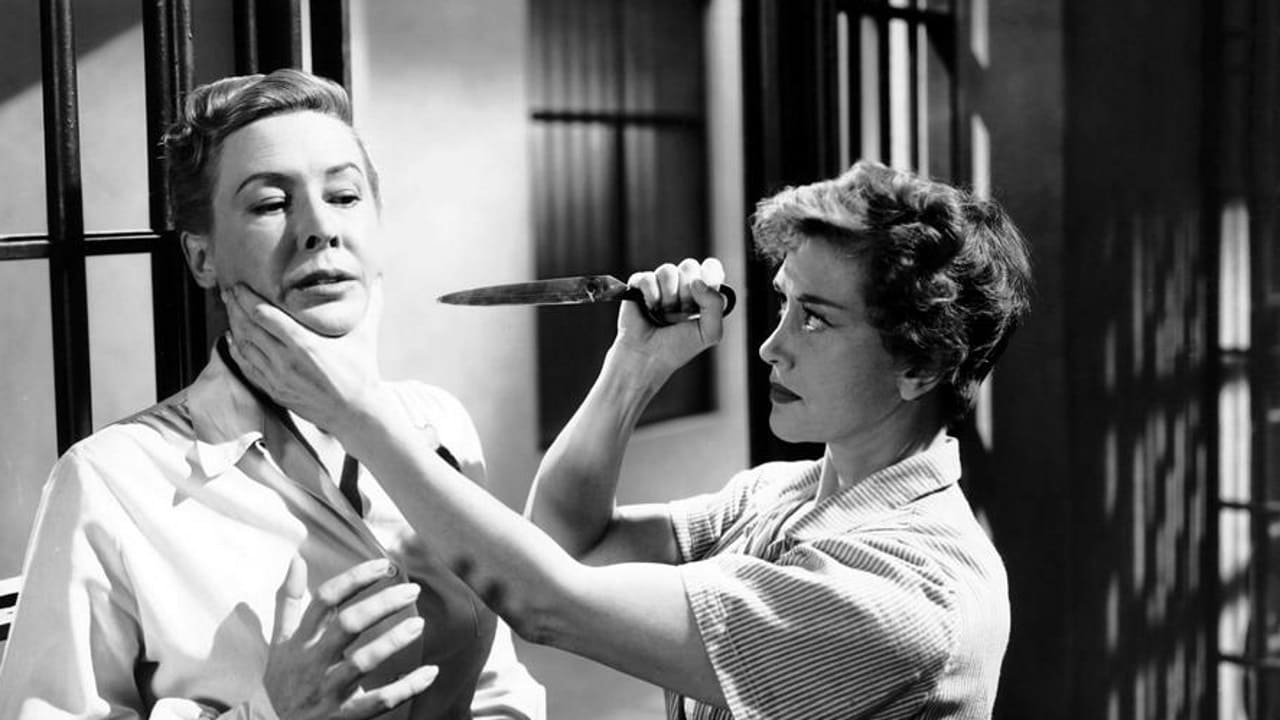
Women's Prison – scene
The Isolation Cell Van Zandt at the Door

Lester White frames van Zandt in a low-angle medium shot as she stands at the threshold of the isolation cell, the overhead institutional light cutting a hard line across her face and leaving her eyes in partial shadow. The cell itself is rendered in deep focus, its emptiness a deliberate compositional statement – the space designed to reduce, and the camera acknowledging that design. The door's iron geometry divides the frame into a crude grid, with van Zandt occupying the dominant vertical, her posture erect, her expression calibrated to project control.

The scene functions as the film's clearest argument about the nature of the authority van Zandt holds. She is not shown in rage but in composed satisfaction, which is the more damning register. The isolation cell is not a departure from the institution's rules; it is their logical extension. What the composition makes visible is that cruelty at this scale does not require passion – it requires only the door, the lock, and the person with the key.

Visual Language

The Cinematography

🎞️
Lester White – Director of Photography

Lester White shoots Women's Prison in the compressed, shadow-conscious style that Columbia's contract cinematographers had refined through the late forties, working almost entirely on studio sets that are lit to feel simultaneously functional and oppressive. The corridors are kept at a middle-gray register that denies both warmth and full expressionist darkness – an institutional palette that serves the film's argument that the worst violence here occurs in plain light, not in shadows. White uses tight focal lengths to crowd figures against the walls and cell bars, compressing space in a way that communicates confinement without resorting to obvious visual metaphor. Key lighting on Lupino is consistently harder than on the other cast members, a deliberate differentiation that codes her as the true source of threat in the facility. Where shadow work does appear – in the isolation sequences and in the quieter scenes between Dr. Crane and the inmates – it is used to mark moments of moral uncertainty rather than menace, reversing the genre's standard equation.

In the Catalogue

Themes & Motifs

Availability

Where to Watch

Also in the Directory

See Also