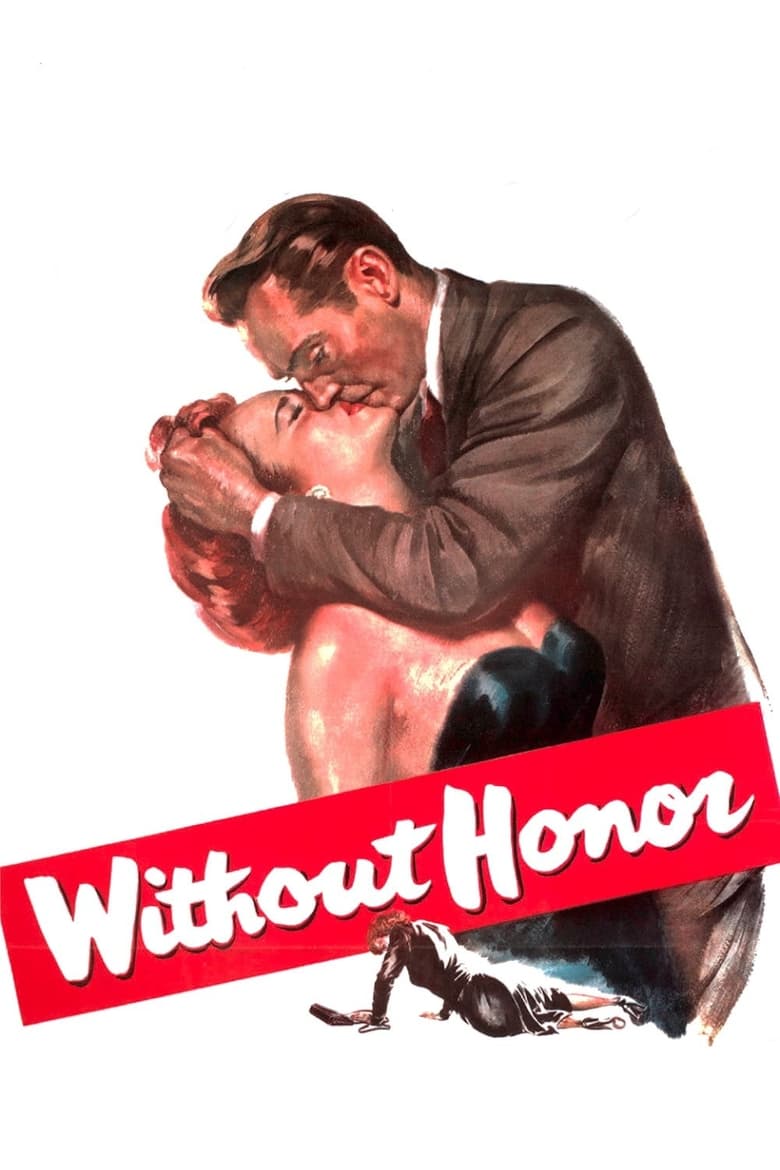
Jane Bandle lives in quiet desperation in a comfortable suburban home, bound to a husband she no longer loves and haunted by a concealed affair with Dennis Williams, the husband of her nearest neighbor. When Dennis arrives at her door one afternoon demanding a resolution to their entanglement, the encounter turns violent, and Jane shoots him. What follows is not an escape into freedom but a descent into the mechanics of consequence, as the body lies inside the house and the afternoon refuses to end.
Jane's husband Bill returns home, as does Dennis's wife Katherine – played with coiled precision by Agnes Moorehead – each arrival tightening the trap Jane has constructed around herself. Katherine suspects the truth and is not inclined toward mercy. Bill, a decent and obtuse man, remains caught between loyalty and dawning comprehension. The film's confined geography – nearly the entire action taking place within a single residence – forces every alliance and betrayal into close quarters, where pretense becomes exhausting and impossible to sustain.
Without Honor belongs to a strain of domestic noir that locates catastrophe not in the underworld but in the living room, where the crime of passion meets the slower crime of dishonesty. Irving Pichel keeps the film tightly wound within its single-day timeframe, and the claustrophobic setting amplifies the moral weight of choices that cannot be undone. It is a film less interested in investigation than in the slow collapse of a person already compromised before the first shot is fired.
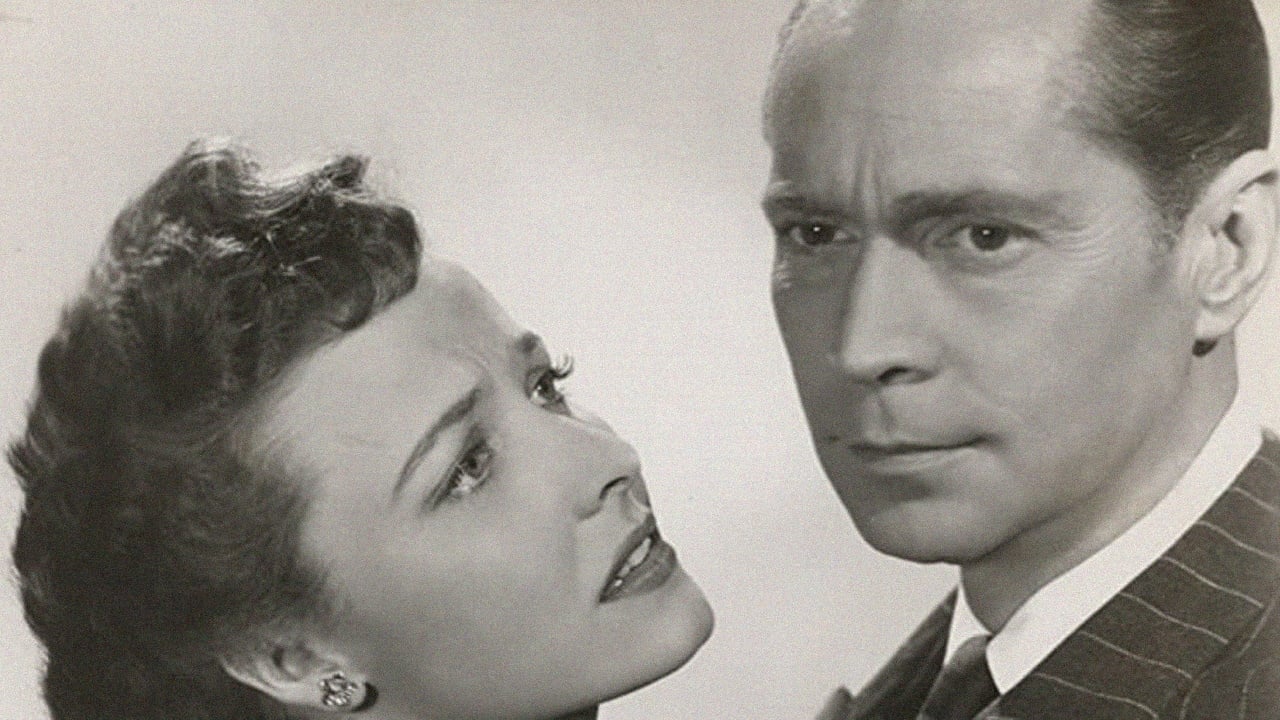
Without Honor is a minor but disciplined entry in the cycle of postwar domestic noirs that transferred the genre's fatalism from rain-slicked streets to furnished interiors. Produced independently by Strand Productions and running just under seventy minutes, the film makes a virtue of its limitations. The compressed setting and near-real-time structure anticipate the theatrical containment later associated with television drama, and there is something almost laboratory-like in the way Pichel isolates his characters and applies pressure. Laraine Day, not generally associated with noir, carries the weight of the film with restraint, and Agnes Moorehead – always a precise instrument – makes Katherine Williams something more than an aggrieved wife: a woman who understands the situation completely and chooses to use that understanding as a weapon. Max Steiner's score, typically lush elsewhere in his career, is applied with relative economy here. The film does not rewrite the genre, but it demonstrates that noir's essential argument – that desire corrupts judgment, and that concealment is itself a form of violence – requires no exotic setting to land with force.
– Classic Noir
Lionel Lindon positions the camera at a slight low angle as Katherine Williams enters the Bandle home uninvited, the light from the doorway falling across her face in a hard diagonal that leaves one eye in near-darkness. The interior behind Jane is kept deliberately murky, the space where the body lies rendered as a zone of shadow that the frame will not fully enter. Lindon holds the two women in a two-shot that refuses to give either figure the comfort of a close-up, keeping both within a composition that feels simultaneously domestic and adversarial.
The scene distills the film's central argument: that the real danger in this story is not legal exposure but the presence of another woman who cannot be deceived. Katherine's stillness is more threatening than any overt accusation, and the framing makes clear that Jane's guilt is not merely criminal but social – she has violated a compact of proximity and trust that Katherine intends to collect on. The scene locates the film's true subject, which is less murder than the particular cruelty of being known.
Lionel Lindon, who would later shoot The Manchurian Candidate and Around the World in Eighty Days, works here within the severe discipline imposed by a single location and a modest budget, and the result is one of the more precise visual arguments in B-tier noir. Lindon favors tight interior setups in which windows and doorways become the primary light sources, carving shadow across walls and faces rather than flooding the set. The house itself is shot with enough variation in angle and focal compression to prevent the space from feeling static – rooms that appear open in early scenes grow perceptibly smaller as the day progresses, a function of lens selection and staging that mirrors Jane's narrowing options. There is little overt shadow expressionism in the German tradition; Lindon's approach is closer to a controlled naturalism in which the moral logic of the narrative is enforced through the slow withdrawal of illumination rather than through theatrical contrast. The visual grammar is quiet but consistent.
Tubi has carried a number of independent and poverty-row noir titles from this period; check current availability as catalogue rotation applies.
Archive.orgFreeAs a Strand Productions independent release, the film may exist in the public domain; Archive.org is the most reliable source for unverified PD prints of late-1940s B noirs.
Amazon Prime VideoSubscription or RentalClassic noir titles from minor studios occasionally appear via Prime's add-on channels or as paid rentals; availability should be confirmed before seeking elsewhere.