Films People Pull a Fast One Night Beat Reading Room On TV Shop
Steel Trap 1952
1952 Thor Productions
★★★☆☆ Notable
Film Noir · 85 minutes · Black & White

Steel Trap

Directed by Andrew L. Stone
Year 1952
Runtime 85 min
Studio Thor Productions
TMDB 6.7 / 10
"A man with access to other people's money discovers that the distance between temptation and ruin is exactly one weekend."

Jim Osborne is a trusted assistant bank manager in Los Angeles, a careful man with a respectable life and a wife, Laurie, who believes in him without question. On a Friday afternoon, with the long weekend of a federal holiday stretching before him, Jim finds himself alone in the vault and makes a decision that will define everything that follows: he takes $100,000 in cash, buys two plane tickets to Brazil under false names, and brings Laurie along on what he tells her is a surprise vacation. She suspects nothing. The money sits in his luggage.

The film tracks the couple's frantic passage through airports, customs checkpoints, and transfer desks as Jim's plan collides with the mundane machinery of modern travel – overbooked flights, alert customs inspectors, missed connections. Laurie remains in the dark, her growing unease contrasting with Jim's increasingly brittle composure. The net that Jim fears is not dramatic or violent; it is bureaucratic, procedural, and utterly indifferent to his anxiety. Every clerk, every checkpoint, every delay tightens the trap that the title names.

Stone constructs the film almost entirely in real locations – airports, ticket counters, public lobbies – giving the pursuit a documentary texture rare in noir of the period. The story belongs to a particular postwar strain of the genre concerned not with gangsters or femmes fatales but with ordinary men undone by a single lapse in judgment, and it uses that ordinariness to argue that guilt is its own most efficient pursuer.
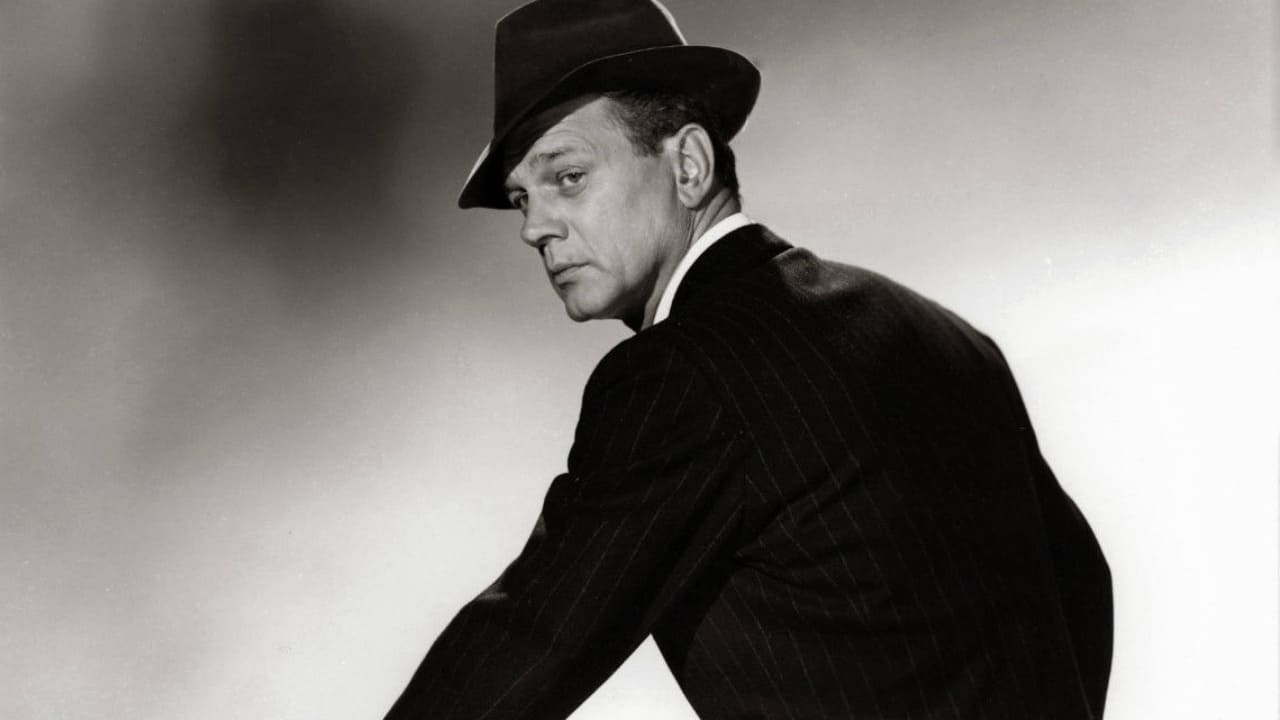
Classic Noir

Steel Trap occupies a specific and undervalued position in early 1950s American noir: the procedural thriller built not around violence but around bureaucratic exposure. Andrew L. Stone, working outside the major studio system through his own Thor Productions, had a documentary instinct that served this material precisely. By shooting almost entirely on location in Los Angeles International Airport and on actual commercial aircraft, he strips away the expressionist scaffolding that most noir relied upon and replaces it with fluorescent light and public space – environments that offer no shadows to hide in. Joseph Cotten, who could project intelligent guilt more efficiently than almost any actor of his generation, carries the film's moral weight without melodrama. Teresa Wright's performance as the unknowing wife adds a quiet ethical dimension: her trust becomes the film's real indictment of Jim's crime. The film's argument is modest but coherent – that embezzlement is less a crime of cunning than of self-deception – and Stone makes that argument with more economy than most of his contemporaries managed.

– Classic Noir
3 ★★★☆☆ Notable
Credits

The Crew

DirectorAndrew L. Stone
ScreenplayAndrew L. Stone
CinematographyErnest Laszlo
MusicDimitri Tiomkin
EditingOtto Ludwig
ProducerBert E. Friedlob
Performances

The Cast

Close Reading

The Signature Scene

Steel Trap – scene
The Customs Queue Money Passing Through the Gate

Stone and cinematographer Ernest Laszlo hold the camera at a slight distance as Jim moves through the customs inspection line, keeping him within a crowd rather than isolating him in close-up. The lighting is institutional – flat, overhead, unforgiving – and Laszlo refuses the conventional expressionist trick of dramatizing the protagonist's fear through shadow. The frame is crowded with ordinary travelers, suitcases, and uniformed officials moving with bureaucratic routine. Jim's face is one face among many, and that visual democracy is the scene's entire point.

What the scene reveals is that Jim's danger comes not from a clever antagonist but from the indifference of a system that processes him exactly as it processes everyone else. His guilt has no special status here. The customs inspector is not suspicious; he is simply thorough. Stone and Laszlo's refusal to elevate Jim's anxiety into visual spectacle is a formal choice that reinforces the film's moral logic: a man who has made himself ordinary in his crime cannot expect the drama of extraordinary detection.

Visual Language

The Cinematography

🎞️
Ernest Laszlo – Director of Photography

Ernest Laszlo's work on Steel Trap demonstrates what noir cinematography looks like when stripped of its most recognizable devices. Shooting extensively on location rather than on controlled studio sets, Laszlo had to construct tension from available architecture rather than purpose-built shadow. He uses the hard, directionless light of airport terminals and aircraft interiors as a form of moral exposure – spaces where the darkness that noir traditionally offers its guilty protagonists simply does not exist. His framing tends toward middle distance in the public sequences, refusing to grant Jim the subjective intimacy of tight close-ups except at moments of peak internal crisis. Where shadow does appear, it falls on walls and floors in geometric shapes generated by real architectural features rather than by lighting rigs. This restraint is disciplined and purposeful. Laszlo, whose later work would include more overtly stylized noir, here demonstrates that the genre's visual language could be adapted to a realist register without losing its capacity to express psychological pressure.

In the Catalogue

Themes & Motifs

Availability

Where to Watch

Also in the Directory

See Also