Films People Pull a Fast One Night Beat Reading Room On TV Shop
Whispering City 1947
1947 Québec Productions
★★★☆☆ Notable
Film Noir · 98 minutes · Black & White

Whispering City

Directed by Fyodor Otsep
Year 1947
Runtime 98 min
Studio Québec Productions
TMDB 4.8 / 10
"In a city of whispers, the truth carries the heaviest sentence."

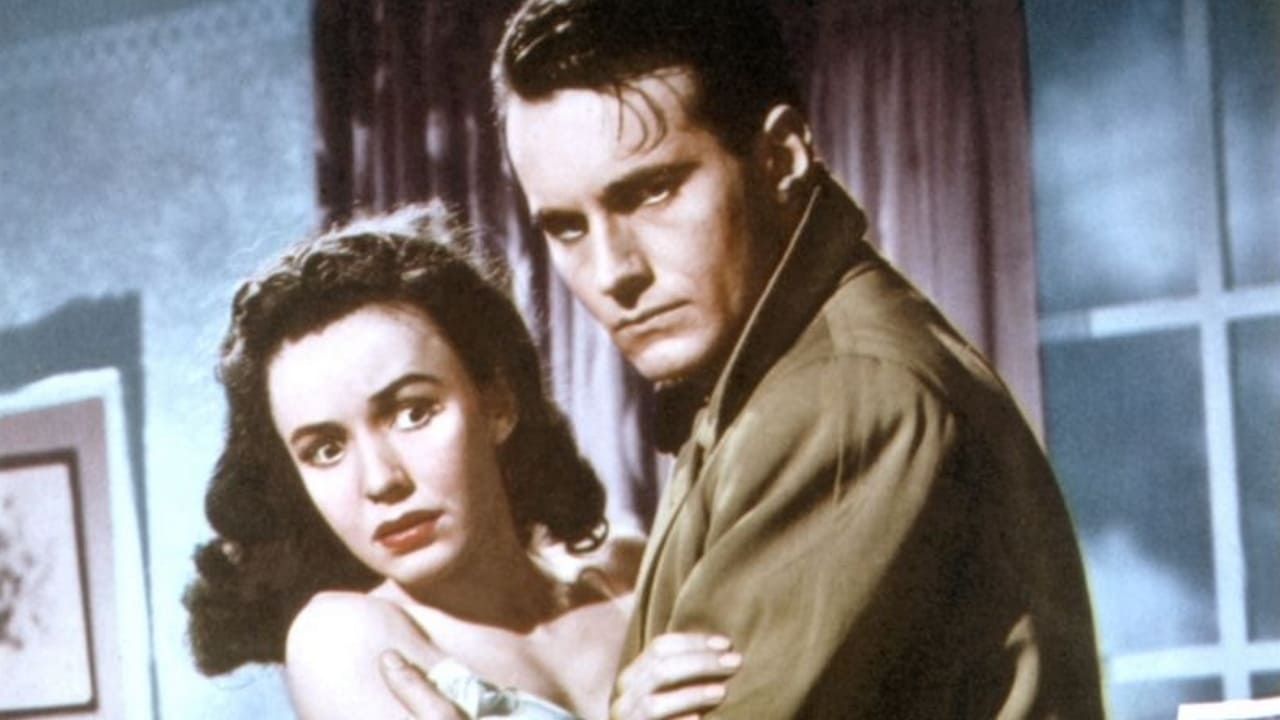
In postwar Quebec City, ambitious young journalist Mary Roberts stumbles onto a story she cannot safely pursue. While investigating the apparent suicide of a woman connected to powerful local figures, Mary uncovers evidence suggesting the death was murder. Her inquiry brings her into contact with Albert Frédéric, a distinguished and widely admired lawyer whose civic reputation masks a history of calculated violence, and Michel Lacoste, a composer whose troubled past and fragile marriage give him reason to keep secrets of his own.

As Mary pushes deeper, Frédéric recognizes the threat she poses and begins to maneuver her closer to him, deploying charm and influence in equal measure. Lacoste, meanwhile, finds himself entangled in Frédéric's schemes, his personal desperation making him a willing if unstable instrument. The film works the tension between these two men's competing claims on Mary's fate, complicating the question of who is predator and who is merely cornered, and whether the journalist's instinct for exposure will protect or destroy her.

Whispering City uses the layered geography of Quebec's Old City – its stone corridors, frozen riverbanks, and concert halls – as both backdrop and moral architecture. The film belongs to a strand of noir concerned less with criminal underworlds than with institutional respectability as a form of organized concealment, placing it alongside works in which the most dangerous figures are the ones who have never needed to raise their voice.
Classic Noir

Whispering City occupies a singular position in the noir catalogue as one of the few Canadian productions of the classical period to engage seriously with the genre's formal conventions rather than simply importing them wholesale. Shot on location in Quebec City and produced by Québec Productions in both English and French versions, the film draws on the city's physical textures in ways that distinguish it from the studio-bound American product it otherwise resembles. Director Fyodor Otsep, a Russian émigré with European instincts, brings a measured quality to the material that keeps the film from tipping into melodrama. Paul Lukas delivers the film's most controlled performance as Frédéric, a man whose menace is entirely architectural – built from posture, timing, and the authority conferred by professional standing. What the film ultimately argues, without flourish, is that civic culture and criminal calculation are not opposites but neighbors, and that a city's most dangerous secrets are the ones it has learned to carry quietly.

– Classic Noir
3 ★★★☆☆ Notable
Credits

The Crew

DirectorFyodor Otsep
ScreenplayGeorge Zuckerman
CinematographyCharles Quick
MusicMorris C. Davis
EditingW.L. Bagier
Art DirectionWilliam Koessler
ProducerGeorge Marton
Performances

The Cast

Close Reading

The Signature Scene

Whispering City – scene
The Concert Hall Confrontation Applause Covering the Threat

The camera holds Frédéric in medium close-up as the concert audience applauds around him, the surrounding light warm and diffuse in the way of public ceremony. His face is composed, even benevolent, but the framing isolates him slightly from the crowd, a few degrees of separation that the lens makes legible. When he leans toward Mary, the camera does not cut; it stays wide enough to show the social context that makes his words unthreatening to any observer, and lethal to her alone.

The scene concentrates the film's central argument in a single spatial arrangement: that power operates most efficiently when it can conduct its business inside the rituals of respectability. Frédéric does not need a dark alley. The concert hall, with its protocols and its noise, gives him everything he requires. Mary's isolation within the frame – surrounded by people who see nothing wrong – is the film's most precise statement about the structural loneliness of the witness.

Visual Language

The Cinematography

🎞️
Charles Quick – Director of Photography

Cinematographer Charles Quick works the dual demands of location and studio with evident care, exploiting Quebec City's stone facades and winter light to establish a geographic specificity rarely achieved in Canadian production of this period. Quick favors mid-range focal lengths that keep architecture in active dialogue with the actors, neither compressing the frame into claustrophobia nor allowing backgrounds to recede into irrelevance. His interior lighting leans on practical sources – sconces, desk lamps, the ambient glow of public rooms – which lends Frédéric's domestic and professional spaces a legitimacy that underscores the film's moral argument: comfort and safety look identical until they do not. Shadow work in the film's more overtly threatening sequences is disciplined rather than expressionist, deployed to signal danger without overstating it. The overall effect is a visual register that sits closer to the restrained European crime film than to American noir at its most stylized, which suits Otsep's directorial temperament and grounds the story's anxieties in recognizable social texture.

In the Catalogue

Themes & Motifs

Availability

Where to Watch

Also in the Directory

See Also