Films People Pull a Fast One Night Beat Reading Room On TV Shop
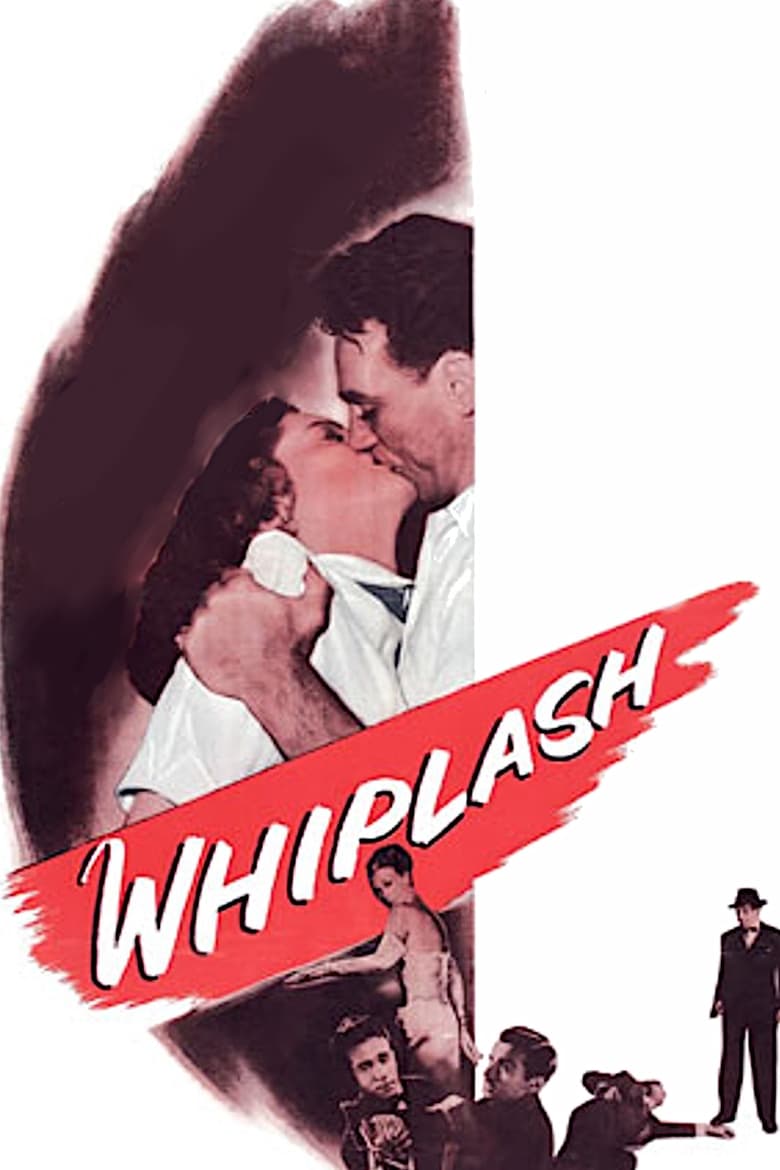
Whiplash 1948
1948 Warner Bros. Pictures
★★★☆☆ Notable
Film Noir · 91 minutes · Black & White

Whiplash

Directed by Lewis Seiler
Year 1948
Runtime 91 min
Studio Warner Bros. Pictures
TMDB 5.0 / 10
"A painter trades canvas for the ring, and finds both blood and love waiting in the same corner."

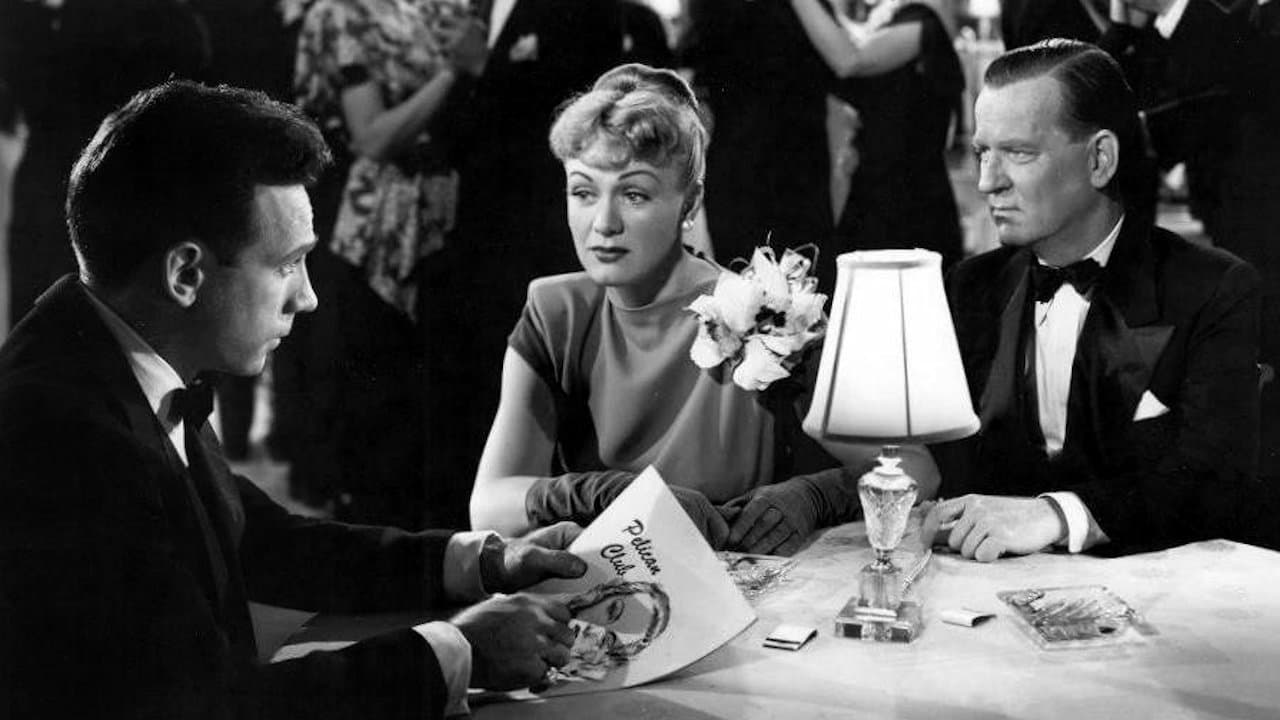
Michael Gordon, a drifting American painter of modest reputation, washes up in San Francisco and stumbles into a relationship with Laurie Durant, a woman of quiet desperation married to Rex Durant, a suave and controlling boxing promoter. Rex, recognizing Michael's raw physicality, maneuvers him into the prize ring under the name Mike Angelo, transforming the artist into a commodity. S.Z. Sakall's Sam and Eve Arden's sardonic Chris Sherwood orbit this arrangement, each watching the central triangle with a mixture of affection and foreknowledge.

As Michael rises in the boxing world, his feelings for Laurie deepen into something neither can safely act upon. Rex, fully aware of the attraction, uses it as leverage, binding Michael to contracts and obligations that function less like business arrangements than traps. Dr. Arnold Vincent provides a medical counterweight, offering Michael a view of what the ring will eventually cost him physically, while Costello introduces the criminal pressures that Rex has always kept just offscreen. Allegiances shift as Michael begins to understand that Rex's control over Laurie is not simply marital but something closer to ownership.

Whiplash works within the well-worn Warner Bros. tradition of social melodrama inflected with noir anxieties, positioning its love triangle against the brutality of professional boxing to examine how men and women are commodified by systems they enter voluntarily but cannot easily leave. The film draws on the postwar unease common to late-1940s Hollywood, where ambition and desire are reliably punished and the institutions that promise opportunity – the ring, the marriage contract, the promoter's handshake – prove to be instruments of confinement.
Classic Noir

Whiplash occupies a modest but legitimate place in the Warner Bros. noir cycle of the late 1940s, a period when the studio was producing genre pictures with enough craft and moral seriousness to elevate routine material. Lewis Seiler directs without flourish, which suits the film's blunt argument about exploitation. Dane Clark, perpetually underestimated in the postwar era, brings a convincing working-class tension to Michael Gordon that the script itself doesn't always earn. Alexis Smith is more constrained by the role's requirements, though she finds moments of genuine ambiguity. Zachary Scott, reliably cast as the man whose charm is the thinnest cover for malice, is the film's most polished element. Franz Waxman's score understands when to stay out of the frame. What Whiplash reveals about its era is the persistence of the trapped-male anxiety that runs through so much postwar American noir: the returned or displaced man who finds that civilian life offers its own forms of coercion, dressed in the language of opportunity.

– Classic Noir
3 ★★★☆☆ Notable
Credits

The Crew

DirectorLewis Seiler
ScreenplayHarriet Frank Jr.
CinematographyJ. Peverell Marley
MusicFranz Waxman
EditingFrank Magee
Art DirectionCharles H. Clarke
ProducerWilliam Jacobs
Performances

The Cast

Close Reading

The Signature Scene

Whiplash – scene
The Gymnasium, Late Evening Light Falls on the Ring

J. Peverell Marley positions the camera low and slightly off-axis as Michael trains alone in the near-empty gymnasium. A single overhead work light carves the ring out of surrounding darkness, leaving the ropes as hard geometric lines against black. The rest of the space dissolves. When Rex enters from the shadows at frame's edge, Marley holds the composition so that Michael remains lit and Rex does not – one man exposed, the other withholding himself from the light as a matter of habit.

The scene functions as a quiet statement of the film's power dynamic. Michael, however physically capable, is always in the open, readable and therefore vulnerable. Rex operates from positions of informational advantage, and the cinematography encodes this before a word is spoken. The gymnasium, meant to be a space of physical preparation and self-determination, becomes here a place of surveillance and arrangement – the ring less an arena for proving oneself than a pen whose door Rex controls.

Visual Language

The Cinematography

🎞️
J. Peverell Marley – Director of Photography

J. Peverell Marley's work on Whiplash reflects Warner Bros. house style of the period – efficient, shadow-conscious, unwilling to waste a setup – while finding room within those constraints for images that carry genuine moral weight. Marley favors high-contrast interiors built around single strong sources: the overhead gymnasium light, the angled lamp in Rex's office, the streetlight that falls across Laurie's face during their most guarded conversations. He uses the studio backlot and interior sets to maintain a controlled spatial geography where openness is associated with exposure and shadow with concealment or threat. Lens choices are conservative – the standard focal lengths of classical Hollywood – but Marley's placement is precise enough that depth within the frame consistently reinforces the hierarchy between characters. The boxing sequences are cut rather than composed, prioritizing rhythm over visual argument, but the quieter scenes demonstrate a cinematographer who understood that noir's moral logic is essentially a lighting logic: who is seen, who is hidden, and what the camera chooses to reveal.

In the Catalogue

Themes & Motifs

Availability

Where to Watch

Also in the Directory

See Also