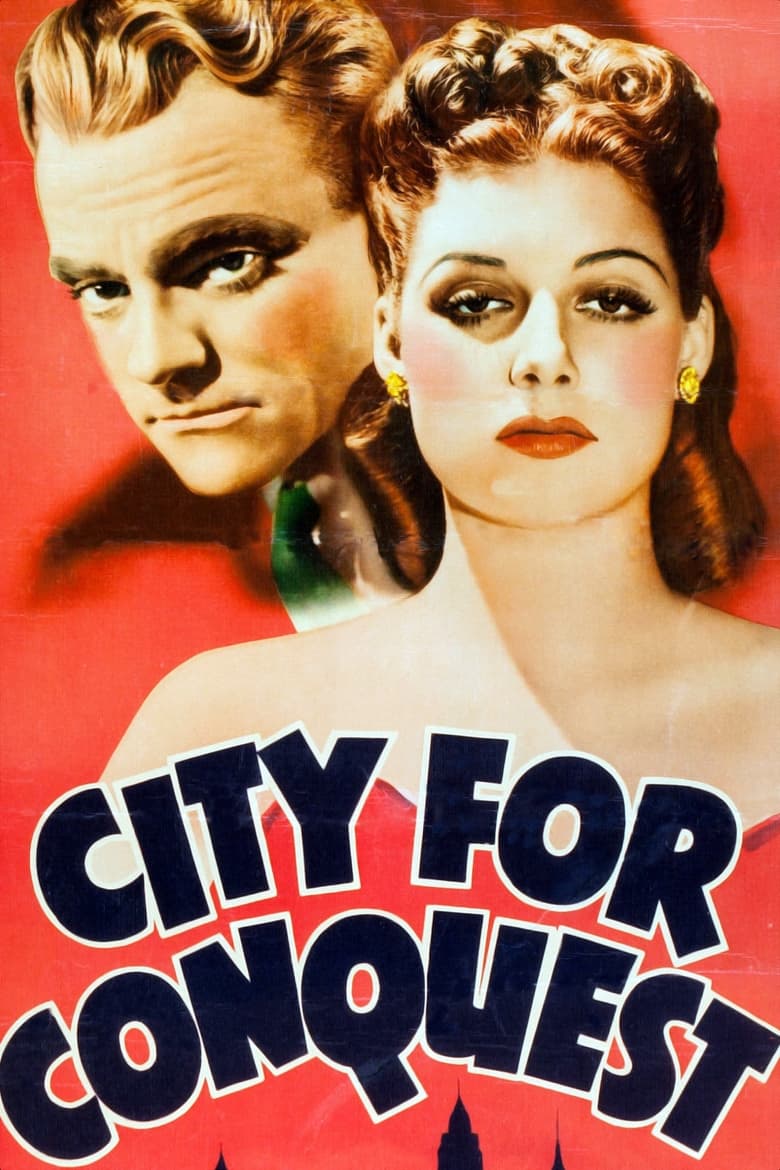
In the tenements of New York's Lower East Side, Danny Kenny is a good-natured street fighter who earns his living in the boxing rings of small-time promoters. His brother Eddie is a composer with ambitions that reach far beyond the neighborhood, and Danny quietly subsidizes those ambitions while pursuing his own – a life with Peggy Nash, a dancer with talent enough to escape the same streets. Their world is circumscribed by poverty and loyalty, two forces that rarely pull in the same direction.
Peggy's ambitions lead her toward 'Dutch' Enright, a slick dance promoter who can offer her the national stage Danny cannot. Danny, pushed by his manager Scotty MacPherson, rises toward a championship bout, but the syndicate figures who control boxing in the city have their own calculations. When a blinding chemical attack during a street ambush ends Danny's career before it reaches its peak, the film's cheerful surface falls away entirely, and what remains is a portrait of sacrifice without return.
City for Conquest occupies an uneasy position between the social realism of the Warner Bros. cycle and the fatalism that would solidify into classical noir. It does not resolve neatly into either mode. The city of its title is not a place of opportunity but of attrition – a machine that extracts the most from those who can least afford to give it. Litvak frames Danny's trajectory not as tragedy in the operatic sense but as a quiet, steady diminishment, which is the film's most honest gesture.
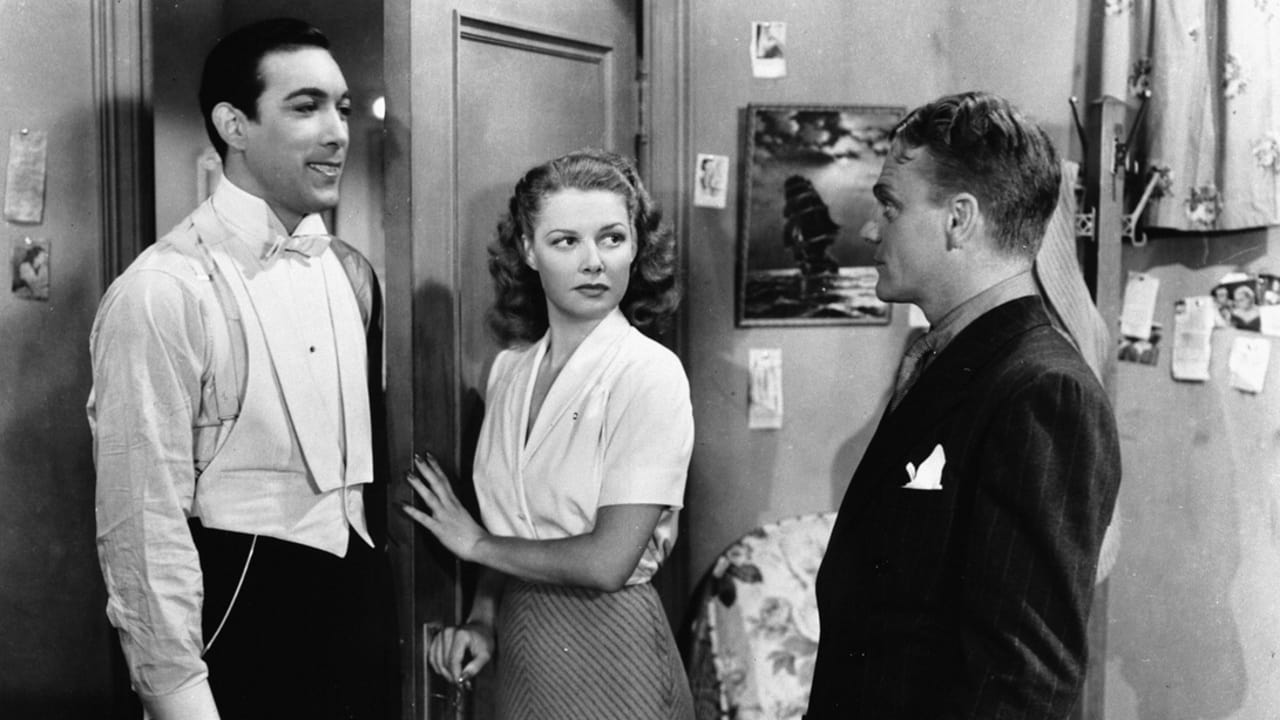
City for Conquest arrives at a transitional moment in American cinema, when the social-problem film of the early Depression era was ceding ground to the darker psychological territory that would define noir proper. Litvak, working from Aben Kandel's adaptation of his own novel, produces a film that refuses the compensatory uplift the genre once demanded while stopping short of the moral nihilism that would come later in the decade. What the film accomplishes is a rigorous examination of class mobility as illusion. Danny Kenny's physical courage is genuine, his loyalty without calculation, and neither quality protects him from the indifference of institutions – the boxing syndicate, the entertainment industry, the city itself. James Cagney holds the center with characteristic economy, never soliciting sympathy, which makes the film's bleak accounting more persuasive than sentiment would allow. The narrative's parallel structure – Danny descending, Eddie ascending – functions as an argument about who pays for whose dreams, and the film declines to sentimentalize the transaction.
– Classic Noir
Litvak and cinematographer Sol Polito place Danny in a narrow corridor of shadow, the street lamps behind him reducing his figure to silhouette before his attackers emerge from the deeper dark ahead. The frame is tight, the geography deliberately compressed so that escape reads as impossible before it is made so. When the acid is thrown, Polito cuts to a close shot of Danny's face in sudden, harsh light – a brief, cruel illumination that functions as ironic counterpoint to what is about to be taken from him permanently.
The scene's structural logic is the film's in miniature: the world briefly clarifies only at the moment it closes. Danny has been moving toward this corner since the opening frames, and Litvak's blocking makes that determinism felt without underlining it. What the scene finally reveals is that Danny's visibility – his public courage, his openness – is precisely the quality the city punishes. The private, calculating men who arrange his ruin remain in the dark throughout.
Sol Polito's work on City for Conquest draws on his long collaboration with the Warner Bros. house style while pushing its expressionist tendencies further than the studio's social dramas typically allowed. Polito favors deep shadows in the tenement and arena sequences, using practical light sources – bare bulbs, street lamps, the harsh overhead rigs of the boxing venue – to anchor the film's visual logic in a recognizable urban reality while keeping the moral atmosphere oppressive. The lens choices in the fight sequences emphasize physical compression, the ropes and canvas filling the foreground to create a sense of inescapable enclosure. Studio interiors are dressed to suggest location, but Polito's lighting refuses the warmth that location softness might provide. Shadow work throughout is consistent with the film's argument: those who operate in daylight are exposed and vulnerable; those who do harm occupy the frame's edges. It is not decorative chiaroscuro but structural – darkness as a diagram of power.
TCM holds a deep Warner Bros. library and is the most reliable source for scheduled broadcasts of this title in a properly restored print.
MaxSubscriptionAs the streaming home of the Warner Bros. catalogue, Max periodically makes this title available on demand, though availability varies by region.
Archive.orgFreeA public-domain version circulates on Archive.org; print quality is inconsistent and this option is best treated as a fallback rather than a first choice.