Matt Corbin, a magazine journalist on a fishing vacation, arrives in the isolated Minnesota resort town of Winnoga to find it hollowed out and hostile. The lake that once drew sportsmen is inexplicably barren of fish, the locals are evasive to the point of menace, and a man who tries to warn him turns up dead before he can speak. Corbin is drawn toward Janet Keller, whose brother Edward runs the medical clinic that has become the town's dominant institution, and whose own unease suggests she knows more than she has been permitted to say.
The clinic, it emerges, is no ordinary rural practice. A cell of former Nazi scientists, shielded by the early Cold War's murky arrangements and bankrolled by Soviet interests, is using the remote facility to develop biological weapons. Dr. Keller is complicit, whether by conviction or coercion the film is careful not to clarify too quickly. Steve Loomis, a blunt enforcer played with cold efficiency by Raymond Burr, keeps the town sealed against outside scrutiny. Corbin, now a prisoner in everything but name, must find a way to alert federal authorities before the operation advances beyond the point of containment.
Whip Hand belongs to a specific postwar strand of American noir in which the enemy is not a femme fatale or a corrupt organization but an ideological threat embedded in the domestic landscape. The thriller mechanics are conventional, but the film's anxiety is genuine: the fear that ordinary American spaces – a small town, a fishing lake, a clinic staffed by healers – can be quietly colonized by forces hostile to the society they inhabit. That dread, rather than any individual crime, is the film's true subject.
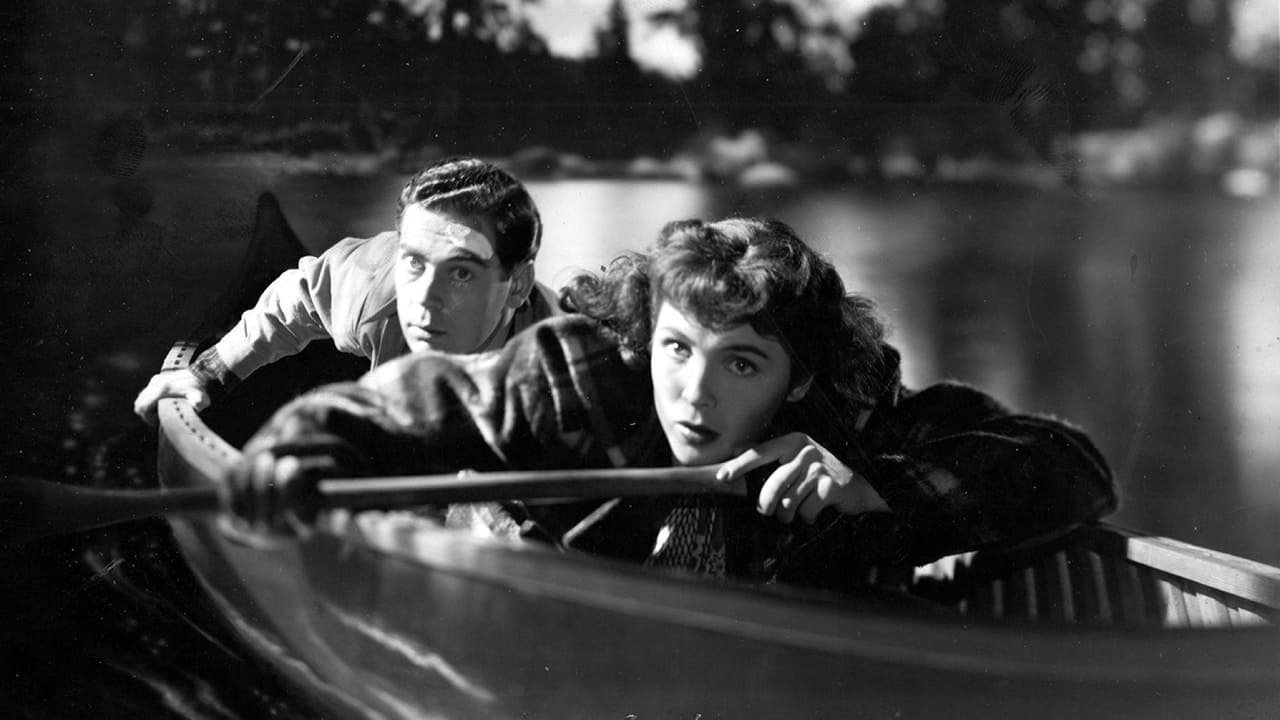
Whip Hand occupies an uncomfortable but historically instructive position in the noir canon. Directed by William Cameron Menzies, whose visual sensibility was shaped by production design as much as by direction, the film deploys the grammar of noir – oppressive interiors, isolated settings, a protagonist systematically stripped of agency – in service of an explicitly anti-communist argument. RKO's involvement was no accident: the studio's ownership and politics at the time shaped the film's ideological content, and an earlier cut apparently centered on Hitler surviving the war before the studio substituted the Soviet threat. What survives is a work genuinely divided between propagandist intent and noir instinct. Nicholas Musuraca's cinematography enforces the moral logic with characteristic discipline, and Raymond Burr's Loomis is a credible instrument of institutional violence. The film does not transcend its political moment, but it documents that moment with unusual clarity, and its portrait of a community silenced by fear resonates beyond its Cold War occasion.
– Classic Noir
Musuraca shoots the corridor as a receding tunnel of diminishing light, the ceiling low and the walls close, with a single overhead source casting a hard pool that Corbin moves through before the surrounding darkness absorbs him. The camera holds at a slight remove, refusing to follow too closely, so that the protagonist appears to shrink as he advances. Doors on either side remain closed, their surfaces flat and unreadable, and the sound design reduces to footsteps and a low ambient hum whose origin the film declines to identify.
The composition externalizes the film's central condition: the more Corbin understands, the less room he has to maneuver. In most noir, knowledge confers at least the possibility of power; here, each discovery tightens the perimeter. The corridor scene makes the architecture of confinement visible, and in doing so shifts the film's register from thriller to something closer to institutional dread – the fear not of a single criminal but of a system that has learned to use the forms of ordinary life as cover.
Nicholas Musuraca, whose work on Out of the Past and Stranger on the Third Floor established him as one of RKO's most precise visual intelligences, brings to Whip Hand a restrained but consistent approach. Working largely on studio-built sets designed to suggest both the openness of a resort town and the claustrophobia of its hidden purposes, Musuraca uses deep shadow not as atmosphere for its own sake but as a correlate of institutional secrecy. Light sources are motivated but often partial: a desk lamp that illuminates documents while leaving faces in ambiguity, exterior windows that admit cold flat daylight into the clinic's sterile rooms. He avoids the extreme low-angle distortions common to lower-budget noir, preferring instead a level, neutral frame that makes the wrongness of what it shows feel more insidious. The effect is less expressionist than procedural – a visual argument that the threat the film describes is not exotic or theatrical but embedded in the unremarkable textures of American life.
Tubi has carried several RKO noir titles in watchable transfers and is the most likely free streaming home for this film, though availability should be confirmed at time of viewing.
Archive.orgFreeAs a film whose copyright status has been subject to question, Archive.org may offer a version for streaming or download, though print quality varies.
Amazon Prime VideoRentalA paid rental option is likely available through Amazon's classic film distributors, offering a more stable and consistently available version than free platforms.