Films People Pull a Fast One Night Beat Reading Room On TV Shop
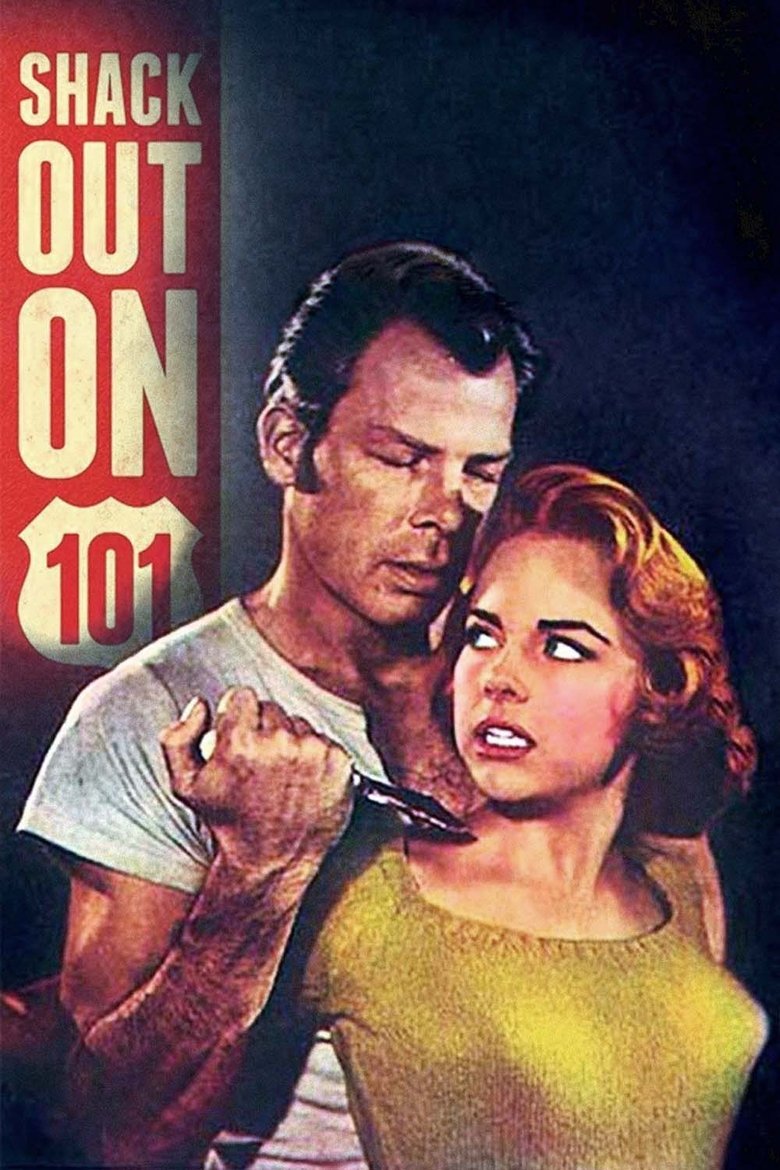
Shack out on 101 1955
1955 Allied Artists Pictures
★★★☆☆ Notable
Film Noir · 80 minutes · Black & White

Shack out on 101

Directed by Edward Dein
Year 1955
Runtime 80 min
Studio Allied Artists Pictures
TMDB 6.0 / 10
"Behind the lunch counter on Highway 101, someone is selling secrets."

A roadside diner on the California coast serves as the unlikely hub of Shack Out on 101 (1955). Kotty, the waitress who holds the place together, works alongside George, the lumbering, self-important short-order cook, and serves a rotating cast of regulars that includes the mild-mannered Professor Sam Bastion, a nuclear physicist from a nearby research facility. The diner's owner, Eddie, runs a modest operation that seems, on its surface, entirely without consequence.

The arrival and behavior of a figure known as Slob – later revealed to operate under the alias Mr. Gregory – introduces a current of menace beneath the diner's greasy-spoon routines. Slob is crude, physically imposing, and contemptuous of those around him, yet he maintains a connection to the research community that proves deliberate rather than incidental. As Kotty navigates the attentions of several men and Bastion's loyalties come under quiet scrutiny, the film reveals that espionage has settled into the most ordinary of American spaces.

Shack Out on 101 belongs to the cycle of Cold War infiltration films that used domestic and working-class settings to dramatize anxieties about subversion from within. Its tone oscillates between low comedy and genuine unease, a tension that is never fully resolved but that gives the film its particular texture. The question of who can be trusted – and what ordinary life conceals – runs beneath every exchange at the counter.
Classic Noir

Shack Out on 101 occupies a specific and underexamined niche in the postwar American crime film: the espionage picture stripped of glamour and relocated to the mundane. Edward Dein works almost entirely within a single cramped set, and the confinement serves the film's argument – that Cold War treachery does not require foreign capitals or shadowy organizations, only an unremarkable stretch of highway and a man willing to pass information for money. Lee Marvin's Slob is the film's engine, a performance of deliberate physical unpleasantness that anticipates his harder work later in the decade. Frank Lovejoy provides a counterweight of restrained uncertainty. What the film achieves is an atmosphere of domestic contamination: the diner is a space of American normalcy, and the revelation that it harbors a spy reads less as thriller convention than as period-specific dread. Allied Artists produced it quickly and cheaply, but the budget constraints reinforce rather than undermine the claustrophobic premise. The film is not without awkward tonal lurches, but its central conceit – surveillance and betrayal staged in a lunch counter – remains pointed.

– Classic Noir
3 ★★★☆☆ Notable
Credits

The Crew

DirectorEdward Dein
ScreenplayEdward Dein
CinematographyFloyd Crosby
MusicPaul Dunlap
EditingGeorge White
Art DirectionLucius O. Croxton
ProducerMort Millman
Performances

The Cast

Close Reading

The Signature Scene

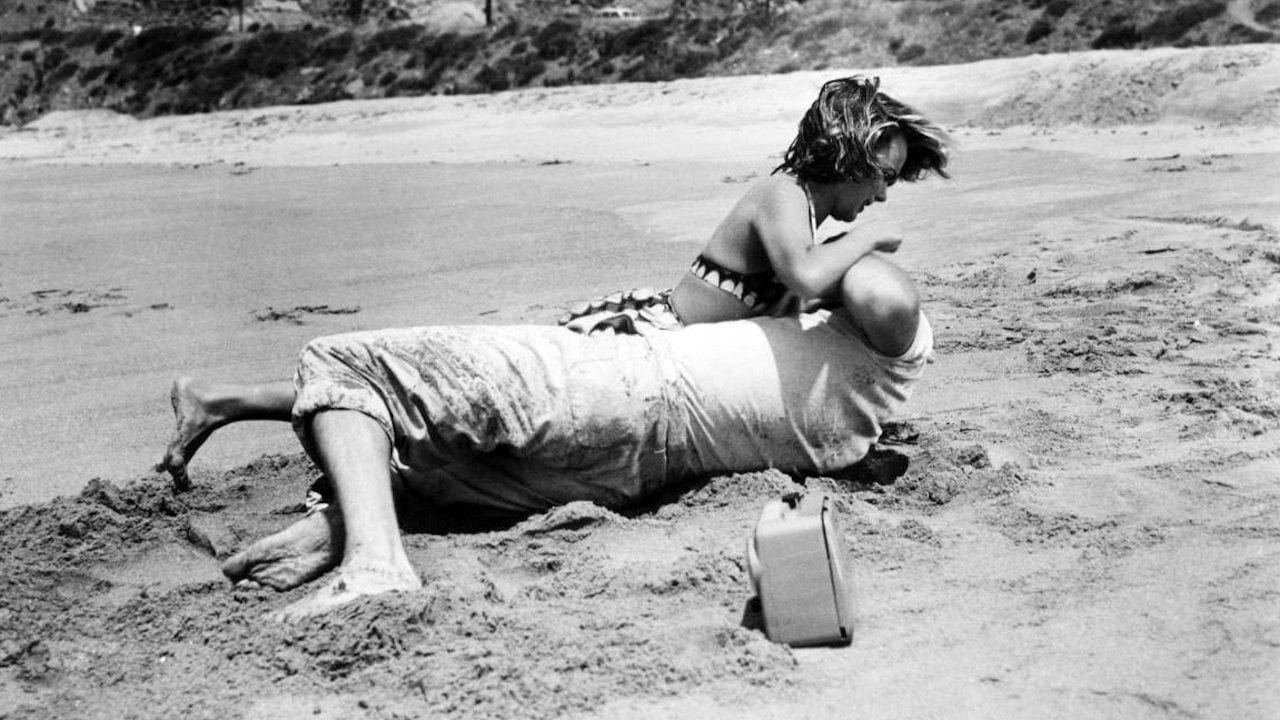
Shack out on 101 – scene
The Diner at Night Slob Alone at the Counter

Floyd Crosby lights the diner's interior in a flat, institutional white that offers no shadows to hide in, yet Marvin manages to occupy the frame as though the light itself defers to him. The camera holds at a medium distance, keeping the counter's length in view, the kitchen pass-through behind him suggesting the back corridors of a world the other characters cannot access. Crosby's choice to avoid the high-contrast chiaroscuro typical of the genre makes the scene stranger rather than safer – there is no expressionist darkness to locate the threat, only the ordinary fluorescence of a place where people eat.

The scene functions as a kind of thesis statement for the film. Slob is not hidden; he is in plain sight, eating, occupying space, performing the rituals of the regular customer. The absence of concealment is precisely the point. The film argues that postwar American anxiety about infiltration is not about the figure lurking outside the frame but about the one already seated at the counter, visible and disregarded.

Visual Language

The Cinematography

🎞️
Floyd Crosby – Director of Photography

Floyd Crosby, whose credits ranged from Murnau's Tabu to Corman's low-budget cycle of the late 1950s, brings to Shack Out on 101 a visual strategy defined by deliberate flatness. Working on Allied Artists' restricted budget, Crosby photographs the diner interior with a hard, overhead light that denies the film the expressionist grammar of more prestigious noir productions. The effect is not poverty but precision: the setting's institutional brightness makes subversion harder to aestheticize and therefore more unsettling. Crosby uses the shallow depth of the diner's counter and the cramped geometry of the kitchen to keep characters physically proximate and psychologically uncomfortable. The rare exteriors – the highway, the coastal edge – are shot with a documentary plainness that refuses to romanticize the location. Where other cinematographers of the period used shadow to signal moral corruption, Crosby uses exposure: everything is seen, nothing is clarified. The visual language mirrors the film's central proposition, that the most dangerous things are not obscured but simply unremarked upon.

In the Catalogue

Themes & Motifs

Availability

Where to Watch

Also in the Directory

See Also