
At a traveling carnival somewhere on the American margins, a Mistress of Ceremonies presides over an evening's entertainment with the practiced authority of someone who has seen every act before. Folk singer Jared Reed performs his set before a crowd whose attention is divided between the stage and whatever trouble they carry in their pockets. The carnival's festive surface conceals a social world governed by transaction, performance, and concealment.
As the night advances, allegiances within the carnival's inner circle begin to fracture. Reed's folk material carries an undercurrent of grievance that the crowd absorbs differently depending on what each member stands to lose. Betty Boop – rendered here as a figure of nostalgic spectacle – functions less as comic relief than as a reminder of innocence long since commodified. The Mistress of Ceremonies navigates competing loyalties with the cool efficiency of someone accustomed to managing surfaces.
Big Carnival situates itself at the edge of the noir tradition, where the genre's characteristic paranoia bleeds into the world of popular entertainment and mass spectacle. The carnival midway becomes a theater of social anxiety, and the film's refusal to deliver conventional resolution places it closer to the ambivalent mood pieces of the period than to its more mechanical crime pictures.
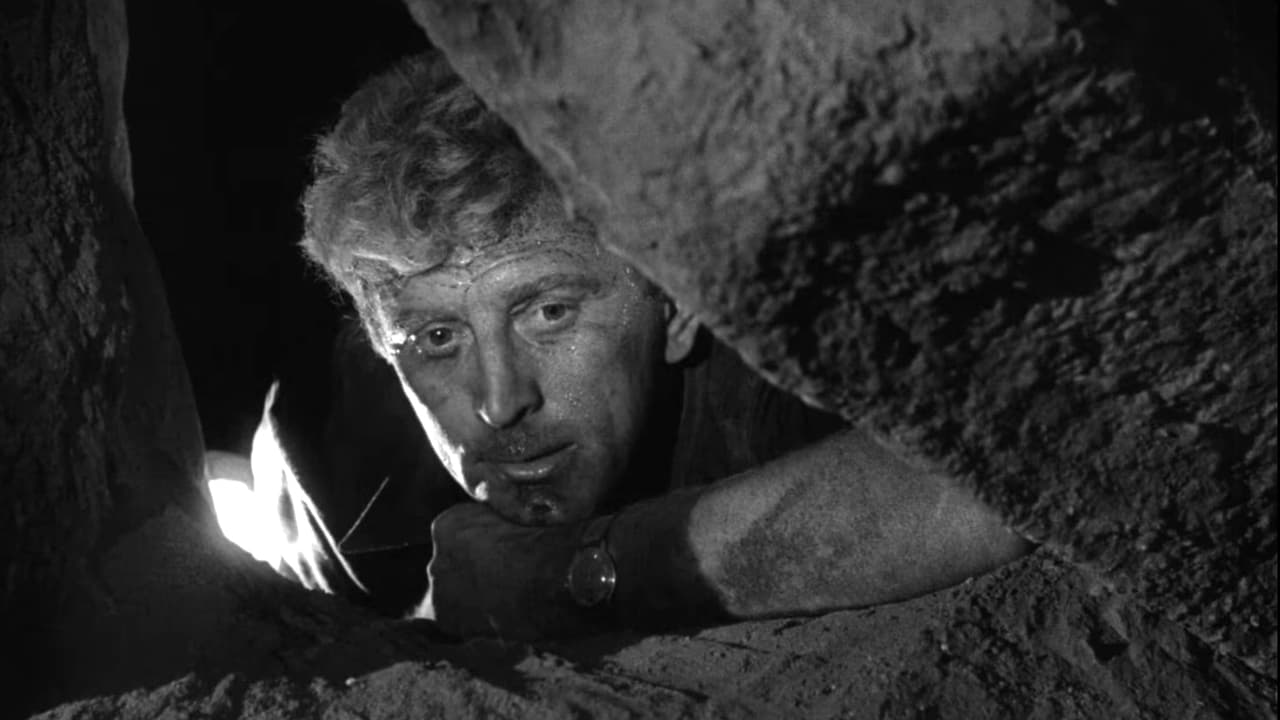
Big Carnival occupies an eccentric corner of the genre – produced under the APA banner with a cast drawn from variety performance and animated nostalgia, directed by Hans Fischerkoesen, whose background in European animation and commercial film gives the project an odd tonal register. The film is less a crime picture than a meditation on spectacle as deception, using the carnival setting to examine the rituals by which audiences consent to be misled. Mae Questel's presence as Betty Boop operates as something more than novelty: the character carries the weight of Depression-era popular culture into a postwar frame, suggesting that the innocence she once represented has become a commodity with diminishing returns. Fischerkoesen brings a European formalism to what might otherwise read as a showcase film, and the result is a work that resists easy classification. Its value lies precisely in that resistance – it illuminates the period's anxieties about entertainment, authenticity, and the price of public performance without resolving them.
– Classic Noir
The camera holds on Reed at center stage, lit by a single overhead source that carves deep shadow beneath his jaw and cheekbones. The crowd recedes into an undifferentiated darkness at the frame's edge, so that the performer appears isolated within his own pool of light – a formal choice that transforms the stage into something closer to a confessional. The composition is static; there is no intercutting, no reverse shot to the audience. The frame simply waits.
The scene establishes the film's central argument: that performance in this world is an act of exposure rather than connection. Reed delivers his song into a void that may or may not be listening, and the camera's refusal to confirm an audience leaves the moral question open. Authenticity, the scene suggests, is indistinguishable from its simulation when the house lights are down.
The cinematographer of Big Carnival remains unconfirmed in surviving production records, which is itself a minor index of the film's marginal status within studio documentation of the period. What the image record reveals is a preference for hard single-source lighting that owes more to theatrical convention than to the location realism that characterized American noir in the early 1950s. Compositions tend toward the frontal and static, reflecting both the performance-based nature of the material and what appears to be a limited production footprint. Shadow work is employed selectively rather than systematically – darkness pools at the periphery of frames rather than cutting through them, which gives the visual language a quality of containment rather than menace. Adolf Steimel's score works in counterpoint to this visual restraint, adding emotional pressure where the image withholds it. The overall effect is of a film aware of noir grammar but choosing to apply it at some distance, which suits a narrative about performance and its discontents.
Archive.org is the most likely current home for this title given its independent production history and limited commercial circulation; availability should be verified before viewing.
TubiFreeTubi's catalog of mid-century independent and marginal productions makes it a plausible source, though listing status should be confirmed directly.
KanopySubscriptionKanopy's access to specialty and archival titles from smaller distributors makes it worth checking for a title of this profile, via local library card.