Films People Pull a Fast One Night Beat Reading Room On TV Shop
Walk East on Beacon 1952
1952 RD-DR Productions
★★★☆☆ Notable
Film Noir · 98 minutes · Black & White

Walk East on Beacon

Directed by Alfred L. Werker
Year 1952
Runtime 98 min
Studio RD-DR Productions
TMDB 5.3 / 10
"The enemy is already inside, and the city does not know it yet."

In early 1950s Boston, the FBI launches a covert investigation after Soviet intelligence agents begin blackmailing American scientists into passing classified research to the East. Inspector Jim Belden, a methodical federal agent, anchors the operation as his team works to trace the network before it can extract data on a critical defense project. The case centers on Professor Albert Kafer, an elderly refugee mathematician whose family behind the Iron Curtain is being used as leverage to compel his cooperation.

The Soviet apparatus is run with bureaucratic ruthlessness by Alexi Laschenkov, who operates in the United States under the alias Gregory Anders. His network includes Teresa Zalenko, a courier moving under the cover name Millie, whose husband Chris is also ensnared in the conspiracy against his will. As Belden tightens surveillance, the lives of civilians caught between loyalty and coercion grow increasingly precarious, and the line between informant, victim, and operative begins to blur.

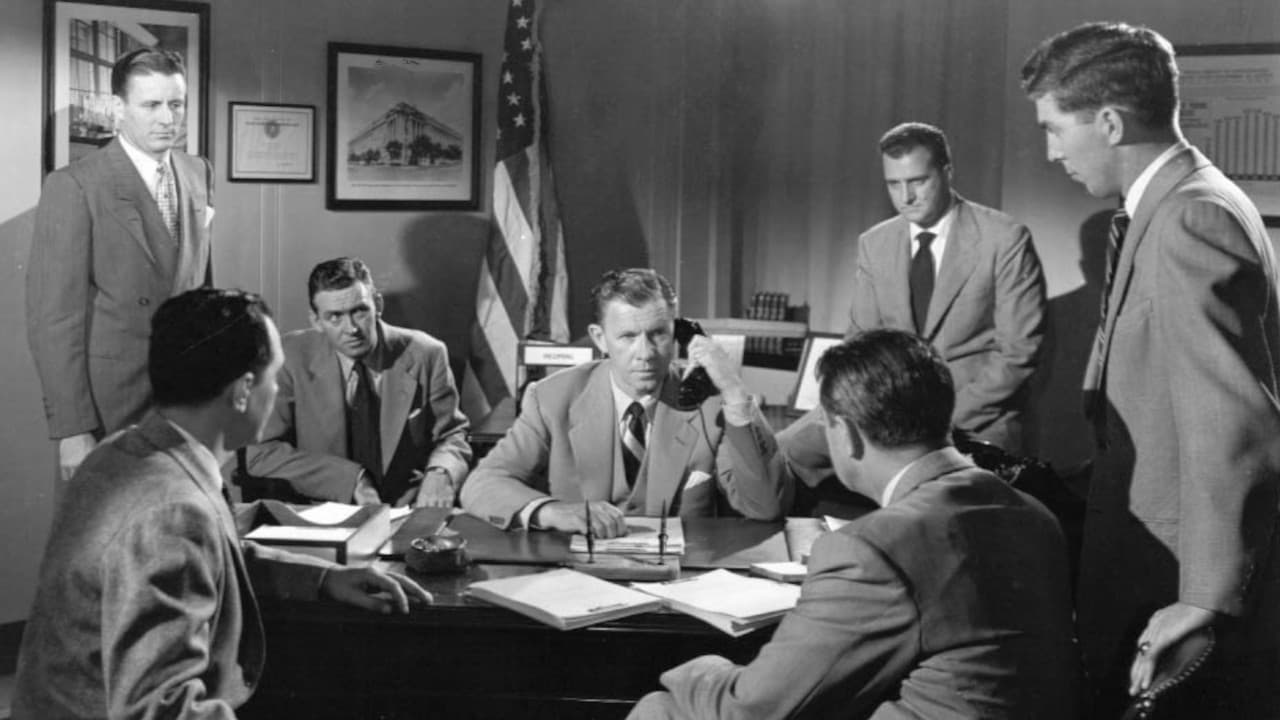
Walk East on Beacon unfolds as a procedural thriller in the tradition of the semi-documentary noir cycle that emerged from postwar American cinema. Shot on location in Boston, it applies the naturalistic visual grammar of films like The House on 92nd Street to Cold War material, framing institutional process itself – the ledger, the shadow, the wire – as the true antagonist of the age.
Classic Noir

Walk East on Beacon belongs to the semi-documentary strand of American noir that the FBI itself helped shape, with J. Edgar Hoover's endorsement visible in the film's procedural confidence and its faith in institutional authority. Adapted from a Reader's Digest article by director Alfred L. Werker and producer Louis de Rochemont, the film treats espionage not as glamour but as bureaucratic attrition – a war of filing systems, surveillance schedules, and patient human pressure. George Murphy's Belden is deliberately undramatic, a civil servant rather than a hero, and this restraint is the film's most considered choice. What the film genuinely captures is the ambient dread of the early Cold War: the idea that the enemy recruits through coercion rather than conviction, exploiting grief and displacement rather than ideology. Finlay Currie brings weight to Kafer that the script barely earns. As a document of how American institutions wished to narrate internal security to a civilian audience in 1952, the film remains quietly revealing.

– Classic Noir
3 ★★★☆☆ Notable
Credits

The Crew

DirectorAlfred L. Werker
ScreenplayLeo Rosten
CinematographyJoseph C. Brun
MusicLouis Applebaum
EditingAngelo Ross
Art DirectionHerbert Andrews
ProducerLouis De Rochemont
Performances

The Cast

Close Reading

The Signature Scene

Walk East on Beacon – scene
The Dead Drop – Boston Waterfront Hands Beneath the Bridge

Joseph C. Brun holds the camera at street level, the frame wide enough to contain the grey architecture of the waterfront and narrow enough to isolate the figure crossing toward the pickup point. Available light from the overcast Boston sky flattens shadow across the pavement, denying the scene the melodramatic contrast of studio noir. The exchange itself is nearly invisible within the shot – two figures whose proximity tells the story, the camera refusing to cut closer and thus refusing to grant the act dramatic privilege.

The choice to stage the scene without concealment – no alley, no doorway, no theatrical penumbra – argues that the most dangerous transactions occur in plain sight, ordinary as commerce. It is the film's clearest visual statement: the city is not protected by its openness. The light that ought to expose conceals precisely because it falls on everything equally, and no one is looking for what is already visible.

Visual Language

The Cinematography

🎞️
Joseph C. Brun – Director of Photography

Joseph C. Brun's cinematography on Walk East on Beacon owes its discipline to the de Rochemont semi-documentary tradition, which prized location texture over studio control. Brun shoots Boston as a civic body under quiet stress – federal buildings, residential streets, and transit corridors rendered with a newsreel sobriety that resists expressionist excess. His lens choices favor moderate wide angles that embed characters in their environments rather than isolating them in morally weighted close-ups. Shadow work, where it appears, is incidental rather than designed – falling from doorframes and overhead fixtures rather than constructed for psychological effect. This is a deliberate grammar: the film's argument is that the threat operates within the normal visible world, and Brun's refusal of high-contrast theatrics serves that argument directly. The result is a visual register closer to the documentary than to the fever dream, locating unease in recognizable urban space rather than in distorted or nocturnal geometry.

In the Catalogue

Themes & Motifs

Availability

Where to Watch

Also in the Directory

See Also