Films People Pull a Fast One Night Beat Reading Room On TV Shop
Lady Without Passport 1950
1950 Metro-Goldwyn-Mayer
★★★☆☆ Notable
Film Noir · 74 minutes · Black & White

Lady Without Passport

Directed by Joseph H. Lewis
Year 1950
Runtime 74 min
Studio Metro-Goldwyn-Mayer
TMDB 5.3 / 10
"A woman without papers, a man without a clean conscience, and a border that exists to be crossed."

In postwar Havana, Peter Karczag – an Immigration and Naturalization Service agent working undercover as Josef Gombush – infiltrates a smuggling ring that moves desperate refugees into the United States across the Florida Straits. The operation is run by the cold-blooded Palinov out of the Gulf Stream Cafe, a man who treats human cargo as a commodity and eliminates liabilities without hesitation. Into this arrangement steps Marianne Lorress, a European refugee whose stateless condition makes her both vulnerable to Palinov's network and, in Karczag's calculating professional eye, a potential informant.

Karczag's cover requires him to court Marianne, and the performance becomes genuine feeling before he has time to register the shift. When Marianne is swept into the smuggling run across the Straits, Karczag's loyalty to his mission and his growing attachment to her are placed in direct conflict. Palinov, meanwhile, is not deceived for long – his instinct for survival makes him a more formidable antagonist than any conventional criminal, and the bureaucratic machinery of the INS, represented by Chief Frank Westlake back in Washington, has its own demands that do not bend to personal circumstance.

Lady Without Passport works the immigration thriller as a subgenre of noir, using the displaced person as a figure through whom postwar anxieties about identity, belonging, and state power are made visible. The film's Cuban locations and semi-documentary procedural framing give it a texture distinct from studio-bound noir, while the central tension between duty and desire places it squarely within the genre's moral architecture.
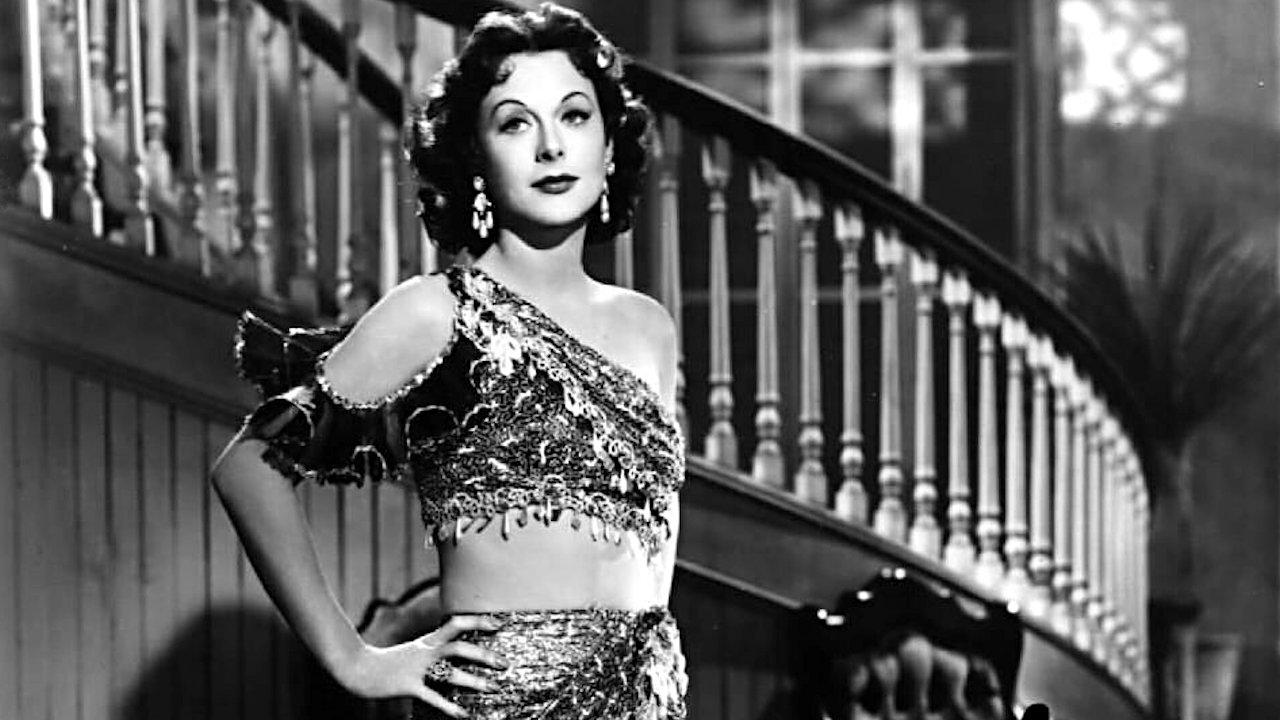
Classic Noir

Lady Without Passport occupies a particular niche in the MGM noir cycle – a film that uses the machinery of the semi-documentary procedural to examine the human cost of postwar statelessness. Joseph H. Lewis, whose Gun Crazy had appeared the previous year, brings a disciplined visual intelligence to material that could easily have settled for routine thriller mechanics. The film's use of actual Havana locations anchors its argument in geopolitical reality: the border is not a metaphor here but a physical and bureaucratic fact that determines survival. Hedy Lamarr's Marianne is less the femme fatale the studio's marketing suggested than a woman whose vulnerability is structural rather than personal, a displaced European whose lack of documentation makes her legible to exploiters and state agents alike. George Macready's Palinov is characteristically chilling, all surface courtesy and operational ruthlessness. At seventy-four minutes, the film does not waste its premise, though the procedural elements occasionally crowd out the more searching aspects of the central relationship. David Raksin's score maintains tonal discipline throughout.

– Classic Noir
3 ★★★☆☆ Notable
Credits

The Crew

DirectorJoseph H. Lewis
ScreenplayHoward Dimsdale
CinematographyPaul Vogel
MusicDavid Raksin
EditingFredrick Y. Smith
ProducerSamuel Marx
Performances

The Cast

Close Reading

The Signature Scene

Lady Without Passport – scene
The Final Pursuit – Florida Everglades Plane Down in the Marsh

Paul Vogel's camera holds a wide, flat perspective across the Everglades as the small aircraft carrying the refugees and Palinov comes in low and hard, the horizon line pressing everything into a compressed, airless frame. The available light – white-grey, diffuse, offering no shadow cover – strips the landscape of any romantic dimension. When the plane makes its forced landing, the camera does not cut away to safety; it stays on the waterlogged terrain, registering the physical difficulty of the ground itself as an antagonist. The mise-en-scène refuses to dramatise the geography as backdrop and instead presents it as a condition that human intention must negotiate and may not survive.

The sequence externalises the film's central argument: that statelessness is not an abstraction but a material condition with physical consequences. Marianne has no ground beneath her in any legal sense, and the Everglades literalise that precarity – unstable, borderless, neither land nor water. Karczag's pursuit through this terrain is not heroic but functional and costly, which is precisely the register in which the film has been working throughout.

Visual Language

The Cinematography

🎞️
Paul Vogel – Director of Photography

Paul Vogel's work on Lady Without Passport benefits substantially from the decision to shoot portions of the film on location in Havana, where the actual texture of the city – the Gulf Stream Cafe's genuine atmosphere, the Straits' hard light – provides a foundation that studio reconstruction would have softened. Vogel uses the Cuban light without sentimentalising it, keeping contrast ratios high and resisting the decorative shadow-play that marks more expressionist noir. Where the film moves indoors, the lighting narrows: Palinov's spaces are enclosed by practicals and directed fill that isolates faces from their backgrounds, reinforcing his transactional relationship to the people around him. The Everglades finale deploys a flatter, near-shadowless register that is genuinely disorienting after the chiaroscuro of the Havana sequences. Vogel's lens choices throughout favour a middle focal length that keeps characters placed in their environments rather than abstracted from them – a choice consistent with the film's semi-documentary procedural ambitions and its insistence that political geography is not incidental but causal.

In the Catalogue

Themes & Motifs

Availability

Where to Watch

Also in the Directory

See Also