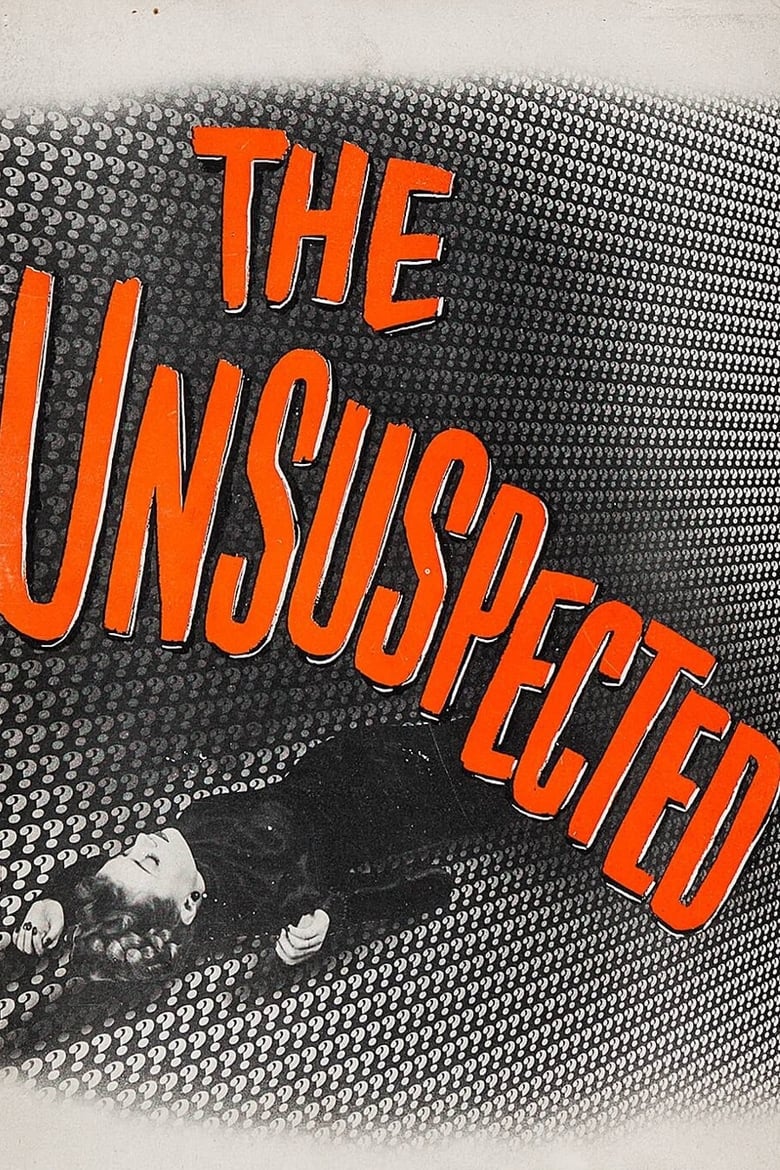
Victor Grandison is a celebrated radio host whose weekly true-crime broadcasts have made him a trusted public voice. Cultured, composed, and surrounded by a household of dependents, he presides over his estate with the quiet authority of a man who has never been questioned. When his secretary Roslyn is found hanged – ruled a suicide – the world takes Victor at his word. Then Steven Howard arrives claiming to be the husband of Grandison's ward, Matilda Frazier, a young woman presumed dead in a shipwreck. His appearance is the first crack in a carefully maintained surface.
Matilda herself returns, suffering from amnesia and uncertain of her own past, while Grandison's niece Althea and her weak-willed husband Oliver orbit the household in states of dependency and mutual suspicion. The insurance investigator Richard Donovan begins pulling at threads, and the film gradually redistributes its suspicion – not to expose a hidden killer so much as to illuminate one hiding in plain sight. Grandison's control over narrative, over public perception, and over the people around him is itself the subject under examination.
Unsuspected belongs to a strand of late-forties noir fascinated less by the criminal underworld than by domestic tyranny – the danger that lives behind respectable facades and well-appointed rooms. Curtiz frames Grandison's world as a kind of theater, and the film becomes a study in the performance of innocence and the institutional credulity that protects it.
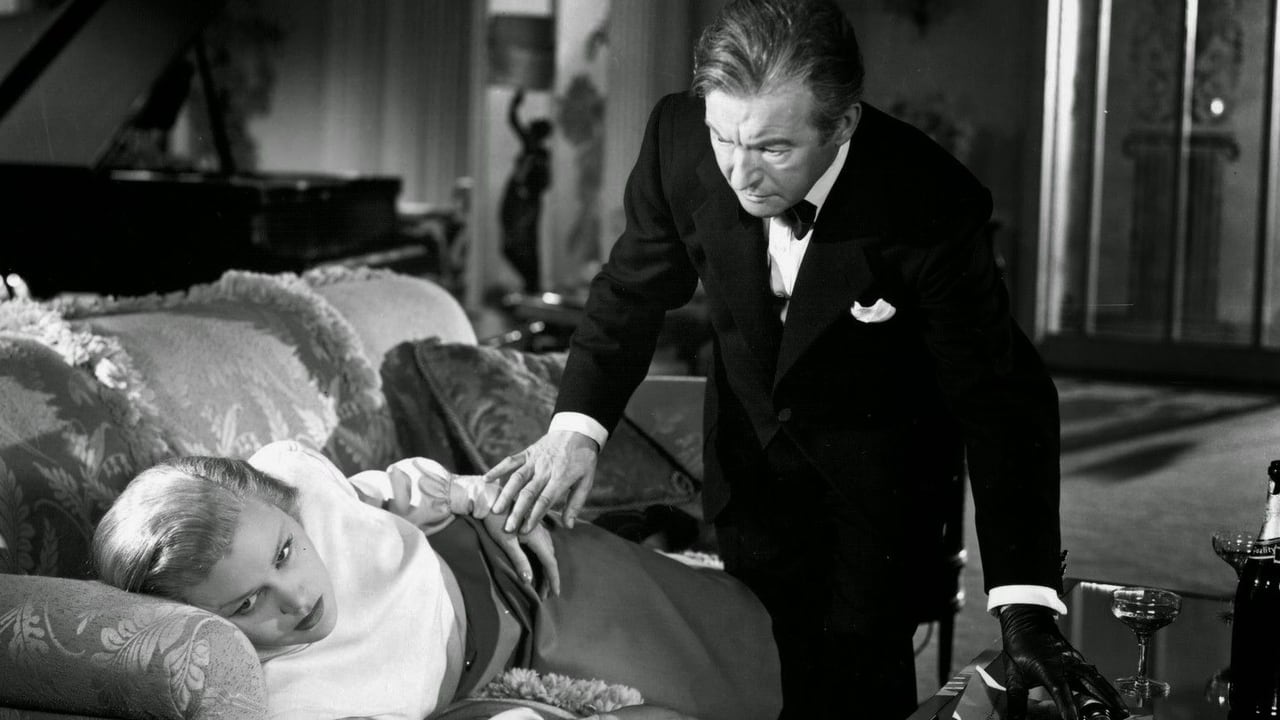
Unsuspected arrives at a peculiar angle to the genre. Where most noir displaces anxiety onto urban space – wet streets, cheap hotels, back rooms – Curtiz locates it inside wealth and reputation. Claude Rains is the film's organizing intelligence, and his performance works precisely because it refuses melodrama: Grandison is charming, reasonable, and genuinely interesting as a man who has constructed a self so persuasive that even he may believe it. The film's real argument is about the power of voice – literal broadcast voice – to constitute truth, and in that sense it carries a postwar unease about media and public trust that sits apart from the era's more conventional crime dramas. Elwood Bredell's photography presses against the limits of the material, finding menace in domestic interiors and in the studio spaces Grandison commands. Franz Waxman's score underlines without explaining. The film is uneven in its supporting performances and occasionally loses momentum in its midsection, but as a study of a particular kind of masculine authority – cultured, articulate, and lethal – it earns its place in any serious consideration of the period.
– Classic Noir
Grandison stands at the microphone in his broadcast studio, the glass partition dividing him from his technicians as cleanly as a frame within a frame. Bredell positions the camera outside the glass so that Grandison is seen through a layer of reflection and refraction – his face slightly distorted, his voice reaching the audience only as a mediated thing. Light falls from a source above and slightly behind, casting the room beyond the partition into relative shadow while Grandison himself is lit with the precision of a performer who has chosen his mark. The composition insists on separation: between the man and the world he addresses, between appearance and interiority.
The scene condenses the film's central proposition. Grandison's authority is broadcast authority – it exists in transmission, in the controlled delivery of a crafted version of events. What the glass makes visible is the mechanism behind the voice, the studio apparatus that turns a man into a trusted presence in ten thousand living rooms. His control of narrative is not incidental to his crimes; it is the method by which those crimes remain unsuspected.
Elwood Bredell, working on loan to Warner Bros. after his run of Universal horror and noir titles including Phantom Lady and Christmas Holiday, brings to Unsuspected a compositional approach that mistrusts the open frame. Interiors are organized around partitions, mirrors, and reflective surfaces – architectural features that fragment characters and imply concealment without resorting to crude expressionist excess. His lighting favors hard sources placed high and lateral, so that shadow falls at angles that contradict the warmth the script assigns to Grandison's household. The contrast between the estate's formal visual order and the moral disorder beneath it is never commented on directly; Bredell lets the geometry carry the argument. In the broadcast sequences the studio glass functions as a practical element that Bredell uses to layer planes of focus and reflection, producing images that are formally elegant and epistemologically unstable – you see Grandison, but you see him twice, refracted, which is precisely the condition the film asks its audience to maintain throughout.
TCM holds Unsuspected in regular rotation and the broadcast presentation is typically derived from a clean Warner Bros. archive print – the most reliable way to see the film at present.
MaxSubscriptionAvailable periodically through Max as part of the Warner Bros. classic library catalog; availability may vary by region and season.
Archive.orgFreePublic domain status is uncertain for this title – verify before use, as any Archive.org copy may be sourced from a degraded secondary print.