Films People Pull a Fast One Night Beat Reading Room On TV Shop
Unholy Wife 1957
1957 John Farrow Productions
★★★☆☆ Notable
Film Noir · 94 minutes · Black & White

Unholy Wife

Directed by John Farrow
Year 1957
Runtime 94 min
Studio John Farrow Productions
TMDB 4.7 / 10
"A woman marries a vineyard and waits for it to kill her husband first."

Phyllis Hochen is a restless, calculating woman trapped in a California wine country marriage to Paul Hochen, a decent but unimaginative viticulturist. She has taken a lover, rodeo rider San Sanders, and when an opportunity presents itself during a hunting outing, she fires a shot intended for Paul – and kills the wrong man. The accidental death of a neighbor reshapes her situation without resolving it, and the machinery of local law begins to turn around her.

Paul, unaware of his wife's intent, absorbs the grief and the legal scrutiny with characteristic steadiness. His mother Emma, sharp-eyed and contemptuous of Phyllis from the outset, watches the household with quiet precision. As the investigation proceeds and Phyllis recalibrates her plan, the domestic world of the Hochen estate becomes a space of barely contained hostility – loyalty and suspicion occupying the same rooms, the same silences. San, meanwhile, proves a less reliable instrument than Phyllis had imagined.

Unholy Wife operates within a recognizable noir template – the scheming wife, the oblivious husband, the lover as liability – but inflects it through a setting more open and sun-drenched than the genre usually permits. The film's interest lies less in procedural mechanics than in the slow erosion of Phyllis's control, and in the question of whether guilt, in this world, is ever truly punished or merely rearranged.
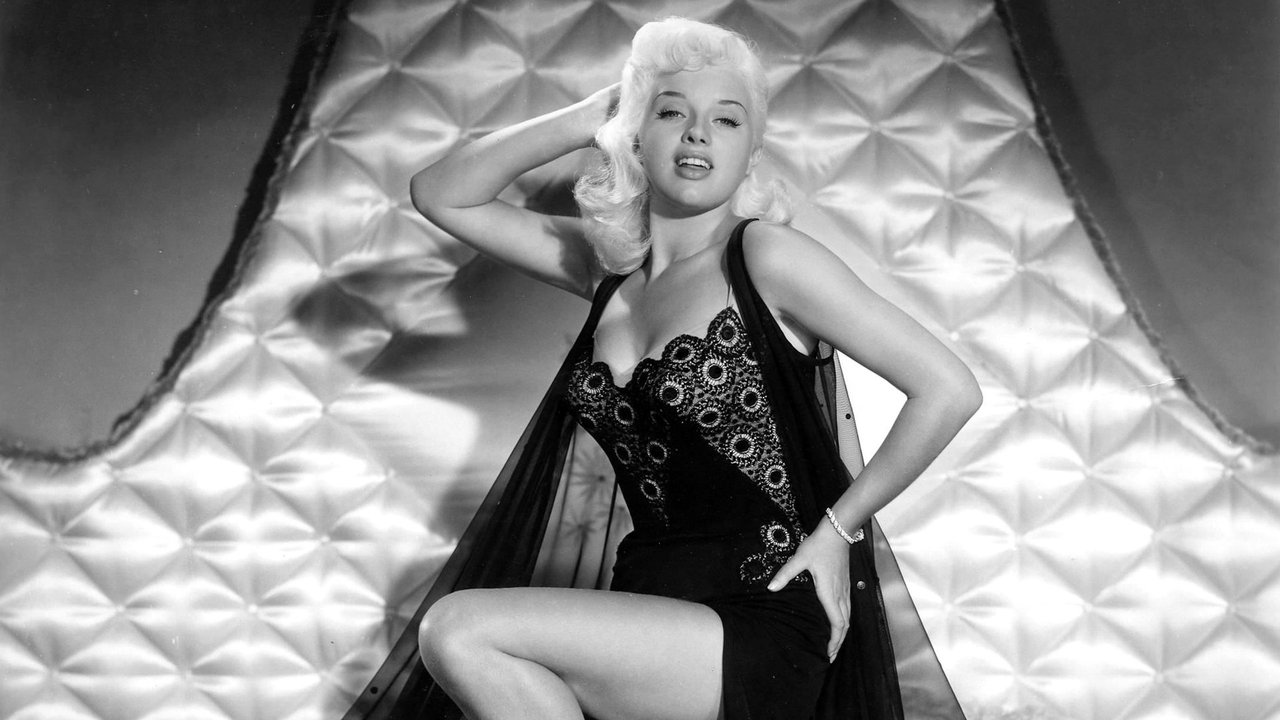
Classic Noir

Unholy Wife arrives in the late phase of classical Hollywood noir, when the genre had become sufficiently codified that a production could engage its conventions with knowing deliberation. John Farrow, a director whose relationship to noir was consistent if uneven across films like Where Danger Lives and His Kind of Woman, brings a cool, unhurried eye to material that might easily have tipped toward melodrama. Diana Dors, imported from British cinema and still carrying the freight of her tabloid celebrity, turns in a performance of controlled opacity – her Phyllis is less a femme fatale in the tradition of appetite and ruin than a woman of ordinary ambitions who has allowed resentment to calcify into murder. Rod Steiger's Paul is not a fool but a man whose decency functions as a kind of blindness. The film's rural California setting – vineyards, open roads, church interiors – refuses the urban shadow-world most noir depends on, and that refusal generates its own disquiet. Beulah Bondi as Emma Hochen provides the film's moral center, though the script is careful not to make her triumphant.

– Classic Noir
3 ★★★☆☆ Notable
Credits

The Crew

DirectorJohn Farrow
ScreenplayWilliam Durkee
CinematographyLucien Ballard
MusicDaniele Amfitheatrof
EditingEda Warren
Art DirectionFranz Bachelin
CostumesHoward Shoup
ProducerJohn Farrow
Performances

The Cast

Close Reading

The Signature Scene

Unholy Wife – scene
The Hunting Grounds Wrong Man in the Sights

Lucien Ballard frames the hunting sequence with a flatness that reads as deliberate unease. The landscape is wide and pale, the light diffuse and without shadow. Phyllis moves through tall grass, her figure composed against a horizon that offers no shelter and no drama. When the shot is fired, the camera holds its distance – there is no expressive close-up, no punctuating cut. The edit is almost casual, the wrong death arriving with the same visual weight as the surrounding stillness.

That tonal refusal is the scene's argument. Phyllis has prepared herself emotionally for one crime and commits another without quite understanding the difference. The film suggests that the intention was sufficient to corrupt her, and that the outcome – accidentally lethal, accidentally legal – is not a reprieve but a continuation of the same moral event. Her composure in the aftermath reads not as cold calculation but as a woman who has passed a threshold and cannot locate where she crossed it.

Visual Language

The Cinematography

🎞️
Lucien Ballard – Director of Photography

Lucien Ballard, who would later define the visual grammar of Sam Peckinpah's westerns, brings to Unholy Wife a restrained approach that sits in productive tension with the genre's usual expressionism. Shooting for RKO in Technicolor, Ballard resists the deep-shadow chiaroscuro standard to black-and-white noir, instead deploying a palette of muted earth tones and high ambient light that renders the California wine country setting as quietly suffocating rather than dramatically menacing. Interior scenes in the Hochen house use soft, directionless light that flattens depth without producing warmth – rooms that look comfortable and feel airless. Ballard's lens choices favor moderate focal lengths that keep characters in relation to their domestic spaces, a compositional strategy that makes entrapment spatial rather than atmospheric. The effect is a film whose moral landscape is encoded in its brightness: in a genre that customarily uses darkness to signal danger, Unholy Wife makes danger visible and ordinary, which is its own kind of pressure.

In the Catalogue

Themes & Motifs

Availability

Where to Watch

Also in the Directory

See Also