Films People Pull a Fast One Night Beat Reading Room On TV Shop
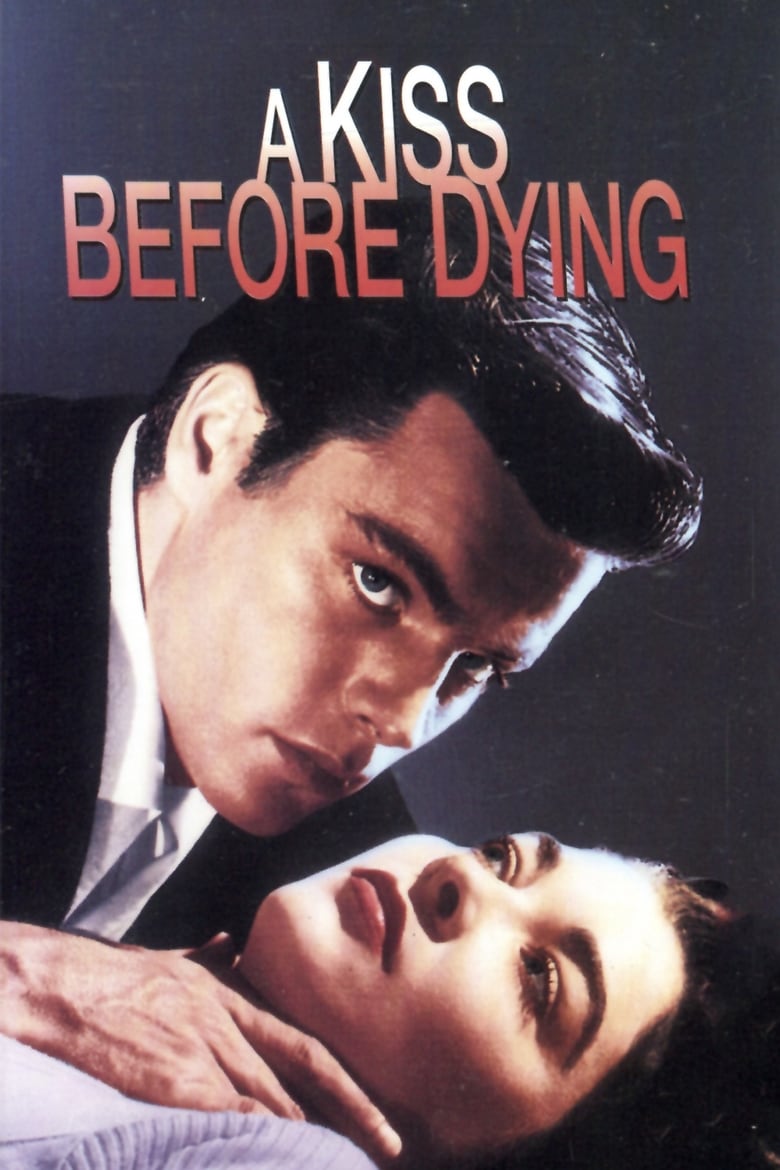
Kiss Before Dying 1956
1956 United Artists
★★★☆☆ Notable
Film Noir · 94 minutes · Black & White

Kiss Before Dying

Directed by Gerd Oswald
Year 1956
Runtime 94 min
Studio United Artists
TMDB 6.3 / 10
"A man with nothing to lose and everything to gain is the most dangerous kind."

In a mid-century American college town, Bud Corliss is a young man of corrosive ambition and no inherited means. When his girlfriend Dorothy Kingship becomes pregnant and threatens to derail his carefully constructed plans, Bud recognizes her not as a person but as an obstacle. Dorothy is the daughter of copper magnate Leo Kingship, and Bud has spent months cultivating proximity to that wealth. The pregnancy is an inconvenience he resolves with cold efficiency, staging her death as a suicide from a municipal building's upper floor.

Dorothy's sister Ellen, unconvinced by the official verdict, begins her own investigation into the circumstances of the death. The irony the film permits itself is quiet but precise: Ellen, drawn into the orbit of a sympathetic law student named Gordon Grant, finds herself falling toward the same man who killed her sister, though she cannot yet name what she senses. Bud pivots effortlessly, transferring his attention from one Kingship daughter to the other, recalibrating his performance of sincerity without missing a step.

Kiss Before Dying belongs to a cluster of 1950s noirs organized around the sociopathic male – the man whose charm functions as camouflage rather than character. Where earlier noir often granted its criminals some comprehensible appetite, Bud Corliss operates on pure calculation, making the film less a crime picture than a study in fraudulent surfaces. The Kingship fortune looms over every scene as both motive and moral indictment of the postwar aspiration that Bud has taken to its logical extreme.
Classic Noir

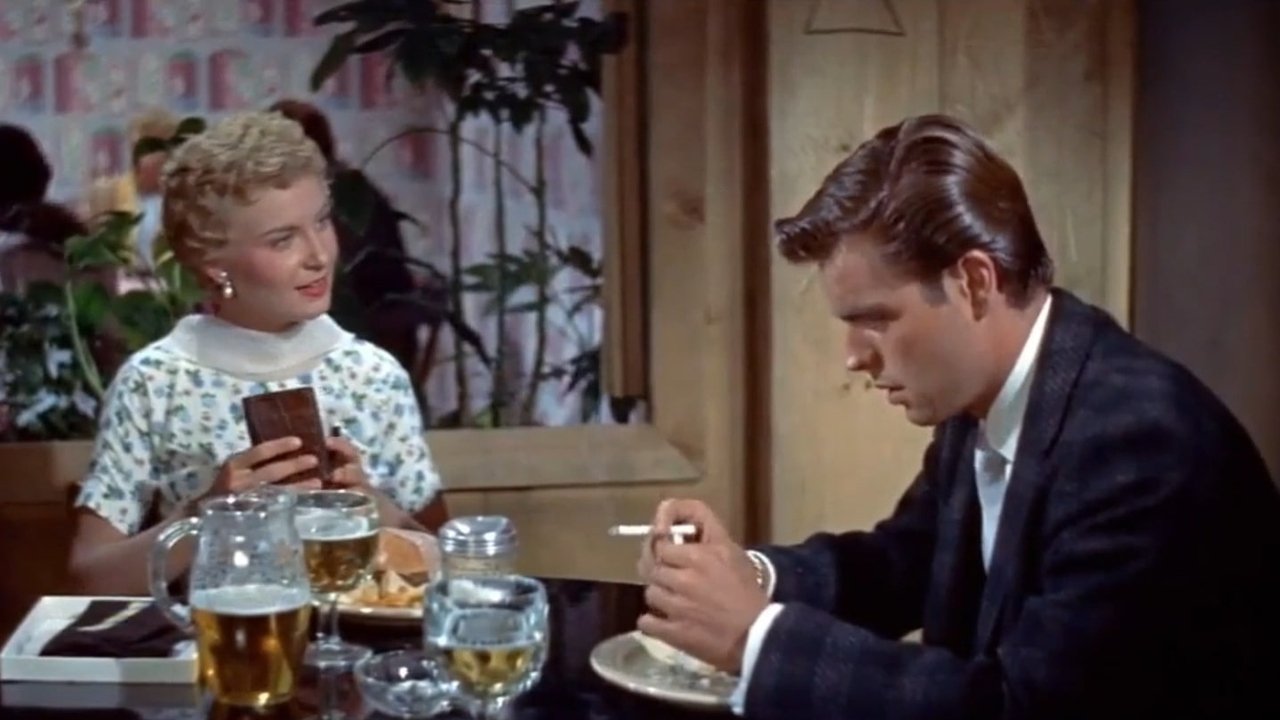
Adapted from Ira Levin's debut novel, Gerd Oswald's film arrives at a moment when American noir is beginning to absorb the anxieties of postwar class mobility rather than simply postwar trauma. Robert Wagner's performance as Bud Corliss is the film's central wager: he plays the character with a surface warmth so carefully maintained that the violence underneath registers as genuinely unsettling rather than telegraphed. The film is not interested in psychology as explanation or excuse. Bud's motives are legible from the opening scene, and Oswald declines to deepen them, which is the correct decision. What the film examines instead is complicity – how money, aspiration, and the performance of normalcy conspire to make a predator invisible. Joanne Woodward, in the earlier and shorter of her two roles, brings more weight to Dorothy than the script strictly requires. The film's structural reliance on dramatic irony is handled with restraint, and Lucien Ballard's cinematography in the CinemaScope frame keeps the American landscape looking both expansive and vaguely hostile.

– Classic Noir
3 ★★★☆☆ Notable
Credits

The Crew

DirectorGerd Oswald
ScreenplayLawrence Roman
CinematographyLucien Ballard
MusicLionel Newman
EditingGeorge A. Gittens
Art DirectionAddison Hehr
ProducerRobert L. Jacks
Performances

The Cast

Close Reading

The Signature Scene

Kiss Before Dying – scene
The Municipal Building Rooftop Sunlight on a High Ledge

Oswald and Ballard use the CinemaScope frame to isolate Dorothy against an expanse of open sky, the horizontal format that ordinarily suggests freedom here working to emphasize how little of the frame she occupies. The camera holds at a distance that refuses intimacy. Light is flat and civic – midday sun, no shadows to hide in – and the composition places Bud at the center of the frame while Dorothy is positioned near its edge, a geometric foreshadowing that operates below the level of conscious reading.

The scene's argument is that violence in daylight, in a public space, dressed in the ordinary clothes of a college town afternoon, is not less monstrous but more so. Bud's control of the physical environment mirrors his control of Dorothy's perception of her own situation. She does not see what is coming because she has been given no frame in which to see it. The film's moral weight accumulates here: the rooftop is not a dramatic location, and that refusal of drama is the point.

Visual Language

The Cinematography

🎞️
Lucien Ballard – Director of Photography

Lucien Ballard, who had already demonstrated range from the gothic interiors of The Lodger to the sleek studio work of his Columbia years, uses the CinemaScope ratio in Kiss Before Dying with uncommon discipline. Rather than filling the wide frame with incident, Ballard frequently allows it to register absence – empty hallways, the margins of rooms, the space around characters that implies surveillance or vulnerability. Oswald and Ballard shoot significant portions of the film in practical daylight exteriors, which was still a calculated choice in 1956, and the effect is to deny the film the alibi of expressionist shadow. When darkness does appear, it is selective: the interior of a car at night, the mouth of a corridor. The lens choices favor middle distances that keep characters readable but not intimate, a formal strategy that reinforces the film's insistence on Bud as a figure who is always being watched and never truly seen. Color, too, is used against expectation – warm domestic hues that refuse to signal danger.

In the Catalogue

Themes & Motifs

Availability

Where to Watch

Also in the Directory

See Also