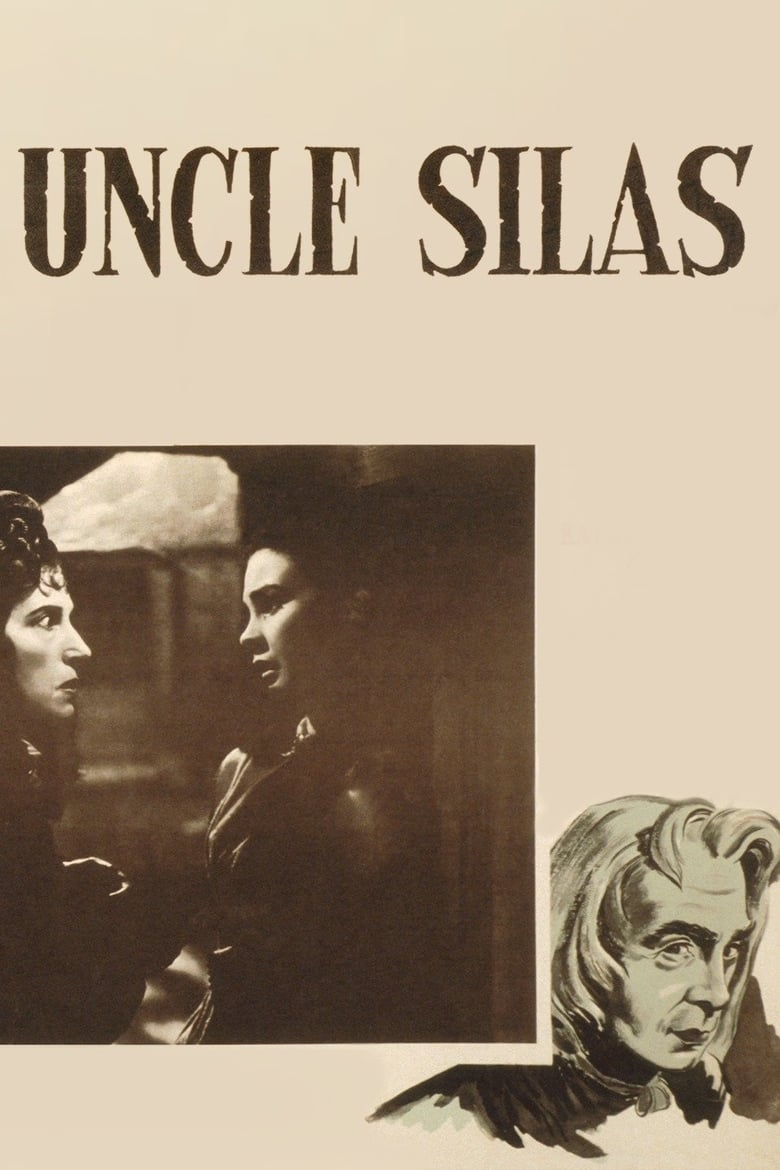
Caroline Ruthyn is a sheltered young woman whose world contracts sharply when her father dies and leaves her in the guardianship of Uncle Silas, a reclusive figure whose past is shadowed by an unresolved accusation of murder. Confined to his decaying estate at Bartram-Haugh, Caroline finds herself navigating a household of peculiar loyalties and suppressed menace, watched over by the sinister governess Madame de la Rougierre, whose presence in Silas's service seems to serve purposes beyond domestic order.
As Caroline attempts to understand the terms of her inheritance and the motives of those around her, the film complicates every apparent alliance. Lord Richard Ilbury offers a sympathetic attachment from outside the estate's walls, but access to Caroline is carefully managed. Dr. Bryerly, a trusted family associate, moves at the margins with knowledge he dispenses sparingly. Silas himself presents a face of aristocratic melancholy while the household tightens around Caroline like a closing hand, with Sepulchre Hawkes functioning as the instrument of whatever Silas cannot perform himself.
Uncle Silas operates as a gothic inheritance thriller whose mechanisms align it with the paranoid domestic suspense that noir borrows from Victorian sensation fiction. The film places a passive heroine in an architecture of entrapment and asks whether social obligation and legal arrangement can themselves become weapons. Based on J. Sheridan Le Fanu's 1864 novel, it belongs to a strand of British noir in which the threat is not the city but the country house stripped of its civilizing pretense.
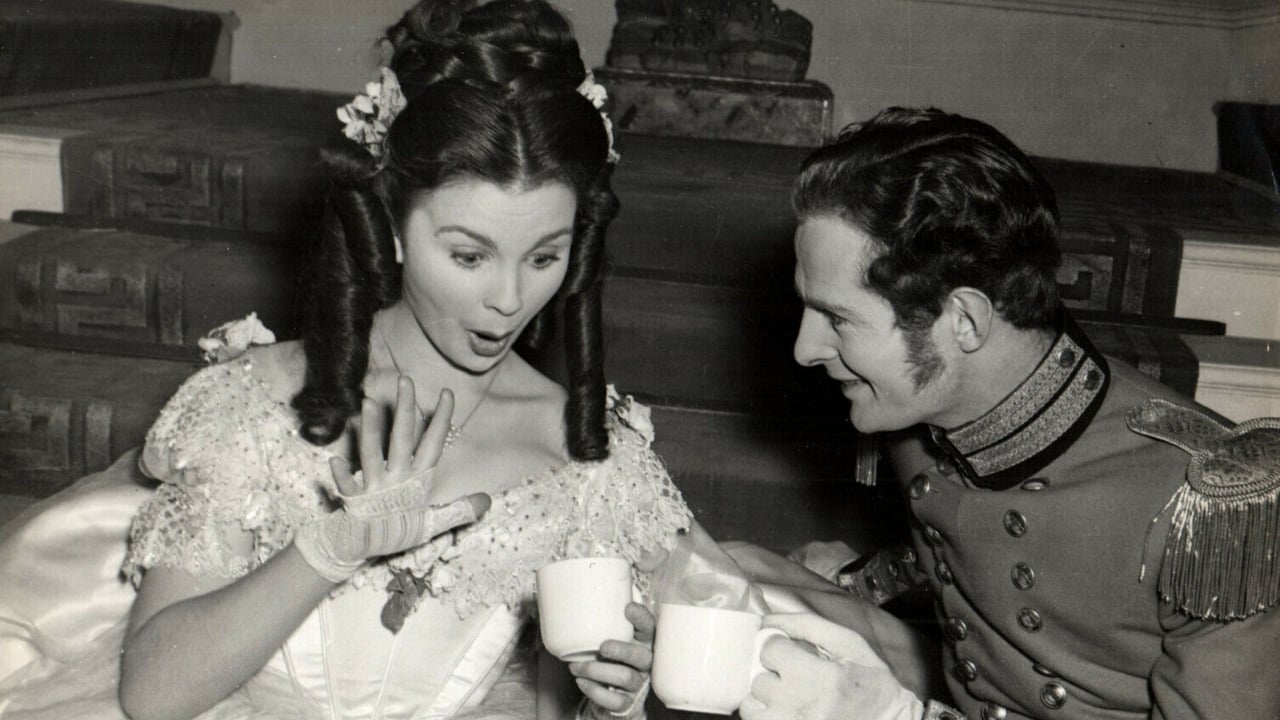
Uncle Silas occupies a productive threshold in British postwar cinema, drawing from gothic literary tradition while deploying the visual grammar of noir to articulate anxieties that are specifically national in flavor. Where American noir tends to locate corruption in urban institutions or the criminal underworld, this film finds it embedded in inheritance, guardianship, and the legal apparatus of family. Derrick De Marney's Silas is less a brute than a man of diminished resource performing respectability he no longer commands, which makes him more credible than a pure villain would be. Katina Paxinou's Madame de la Rougierre is the film's most forceful presence, a foreigner whose exaggerated menace doubles as the film's acknowledgment that danger has been displaced onto an outsider while domestic arrangements remain unreformed. Jean Simmons, only seventeen at the time of filming, carries the central passivity required by the material without surrendering audience investment. The film does not fully escape the constraints of its literary source, and its pacing reflects a deference to plot mechanics over psychological atmosphere, but Robert Krasker's photography sustains a visual coherence that elevates the material considerably.
– Classic Noir
Madame de la Rougierre enters Caroline's room at night carrying a single lamp whose upward cast dissolves her features into something more mask than face. Krasker holds the frame wide enough to preserve the scale of the room against the single point of light, so that darkness occupies the majority of the image and the governess moves through it as a figure partially claimed by the surrounding shadow. The camera does not cut to Caroline's reaction immediately, prolonging the duration in which Rougierre stands unaccounted for at the threshold.
The scene encodes the film's central argument about surveillance disguised as care. Rougierre's visit carries the form of concern – she is checking on her charge – while the visual language assigns her the iconography of threat. That the lamp illuminates her rather than Caroline inverts the expected power relation and suggests that within Bartram-Haugh, the watched and the watcher have exchanged positions. Caroline's vulnerability is not ignorance but the structural inability to act on what she understands.
Robert Krasker, who would photograph The Third Man two years after this film, brings to Uncle Silas a disciplined approach to architectural shadow that treats the estate at Bartram-Haugh as a moral landscape rather than a backdrop. Working largely on studio-built sets at Two Cities, Krasker uses high-contrast lighting with hard sources to exaggerate the depth of doorways and corridors, so that transitional spaces become points of danger rather than passage. His lens choices favor a moderate wide angle that preserves environmental context around characters, denying them the psychological isolation that a longer lens would produce and instead insisting on their entrapment within the frame's geometry. The shadow work is particularly precise in scenes involving Madame de la Rougierre, where deep fill reduction gives Paxinou's face an unresolved quality that sustains ambiguity about her motives longer than the script strictly requires. The film's visual logic consistently argues that the house itself is the instrument of harm, and Krasker constructs that argument through the consistent subordination of human figures to the spaces they cannot leave.
MUBI has carried British postwar titles from this period and represents the most likely current home for a curated presentation of the film with contextual framing.
Archive.orgFreeA public domain print has circulated on Archive.org and provides the most accessible free option, though print quality varies and no restoration is available at this time.
KanopyFreeKanopy's holdings of British noir and gothic titles from this era make it a plausible library-access option, though availability should be confirmed through individual library accounts.