Films People Pull a Fast One Night Beat Reading Room On TV Shop
Kind Lady 1951
1951 Metro-Goldwyn-Mayer
★★★☆☆ Notable
Film Noir · 78 minutes · Black & White

Kind Lady

Directed by John Sturges
Year 1951
Runtime 78 min
Studio Metro-Goldwyn-Mayer
TMDB 7.0 / 10
"A genteel London drawing room becomes a prison, and the prisoner does not yet know she is locked in."

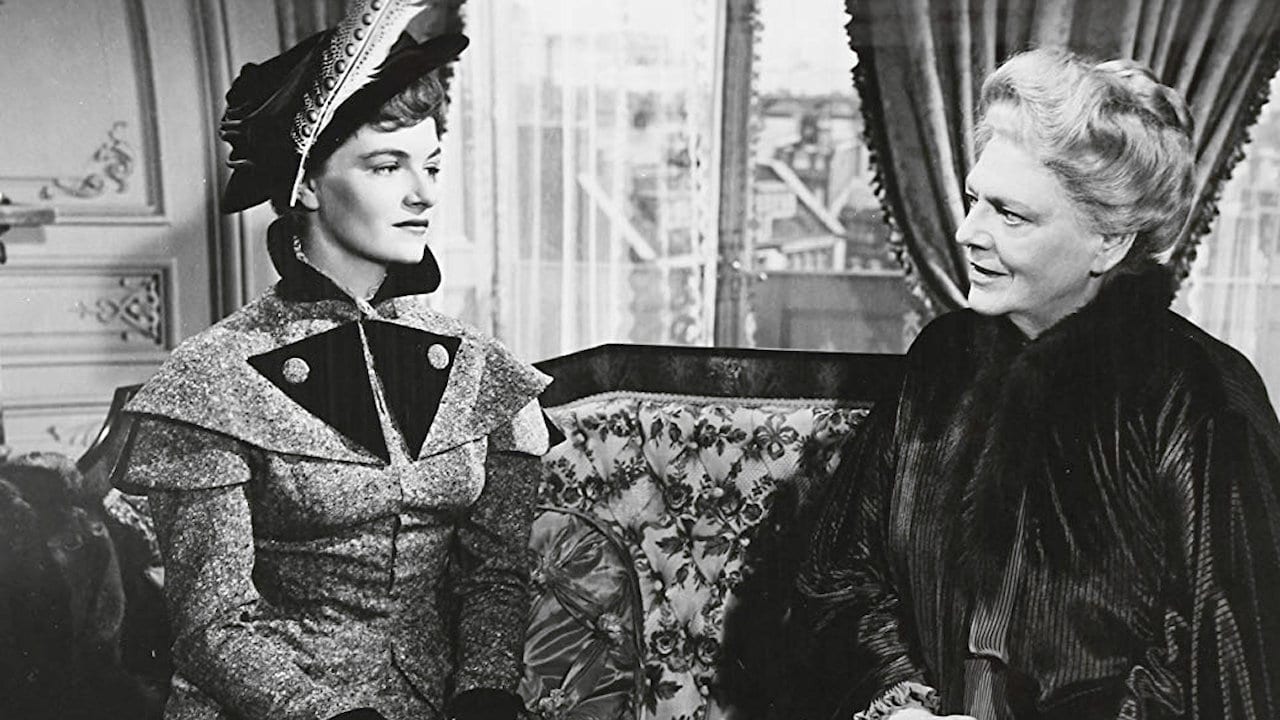
In the comfortable Mayfair home of Mary Herries, a wealthy and cultivated elderly woman, a chance act of Christmas charity sets a trap in motion. Henry Springer Elcott, a plausible and softly spoken stranger who presents himself as a struggling artist, accepts her kindness and returns it with flattery and manipulation. Gradually, over days that blur into weeks, he introduces into her house a rotating cast of shabby associates – chief among them the coarse Mr. Edwards, his compliant wife, and the quietly desperate Ada – until Mary finds that her routines, her correspondence, and her freedom have been quietly annexed.

The film withholds the full dimensions of Mary's captivity from outside observers through Elcott's patient social engineering. Her solicitor Mr. Foster grows uneasy; her housekeeper Rose senses something wrong; but Elcott's control over access to Mary is thorough enough to neutralize each concern as it surfaces. What emerges is less a conventional crime plot than a study in the mechanics of coercion – how submission is manufactured from politeness, how isolation is achieved by increments, and how a woman of intelligence and resources can be rendered helpless inside the architecture of her own respectability.

Kind Lady occupies an oblique position within postwar American noir, substituting the rain-slicked street for the silk-curtained interior and exchanging the femme fatale for a cultivated predator in a well-cut suit. Its true subject is vulnerability – the vulnerability of the solitary, the elderly, and the trusting – and the film pursues that subject with a restraint that makes its implications more unsettling than any conventional thriller turn of the screw would allow.
Classic Noir

Kind Lady belongs to a strand of early 1950s noir that relocates the genre's core anxieties – predation, entrapment, the corruption of sanctuary – into bourgeois interiors rather than underworld streets. John Sturges, more commonly associated with action pictures, demonstrates here a disciplined economy of menace, allowing the horror to accumulate through accumulating social detail rather than incident. The film's chief distinction is its central performance: Ethel Barrymore plays Mary Herries not as a frail victim but as a woman of substantial will confronting a situation in which will alone is insufficient, and the gap between her intelligence and her powerlessness is the film's most unsettling element. Maurice Evans, cast against his theatrical reputation, renders Elcott without melodrama – precisely calibrated, never raising his voice when a pause will do more damage. Angela Lansbury and Keenan Wynn, in secondary roles, supply the film's rawer social textures. David Raksin's score maintains a chamber-music restraint that suits the confined world it accompanies. The film does not reach the canonical status of the best psychological noirs, but as a document of how the genre absorbed the anxieties of respectability and aging, it repays serious attention.

– Classic Noir
3 ★★★☆☆ Notable
Credits

The Crew

DirectorJohn Sturges
ScreenplayCharles Bennett
CinematographyJoseph Ruttenberg
MusicDavid Raksin
EditingFerris Webster
Art DirectionCedric Gibbons
ProducerArmand Deutsch
Performances

The Cast

Close Reading

The Signature Scene

Kind Lady – scene
The Drawing Room, Evening The Letter That Cannot Leave

Mary Herries sits at her writing desk, composing what she intends as a communication to the outside world. Joseph Ruttenberg's camera holds her in a medium shot that at first suggests agency – the desk lamp pools warm light across the writing surface, the bookshelves behind her signal a life of independent cultivation. Then the frame subtly widens, and the geometry of the room reasserts itself: doorways in soft shadow at the edges, the seated figures of Elcott's associates positioned at a middle distance that is neither intrusive nor accidentally placed. The composition makes visible what Mary cannot openly acknowledge – that she is observed, that every action occurs within a supervised field.

The scene crystallizes the film's central argument about the nature of imprisonment. Mary is not restrained by force; she is restrained by the social grammar she has spent a lifetime internalizing – the code that prevents a woman of her class from making a scene, from accusing, from acting in ways that might seem irrational or undignified. Her predicament is not merely criminal but cultural, and the scene understands that the most durable prisons are constructed from the prisoner's own formation.

Visual Language

The Cinematography

🎞️
Joseph Ruttenberg – Director of Photography

Joseph Ruttenberg – an MGM contract cinematographer whose career ran from silent pictures through the studio era – brings to Kind Lady a visual approach that turns the conventions of prestige interior photography against themselves. The film is shot almost entirely on studio sets, and Ruttenberg exploits the total control that affords: light sources are carefully motivated by practical lamps and window light, but the fill is withdrawn in degrees as the narrative tightens, so that the same rooms that appear welcoming in early scenes accumulate shadow at their margins as the occupation of the house proceeds. Ruttenberg avoids the baroque chiaroscuro of German-influenced noir, preferring a more naturalistic gradation that makes the darkness feel like weather rather than stylization. Focal lengths stay in the middle range, keeping figure and environment in a relationship that emphasizes Mary's entrapment within the domestic space she has furnished. Doorframes and window casements function as secondary framing devices, subdividing the image into zones of access and exclusion. The visual language quietly proposes that comfort and captivity are not opposites but, under the right pressure, the same condition.

In the Catalogue

Themes & Motifs

Availability

Where to Watch

Also in the Directory

See Also