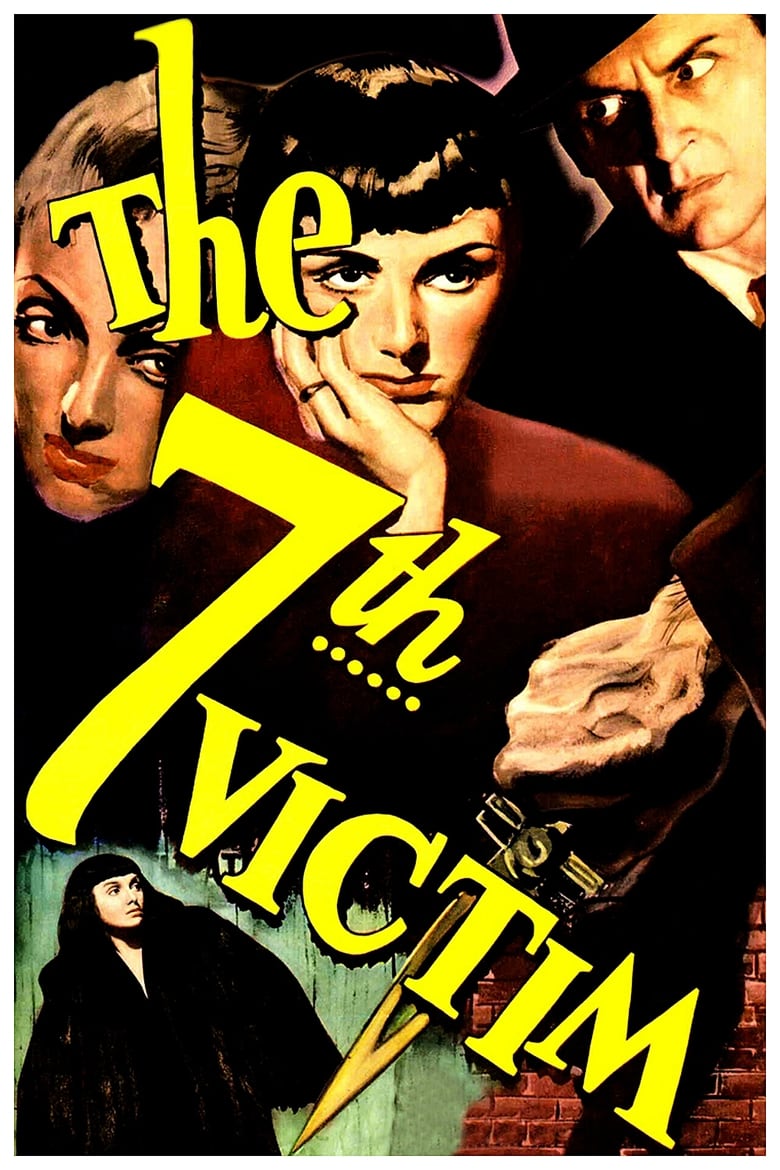
Mary Gibson, a student at a boarding school, learns that her older sister Jacqueline has disappeared and stopped paying her tuition. Mary travels to New York City to find her, discovering that Jacqueline has sold her cosmetics business to a man named Mr. Brun and vanished into the city's margins. The trail leads Mary to a Greenwich Village community of Satanists known as the Palladists, who have a claim on Jacqueline's silence, and to Gregory Ward, a lawyer who has married Jacqueline in secret, and to Dr. Louis Judd, a psychiatrist with his own complicated interest in the missing woman.
Jacqueline, when she is finally located, proves less a victim waiting to be rescued than a figure who has chosen her own particular form of surrender. She has rented a bare room with a noose hanging from the ceiling, a furnished admission of where she believes her life is heading. The Palladists, bound by their own code, have condemned her for revealing their existence and face the question of whether they are capable of acting on that condemnation. Around Jacqueline, allegiances shift: Ward genuinely loves her, Judd studies her with clinical remove, and Mary increasingly understands that finding someone is not the same as saving them.
The Seventh Victim belongs to the Val Lewton unit at RKO, and it shares that cycle's conviction that horror resides not in the supernatural but in exhaustion, isolation, and the slow withdrawal of the will to continue. It is a noir in temperament if not always in mechanics, less interested in crime as such than in the atmosphere crime creates around those who brush against it. The film's real subject is the desire for death and the question of whether those who love a person have any right to override that desire.
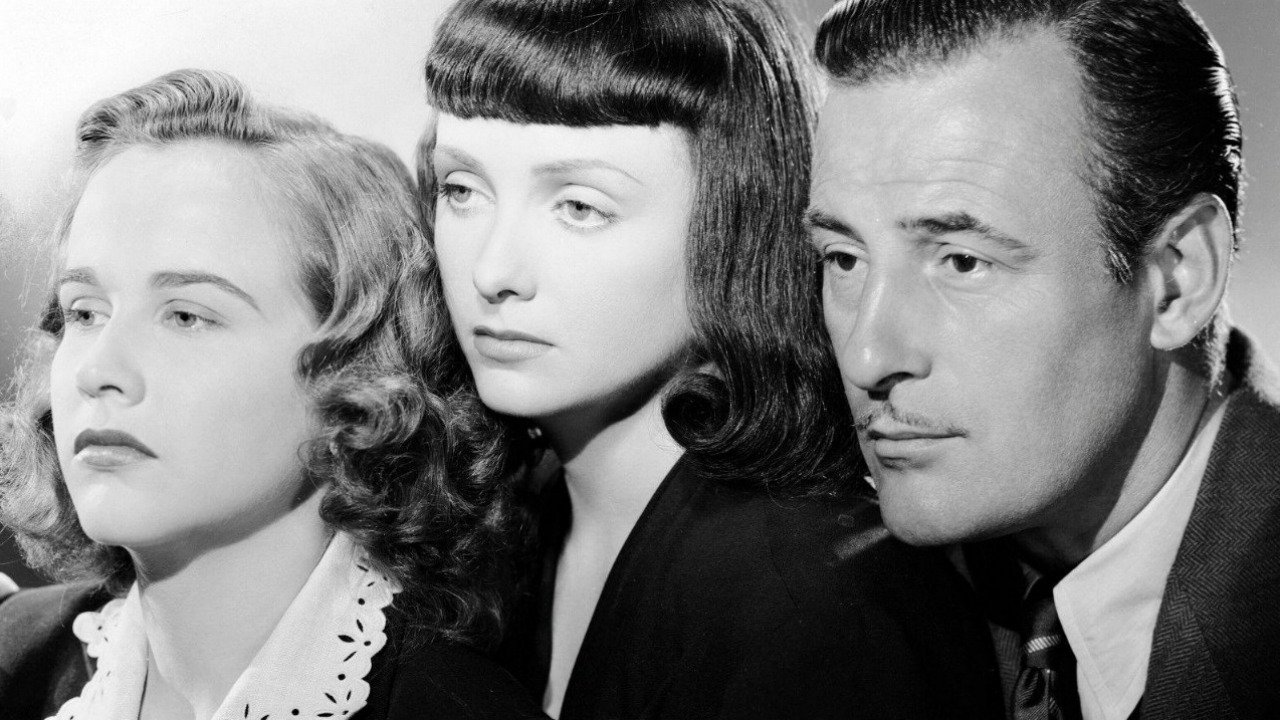
Produced by Val Lewton and directed by Mark Robson in 1943, The Seventh Victim is one of the stranger artifacts the classical Hollywood system generated during the war years. It arrives at darkness through absence rather than accumulation: Jacqueline Gibson is present for very little of her own story, and the film is more honest than most of its contemporaries about the limits of rescue as a narrative solution. The Satanist subplot has drawn dismissal from critics who find it incongruous, but it functions less as thriller machinery than as a social formation, a group of people bound by a shared secret who discover they lack the conviction to enforce their own rules. What remains is a film about mortality as a form of self-possession, made during a war in which mortality was being distributed without consent. Lewton and Robson do not resolve this tension. The ending refuses comfort with a directness that mainstream American cinema of the period rarely permitted itself, and that refusal is what keeps the film in serious discussion.
– Classic Noir
Mary walks home through near-empty streets at night, and the camera withdraws to a distance that makes her small against the geometry of the city. A figure trails behind her at a fixed interval, never closing, never falling back. Musuraca lights the wet pavement so that reflections duplicate the scene beneath the scene, and the frame's depth becomes ambiguous – it is no longer clear which plane of action is primary. When Mary enters a corridor, the camera holds on the doorway rather than following, and the threat resolves itself not through confrontation but through the sudden disappearance of the pursuer.
The scene encodes the film's central argument in visual terms: danger in this world does not announce itself, and safety is not confirmed by the absence of evidence. Mary's relief at reaching her destination is structurally identical to the relief the audience feels, and both are shown to be partial. The city Musuraca renders is one in which the street itself is the antagonist, indifferent to outcome, and the scene demonstrates that the Palladists are almost incidental to what the film is actually about.
Nicholas Musuraca, whose work on Cat People the previous year had established the visual grammar of the Lewton unit, brings to The Seventh Victim a disciplined approach to negative space. Working on RKO studio sets dressed to suggest Greenwich Village, he favors deep shadow pools that consume the lower portions of the frame, leaving faces isolated in narrow channels of light. His lens choices tend toward moderate focal lengths that preserve a shallow sense of depth, keeping backgrounds soft and slightly threatening rather than sharply detailed. The effect is environmental rather than expressionistic: this is not a world of distorted angles asserting psychological crisis, but one in which normal geometry has simply been drained of warmth. Practical sources – a street lamp, a window, a bare bulb in Jacqueline's rented room – anchor the lighting setups and make the darkness feel earned rather than imposed. Musuraca's cinematography here argues that the most effective way to photograph despair is to light only what is necessary and allow the rest to recede.
The film is in the public domain and available in full on Archive.org, though print quality varies by upload; seek the highest-resolution version available.
TubiFreeTubi has carried the film as part of its classic horror and noir catalog; check current availability as streaming libraries shift.
Criterion ChannelSubscriptionWhen available through Criterion's Lewton programming blocks, this is likely to offer the most stable and carefully sourced print for serious viewing.