Films People Pull a Fast One Night Beat Reading Room On TV Shop
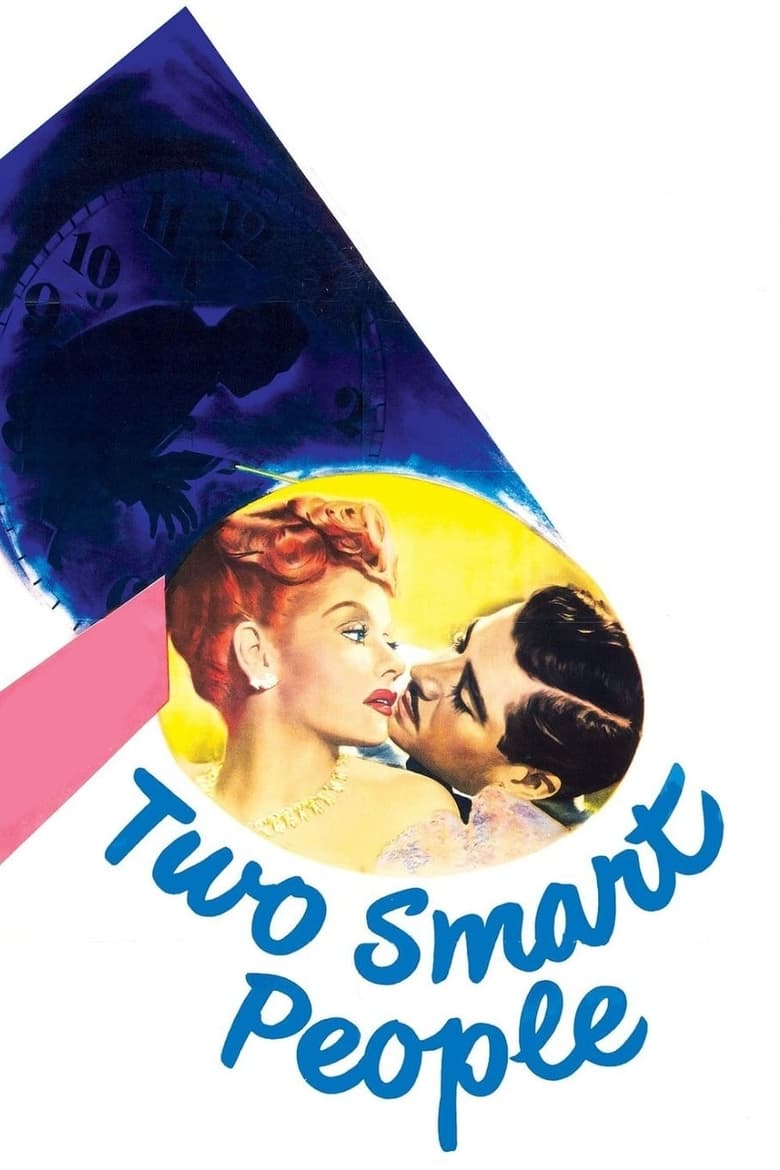
Two Smart People 1946
1946 Metro-Goldwyn-Mayer
★★★☆☆ Notable
Film Noir · 93 minutes · Black & White

Two Smart People

Directed by Jules Dassin
Year 1946
Runtime 93 min
Studio Metro-Goldwyn-Mayer
TMDB 6.6 / 10
"Two grifters share a train west and discover that trust, like a forged note, can only be passed once."

Ace Connors is a charming con man on his way to a federal prison sentence, escorted across the country by easy-going federal agent Bob Simms. Before he surrenders, Ace has hidden the proceeds of an elaborate swindle – a cache no one has yet located. On the train, he encounters Ricki Woodner, a woman with her own angles and no obvious allegiances, whose interest in Ace sits somewhere between genuine attraction and calculated self-interest.

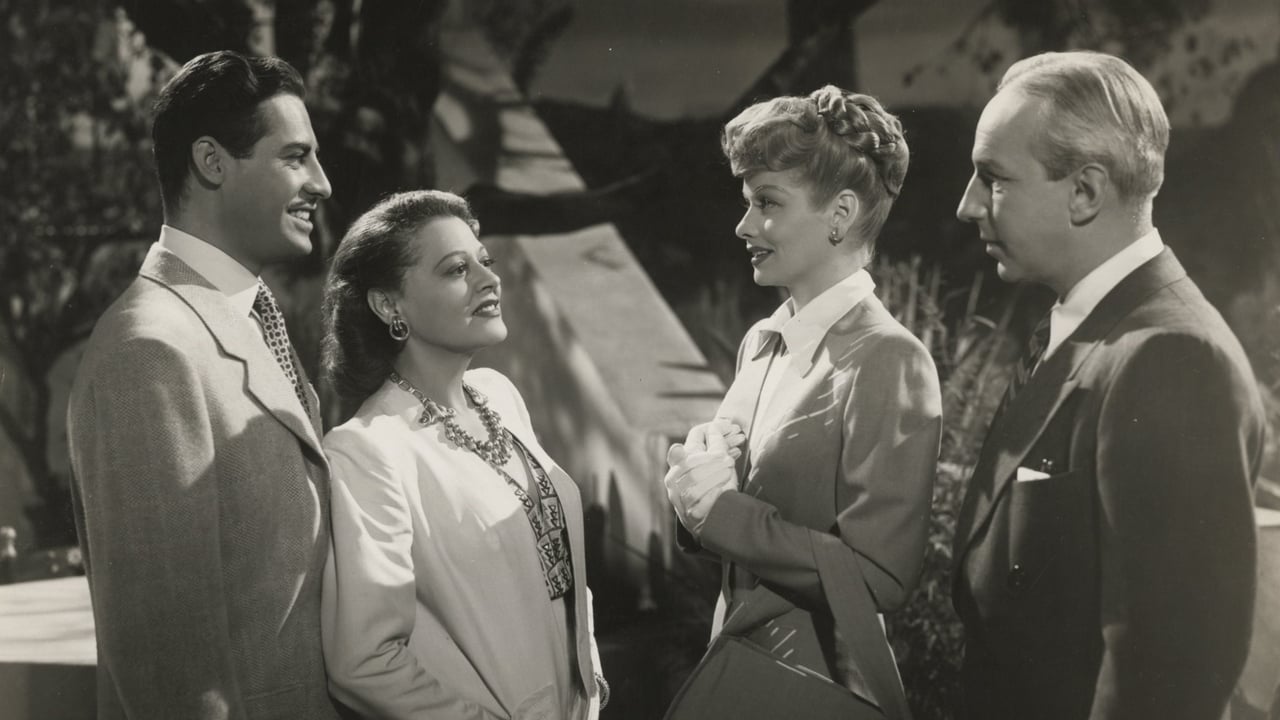
Ricki is herself being watched. A coterie of figures orbits the journey: the oily Mr. Rodriguez, the volatile Maria Ynez, the nervous Fly Feletti, and the officious Dwight Chandwick – each with some claim on Ace's hidden money. As the train moves and the stopovers accumulate, Ace and Ricki test one another, their sparring edged with the awareness that whoever blinks first loses everything. Simms, cheerfully underestimated by everyone, observes with quiet patience.

Two Smart People works the con-artist variant of noir, where the femme fatale and the doomed operator may be mirrors of each other rather than predator and prey. The film's interest lies less in violence than in the arithmetic of deception – who is playing whom, and at what cost. Its resolution turns not on gunfire but on the question of whether two people schooled entirely in bad faith can choose otherwise.
Classic Noir

Two Smart People occupies an instructive peripheral position in Jules Dassin's filmography, arriving between the modest Reunion in France and the more assured Brute Force. It is not a fully realized noir – MGM's institutional gloss and a script that keeps lightness in reserve work against the genre's characteristic fatalism – yet the film earns attention on several counts. Lucille Ball, rarely discussed in noir contexts, plays Ricki with a guarded intelligence that resists the period's reflex to sentimentalize the knowing woman. John Hodiak brings a plausible weariness to Ace, a man whose competence at deception has left him with nothing durable. What the film captures, almost inadvertently, is the postwar anxiety about men returning to civilian life with skills suited only to the margins: the con, the hustle, the practiced charm with nowhere legitimate to land. Lloyd Nolan's Simms functions as the film's moral center, but Dassin frames him without condescension, which keeps the moral arithmetic from collapsing into simple virtue.

– Classic Noir
3 ★★★☆☆ Notable
Credits

The Crew

DirectorJules Dassin
ScreenplayAllan Kenward
CinematographyKarl Freund
MusicGeorge Bassman
EditingChester W. Schaeffer
Art DirectionCedric Gibbons
ProducerRalph Wheelwright
Performances

The Cast

Close Reading

The Signature Scene

Two Smart People – scene
The New Orleans Nightclub Ricki Performs for No One

Karl Freund lights the scene from a single source above the small stage, leaving the surrounding tables in graduated shadow. Ricki stands at the edge of the light, the frame holding her in medium shot while Ace watches from the darkness at screen right, his face caught only in a sliver of reflected glow. The camera does not move toward her; it waits, keeping the space between them measurable and honest.

The staging makes the scene's argument: performance is the one language both characters share fluently, and the inability to step outside it is what keeps them in danger. Ricki is not singing for the room – she is reading Ace, and Ace knows it. Freund's restraint in keeping the two figures separated by dark space rather than cutting between close-ups forces the viewer to hold both of them in mind simultaneously, which is precisely the suspension the film requires.

Visual Language

The Cinematography

🎞️
Karl Freund – Director of Photography

Karl Freund brings to Two Smart People a lighter touch than his celebrated work in horror and German Expressionism might suggest, though his understanding of the rhetorical weight of shadow never fully recedes. Shooting on MGM studio sets, Freund resists the studio's preference for even, high-key illumination, favoring instead practical-source motivated lighting that gives the interior scenes – train compartments, club floors, hotel corridors – a sense of depth uncharacteristic of the lot's usual output. His lens choices favor middle focal lengths that neither flatten the space nor exaggerate it, producing an ambiguity of proximity appropriate to characters who conceal as much as they reveal. Where the script softens, Freund's compositions quietly insist on moral complexity: two-shots are composed so that neither figure fully commands the frame, and the recurring motif of characters photographed against glass or reflective surfaces keeps the question of authentic selfhood visually present throughout.

In the Catalogue

Themes & Motifs

Availability

Where to Watch

Also in the Directory

See Also