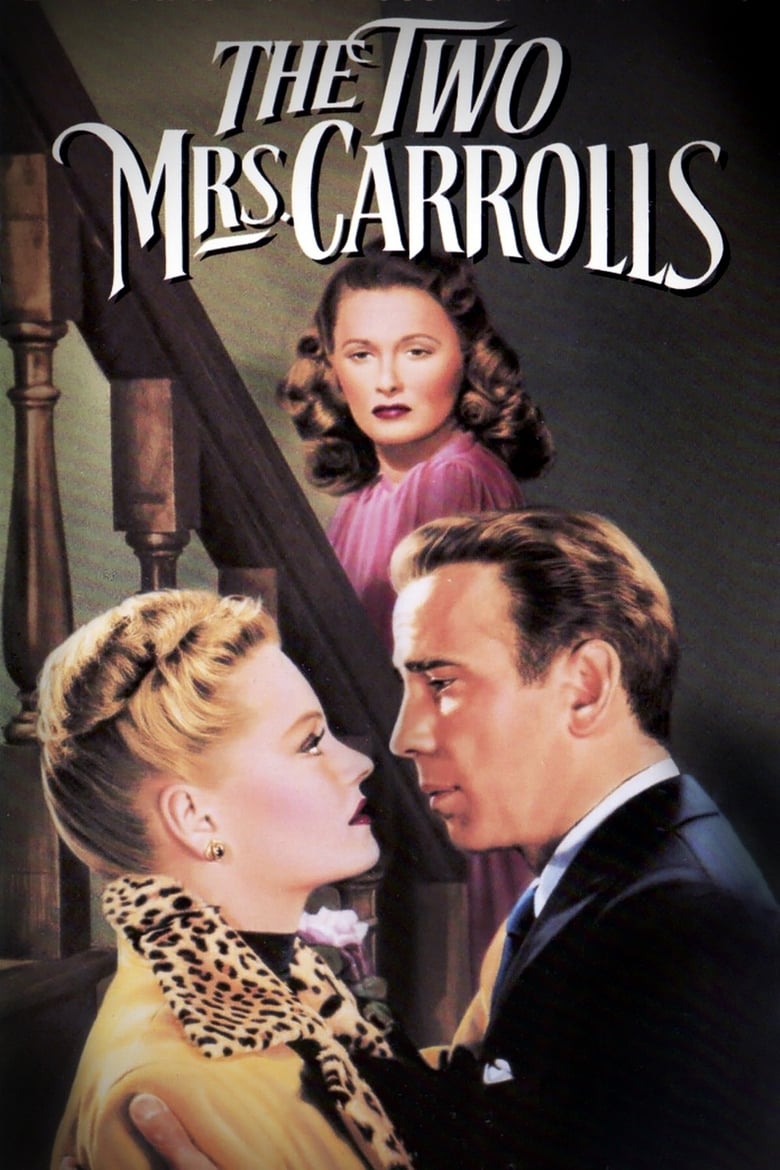
Geoffrey Carroll is an English artist living in Scotland when he falls for Sally Morton, a woman he meets while his first wife lingers inexplicably ill at home. When that wife dies under circumstances no one quite examines, Geoffrey marries Sally and installs her in his English country house, where his quiet young daughter Beatrice and his bumbling family physician Dr. Tuttle round out the household. Sally arrives with gratitude and relief, believing she has found stability in a charming, if brooding, man.
A second woman, the bright and socially ambitious Cecily Latham, begins drawing Geoffrey's attention, and Sally soon notices the painter's moods shifting in ways she cannot interpret. Strange things accumulate: a glass of milk left at her bedside, a weakening she cannot explain, a portrait of herself rendered in the sickly pallor Geoffrey once used for his first wife. Dr. Tuttle, well-meaning but incurious, misreads every symptom.
The Two Mrs. Carrolls works a Gothic variant on the noir formula, replacing the urban crime machine with a sealed domestic world in which the institution of marriage becomes the trap. Bogart is cast against the grain of his tough-guy image as the predator rather than the pursuer, and the film uses that displacement to examine how charm and social respectability can serve as cover for systematic cruelty.
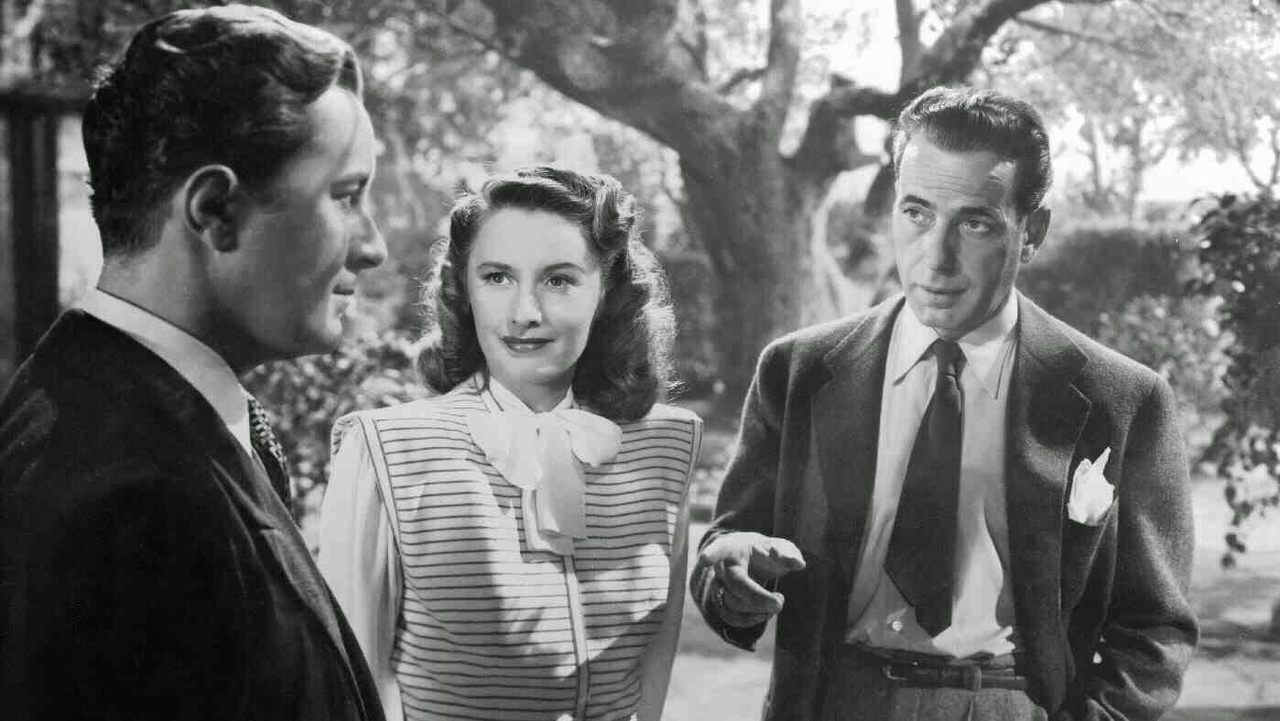
Adapted from Martin Vale's stage play and shot largely on Warner Bros. soundstages, The Two Mrs. Carrolls arrives at an awkward intersection between Gothic melodrama and psychological noir. The film is most interesting as a study in miscasting that partially works: Bogart's screen authority had been built on men who absorb danger, and repositioning him as its source produces a residual unease that straightforward villainy might not. The picture's weaknesses are structural – the third act turns on revelations that arrive too late and too schematically – but its atmosphere, cultivated by Franz Waxman's tightly wound score and J. Peverell Marley's deep-shadow interiors, sustains the dread across its middle section. Barbara Stanwyck, oddly passive for an actress of her command, suggests a woman too intelligent to ignore the signs yet too entangled to act on them, which is finally the film's most honest psychological observation.
– Classic Noir
Marley frames the scene in a tight, high-contrast setup: the bedroom walls fall into near-total darkness while a single practical lamp isolates the glass of milk on the nightstand with the clarity of a still life. The camera holds at Sally's eye level as she registers the glass, the composition forcing the viewer to measure its ordinary whiteness against the surrounding shadow. Geoffrey enters the frame from behind her, and Marley keeps both figures in focus, refusing the viewer the comfort of shallow depth that might soften the geometry of predator and prey.
The scene concentrates the film's central argument in a single prop: domesticity as delivery mechanism. The glass of milk is the one element in the house that carries the language of care, and Geoffrey has colonized it. Sally's inability to refuse it – to name what she suspects without proof – is the trap the film has been constructing, and the nightstand shot makes that trap legible without a word of dialogue.
J. Peverell Marley was not among the first generation of noir cinematographers who built the idiom on location streets and hard documentary light, and The Two Mrs. Carrolls reflects that orientation. Working on controlled Warner Bros. interiors, Marley relies on deep-focus compositions that keep both threatening and threatened figures in the same sharp plane, denying the viewer any optical alibi. His lighting setups favor a single dominant source – a fireplace, a bedside lamp, a curtained window – surrounded by graduated shadow that erodes the room's edges. The country house never feels like a refuge because Marley refuses to let the light settle comfortably anywhere within it. This moral geometry, in which illumination marks danger rather than safety, is the film's most consistent achievement and holds the picture together in passages where the screenplay falters.
TCM is the most reliable rotating source for Warner Bros. titles of this era and frequently programs Bogart deep cuts alongside his canonical work.
MaxSubscriptionAs a Warner Bros. production, the film has appeared on Max; availability rotates so confirm before seeking.
TubiFree / Ad-supportedTubi has carried the film in the past, making it the most accessible no-cost option, though streaming rights for this title shift.