Films People Pull a Fast One Night Beat Reading Room On TV Shop
Two Dollar Bettor 1951
1951 Jack Broder Productions Inc.
★★★☆☆ Notable
Film Noir · 72 minutes · Black & White

Two Dollar Bettor

Directed by Edward L. Cahn
Year 1951
Runtime 72 min
Studio Jack Broder Productions Inc.
TMDB 5.4 / 10
"A respectable man discovers that the track is a shorter road to ruin than he imagined."

John Hewitt is a mild-mannered bank employee in a mid-sized American city, the sort of man whose life is organized around routine and the appearance of propriety. When a colleague introduces him to horse racing, what begins as a modest recreation – two-dollar bets on weekend afternoons – quietly assumes the logic of compulsion. His wife and daughters remain unaware as the losses accumulate, and Hewitt begins covering shortfalls with small, careful thefts from the bank's accounts.

Into this deteriorating situation steps Rick Bowers, a smooth operator who moves at the edges of organized gambling and understands exactly how to read a man like Hewitt. Also present is Mary Slate, whose relationship to Bowers and to the larger criminal machinery around the racetracks keeps shifting in ways that complicate everyone's loyalties. As Hewitt's embezzlements grow larger and the bank's auditors draw closer, the film maps the distance between the man Hewitt believed himself to be and the one his choices have produced.

Two Dollar Bettor belongs to a minor but persistent strain of American noir concerned less with professional criminals than with ordinary men who make one affordable-seeming compromise too many. The film treats the gambling hall not as glamorous underworld but as a banal trap, and it positions Hewitt's fall as something systemic rather than merely personal – a condition of postwar consumer culture in which the dream of sudden gain corrodes the slower satisfactions of honest work.
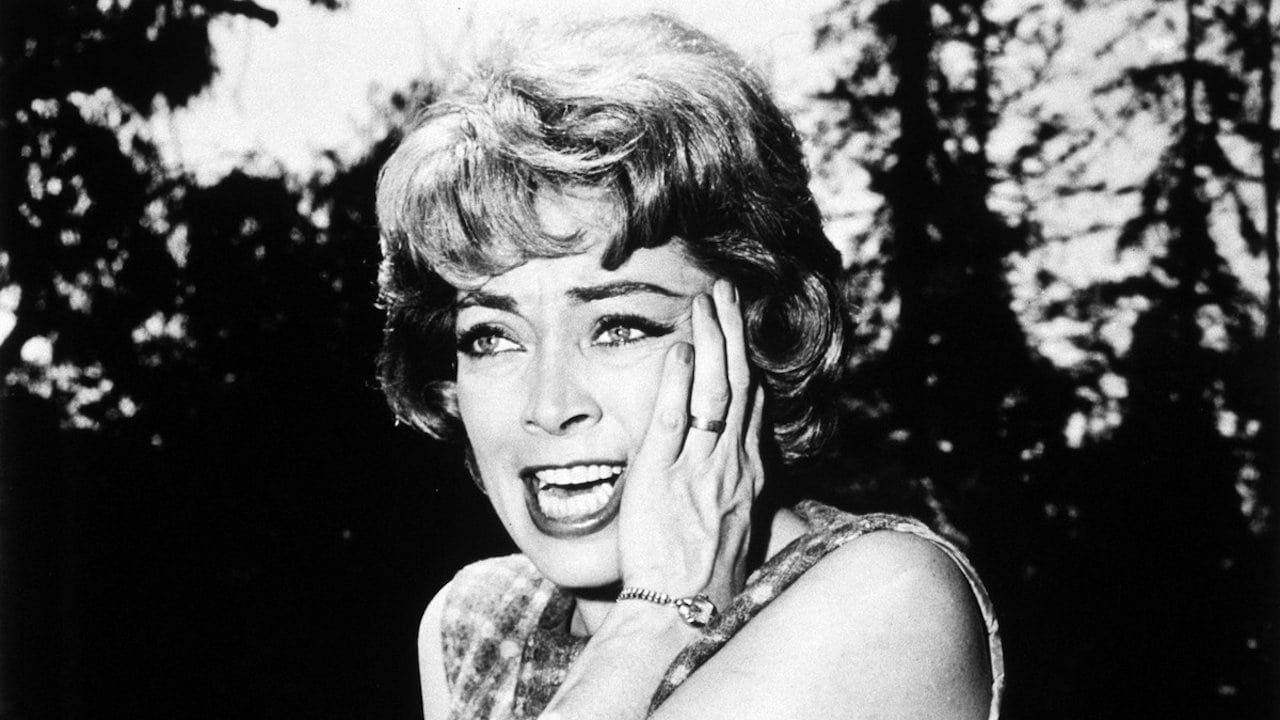
Classic Noir

Two Dollar Bettor is a modest production from Jack Broder's Realart operation, shot quickly and cheaply, yet it earns its place in the noir catalogue through the seriousness with which it pursues its cautionary argument. Edward L. Cahn, a director whose career ran from silents through exploitation pictures, keeps the film disciplined and unsentimental, refusing the melodramatic release that a lesser production would have reached for. Steve Brodie brings the right quality of coiled menace to Bowers without overstating it, and Marie Windsor, always economical, gives Mary Slate more ambiguity than the script strictly requires. What distinguishes the film from the dozens of similar B-noirs of the period is its insistence on locating moral failure inside the institutions – the bank, the family, the respectable neighborhood – rather than outside them. The racetrack is never rendered romantic. The film's portrait of compulsive gambling as a quiet, incremental erosion of identity anticipates later sociological treatments of addiction, and its period anxiety about financial respectability reads clearly as a postwar phenomenon.

– Classic Noir
3 ★★★☆☆ Notable
Credits

The Crew

DirectorEdward L. Cahn
ScreenplayHoward Emmett Rogers
Performances

The Cast

Close Reading

The Signature Scene

Two Dollar Bettor – scene
The Bank Office After Hours Hands in the Ledger

Hewitt sits alone at his desk, the overhead fluorescent cut and a single lamp casting a tight pool of light across the open ledger. The camera holds at a slight distance, framing him small against the dark geometry of filing cabinets and frosted-glass partitions. His hands move across the columns with practiced care, but the light falls unevenly – one half of his face lit, the other absorbed by shadow – a compositional choice that the film does not editorialize but simply allows to register.

The scene earns its place because it refuses dramatic event: no one enters, no telephone rings. It is simply a man doing arithmetic, and the horror is that the arithmetic is working. What the frame argues is that the decisive moment of Hewitt's ruin has already passed without announcement, and what we are watching is not a crisis but its administration. The moral logic of the film concentrates here: corruption in this world is not a rupture but a procedure.

Visual Language

The Cinematography

🎞️
Director of Photography – Director of Photography

The cinematographer on Two Dollar Bettor is not confirmed in surviving production records, a gap that is itself characteristic of the Realart B-unit economy in which the film was made. What the footage demonstrates is a competent application of low-budget noir grammar: hard single-source key lights that produce dense shadow fill, minimal diffusion, and a reliance on practical set dressing – lamps, windows, desk fixtures – to motivate the lighting setups. Interior studio work dominates, with location material used sparingly for the racetrack sequences, where flat daylight creates an intentional visual bleakness that drains the gambling environment of any glamour. Lens choice appears conservative, favoring standard focal lengths that keep the frame legible without expressionist distortion. The shadow work is most confident in the bank interiors, where angular architecture provides natural compositional structure. The overall visual register serves the film's moral argument: this is a story told in ordinary light gone wrong, not in the operatic chiaroscuro of more ambitious productions.

In the Catalogue

Themes & Motifs

Availability

Where to Watch

Also in the Directory

See Also