Films People Pull a Fast One Night Beat Reading Room On TV Shop
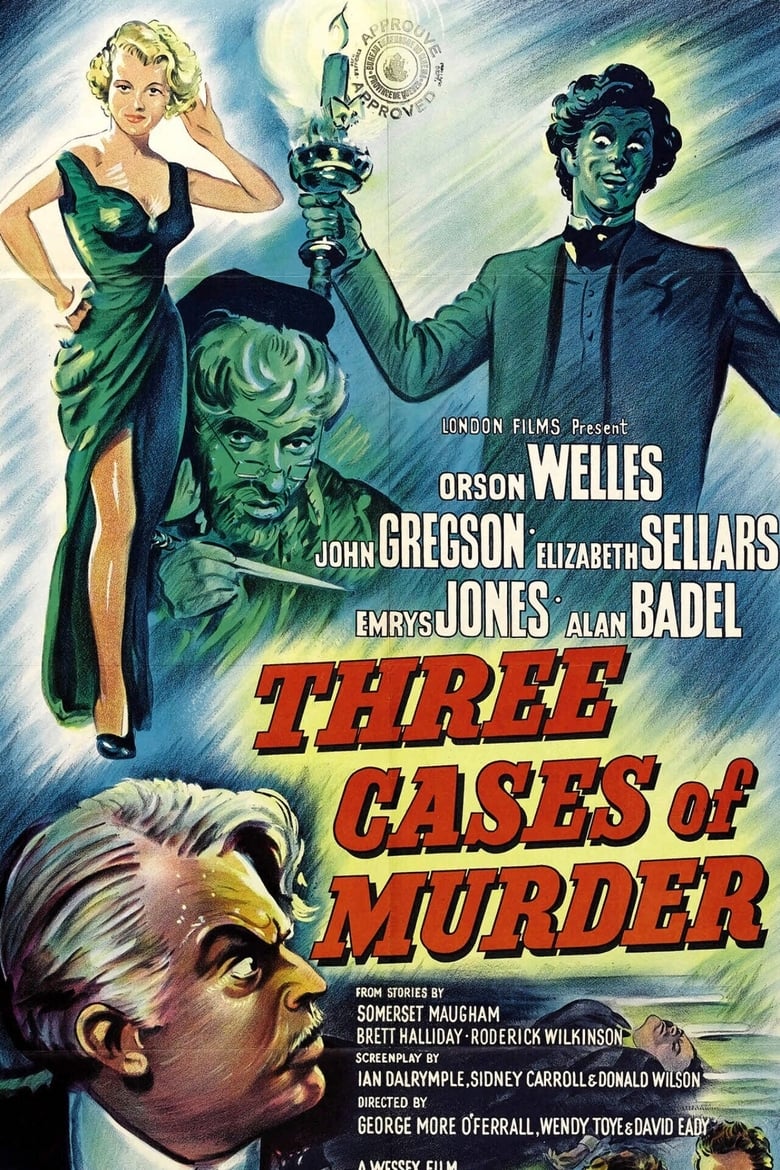
Three Cases of Murder 1955
1955 British Lion Film Corporation
★★★☆☆ Notable
Film Noir · 99 minutes · Black & White

Three Cases of Murder

Directed by David Eady
Year 1955
Runtime 99 min
Studio British Lion Film Corporation
TMDB 6.0 / 10
"Three stories, three murders, and one face that keeps returning from the dark."

Three Cases of Murder is a British anthology film comprising three separate stories, each turning on an act of killing and its consequences. In the first segment, 'In the Picture,' a museum visitor named Mr. X finds himself inexplicably drawn into a painted landscape, where a cottage harbours a secret that the painting's creator buried with him. The second story, 'You Killed Elizabeth,' follows George Wheeler and Edgar Curtain, two men whose friendship curdles into accusation and obsession after the woman they both loved dies under circumstances neither can fully account for. The third and longest segment, 'Lord Mountdrago,' centres on a powerful Foreign Secretary whose waking life is being systematically destroyed by the recurring dream-presence of Owen, a Welsh MP he once humiliated in the House of Commons.

Across all three tales, guilt refuses to stay contained. In 'You Killed Elizabeth,' the weight of suspicion passes between Wheeler and Curtain like a contagion, with neither man able to establish innocence or confirm culpability, and Elizabeth herself becoming more a contested symbol than a recoverable memory. In 'Lord Mountdrago,' the psychiatrist Dr. Audlin attempts to mediate between Mountdrago's aristocratic certainty and the more disturbing possibility that psychic reality and waking reality have begun to bleed into each other. Owen, mild and implacable, pursues Mountdrago not through violence but through the sheer persistence of his presence – in dreams, in parliament, in the corridors of power. The anthology structure allows the film to return obsessively to the same actor, Alan Badel, in each segment, a formal device that gives the film an undertow of doubling and inevitability.

Three Cases of Murder sits at the intersection of psychological horror and noir procedural, less interested in the mechanics of crime than in the moral weather that surrounds it. The film draws on Somerset Maugham's source story for the final segment and deploys Orson Welles at his most controlled and imperious, using the anthology form not as a convenience but as an argument: that murder is not an event but a condition, recurring and self-renewing across entirely different social registers and narrative modes.
Classic Noir

Three Cases of Murder arrives in 1955 as a relatively marginal item in the British noir tradition, yet it repays attention for the precision with which it uses the anthology format to mount a sustained argument about guilt and recurrence. The film is uneven – the first segment plays as mild supernatural whimsy, the second is more successful as a study in masculine self-deception, but it is the third that justifies the enterprise. Welles's Lord Mountdrago is a study in how authority curdles when it meets a reckoning it cannot absorb or dismiss. André Morell's Dr. Audlin provides the film with its most credible moral anchor, and the exchanges between analyst and patient carry a post-war weight: the exhaustion of certainty, the collapse of class as a defence against consequence. Doreen Carwithen's score is restrained and purposeful. Georges Périnal's cinematography, long seasoned in both British studio work and prestige production, gives the film a visual gravity that its anthology structure might otherwise have dissipated.

– Classic Noir
3 ★★★☆☆ Notable
Credits

The Crew

DirectorDavid Eady
ScreenplayIan Dalrymple
CinematographyGeorges Périnal
MusicDoreen Carwithen
EditingGerald Turney-Smith
ProducerAlexander Paal
Performances

The Cast

Close Reading

The Signature Scene

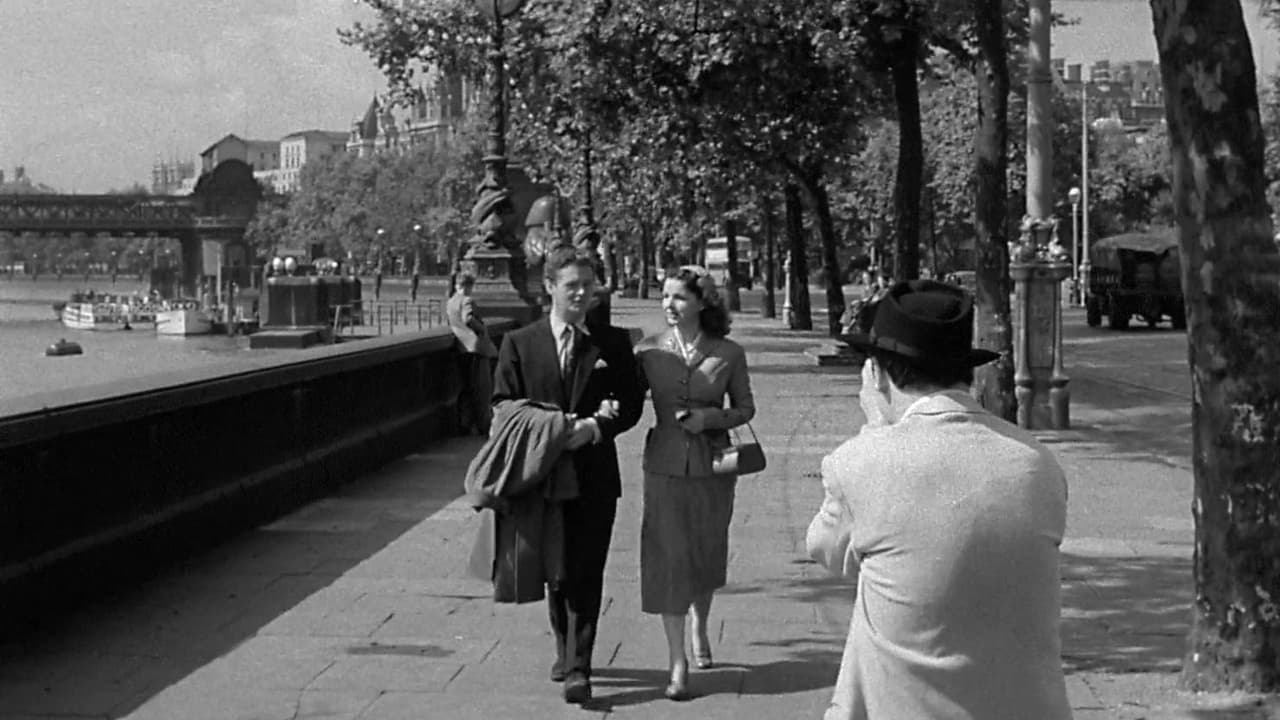
Three Cases of Murder – scene
Lord Mountdrago's Dream Parliament Owen Rises to Speak

Périnal composes the dream chamber with a geometry that mirrors the actual House of Commons while introducing subtle distortions of scale and depth – the ceiling presses lower, the benches recede at an angle that increases the sense of inescapable enclosure. Light falls from sources that cannot be identified, casting Mountdrago in a harsh frontal exposure that strips him of shadow while placing Owen in a cooler, more ambiguous illumination. The camera holds on Welles's face as recognition arrives: not shock, but the particular horror of someone who has encountered the same corner twice in a maze he believed he understood.

The scene functions as the film's central statement. Mountdrago's power – rhetorical, political, social – is precisely what Owen exploits, returning to the place where Mountdrago is most himself in order to demonstrate that dominance is a fiction the powerful maintain only so long as others consent to it. The dream parliament is not a fantasy but a court, and Mountdrago's inability to control its proceedings reveals that his waking authority was always performance rather than substance.

Visual Language

The Cinematography

🎞️
Georges Périnal – Director of Photography

Georges Périnal brings to Three Cases of Murder a career-long fluency in studio-constructed realism that serves the film's shifting registers without calling attention to itself. Working primarily on constructed sets at British Lion, Périnal uses deep-focus compositions in the Mountdrago segment to keep both the imposing Welles and the quieter Badel in sharp definition simultaneously, refusing the easy hierarchy that shallow focus would impose. His lighting in the dream sequences trades the high-contrast chiaroscuro of American noir for something more diffuse and disorienting – shadows that lack sharp edges, highlights that cannot be traced to a source. In 'You Killed Elizabeth,' he favours tighter, more constricted framings that reflect the claustrophobia of male jealousy and retrospective suspicion. The domestic interiors are lit with a slightly excessive normality that makes the violence beneath them more troubling. Throughout, Périnal's choices serve a consistent moral logic: the closer a character is to self-knowledge, the less stable and definable their visual environment becomes.

In the Catalogue

Themes & Motifs

Availability

Where to Watch

Also in the Directory

See Also