Films People Pull a Fast One Night Beat Reading Room On TV Shop
Night of the Hunter 1955
1955 Paul Gregory Productions
★★★★★ Essential
Film Noir · 93 minutes · Black & White

Night of the Hunter

Directed by Charles Laughton
Year 1955
Runtime 93 min
Studio Paul Gregory Productions
TMDB 7.9 / 10
"A false prophet hunts two children through a landscape where innocence offers no protection."

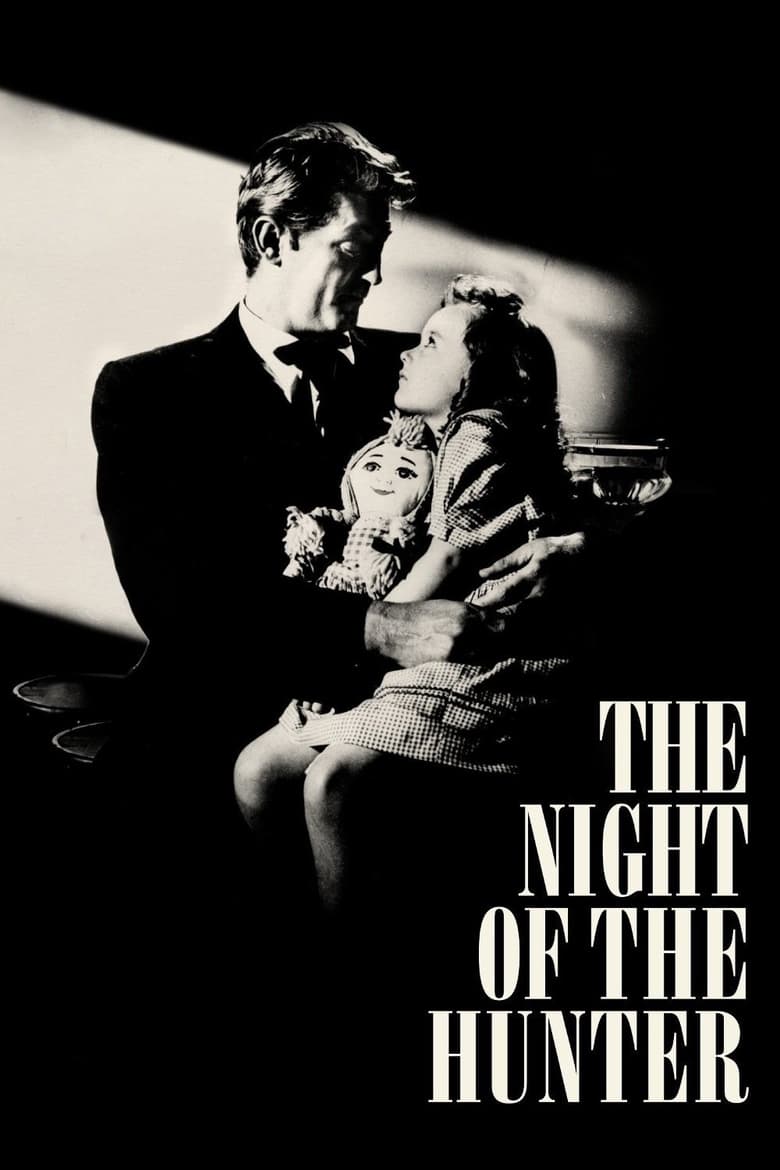
In a small West Virginia river town during the Depression, Ben Harper is hanged for murder and robbery, leaving behind a widow, Willa, and two young children, John and Pearl. Before his arrest, Ben hid ten thousand dollars in stolen money inside Pearl's rag doll, swearing the children to secrecy. In prison, Ben shares a cell with Harry Powell, a self-ordained itinerant preacher with the words LOVE and HATE tattooed across his knuckles and a habit of killing widows for their savings. When Powell is released, he travels to the Harper town with the children and their money firmly in his sights.

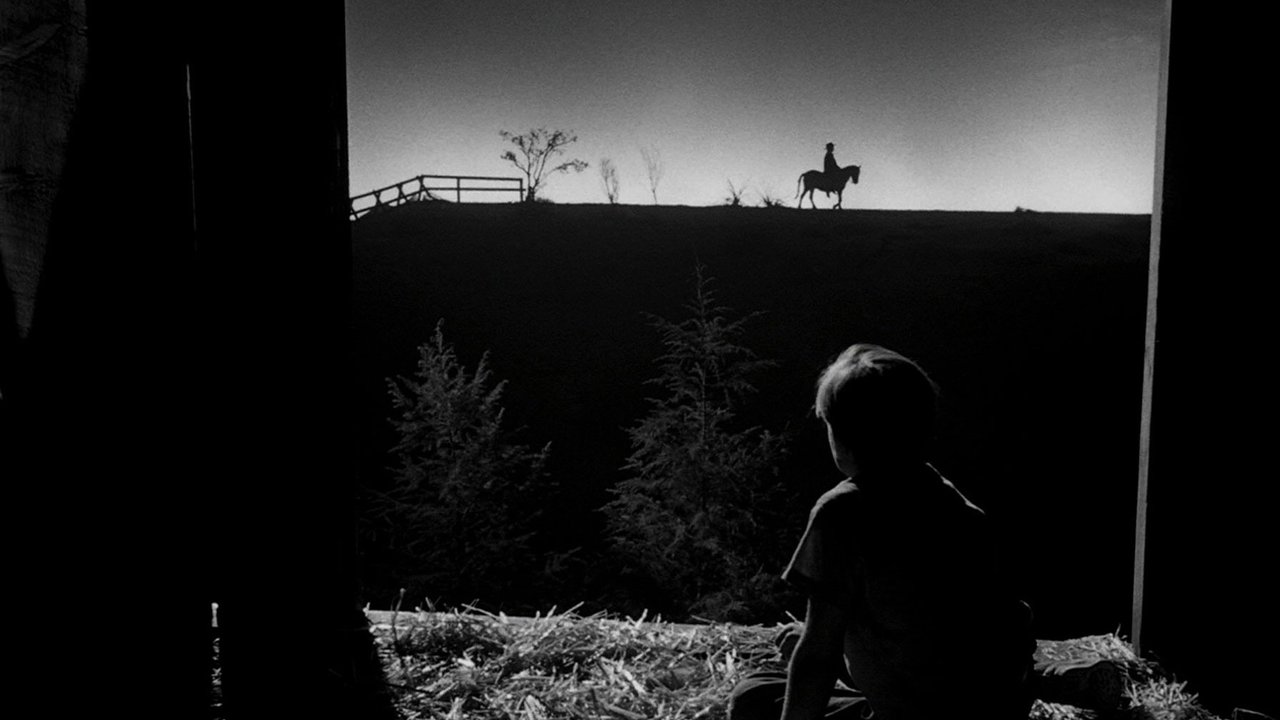
Powell courts and marries the credulous, spiritually vulnerable Willa, and the townspeople – led by the gossiping, pious Icey Spoon – embrace him without reservation. Only young John perceives the threat beneath Powell's hymn-singing charm. When Willa discovers the truth about the hidden money, Powell kills her and conceals the body in the river, then turns his full attention to extracting the location of the cash from the children. John and Pearl flee by night down the Ohio River, pursued relentlessly by Powell on horseback, moving through a dreamlike rural landscape that strips the story of any firm anchor in social realism.

Night of the Hunter occupies a position at the edge of classical noir, borrowing its moral darkness and its predatory male archetype while pushing both toward fable and expressionist allegory. The film's final act, in which the children find shelter with the fiercely practical widow Rachel Cooper, reframes the pursuit as a contest between two competing ideas of faith – one exploitative and theatrical, the other austere and earned. The outcome is not quite tragedy and not quite reassurance, and the film's refusal to resolve cleanly into either mode is central to its unease.
Classic Noir

Night of the Hunter is the only film Charles Laughton directed, and it stands as one of the more disciplined and formally coherent works produced in Hollywood during the 1950s. Laughton and cinematographer Stanley Cortez constructed a visual grammar drawn from German Expressionism, D.W. Griffith's pastoral silents, and the documentary grain of Depression-era photography, producing a film that is recognizably American in its anxieties while operating in a register closer to folklore than to crime procedural. Robert Mitchum's Powell is the genre's defining false patriarch – sanctimonious, sexually menacing, and genuinely dangerous – but the film's moral argument is carried by Lillian Gish, whose Rachel Cooper brings the weight of silent-cinema authority to a role that functions as a direct counter-proposition to Powell's fraudulent gospel. Released in 1955, the film was a commercial failure, and its reputation built slowly through retrospective critical attention. It now reads as a document of postwar American unease about religious demagoguery, the vulnerability of the isolated family unit, and the ease with which communities extend trust to performed virtue.

– Classic Noir
5 ★★★★★ Essential
Credits

The Crew

DirectorCharles Laughton
ScreenplayCharles Laughton
CinematographyStanley Cortez
MusicWalter Schumann
EditingRobert Golden
Art DirectionHilyard M. Brown
ProducerPaul Gregory
Performances

The Cast

Close Reading

The Signature Scene

Night of the Hunter – scene
The River at Night Children Drifting Through Darkness

John and Pearl float downstream in a small skiff, the frame composed so that the boat occupies only the lower register while the night sky and overhanging willows fill the remainder of the image. Cortez shoots with deep-focus lenses that keep both the children in the foreground and the dense, silhouetted riverbank in sharp resolution, creating a sense of enclosure rather than open escape. The light source is artificial and directional, falling on Pearl's face and the doll in her arms while John's expression is left in partial shadow. A spider's web catches the light in one composition; a bullfrog sits enormous in the near foreground while the children recede behind it. The cutting is slow, almost ceremonial, and Walter Schumann's score draws on lullaby structures that convert the danger into something elegiac.

The sequence establishes that the film's logic is not that of pursuit and evasion but of a child's understanding of a world populated by forces beyond rational management. The natural world – frogs, spiders, animals along the bank – observes the children without malice, offering a kind of indifferent sanctuary that the human world has withheld. Pearl, too young to fully register the danger, holds the doll and sings. John steers. The division of labor between them is the film's quiet moral center: knowledge is a burden, and the one who carries it cannot afford the protection of not knowing.

Visual Language

The Cinematography

🎞️
Stanley Cortez – Director of Photography

Stanley Cortez, who had previously shot Orson Welles's The Magnificent Ambersons, brought to Night of the Hunter a lighting philosophy rooted in high-contrast black-and-white composition where shadow functions not as atmosphere but as moral geography. Cortez and Laughton shot almost entirely on studio sets at Paul Gregory Productions, a controlled environment that allowed them to build precise, artificial landscapes – the river sequences were filmed on a studio tank with painted backdrops, enabling exact control over light fall and silhouette. Cortez used hard, directional arc lighting to eliminate mid-tones in key scenes, so that Powell's figure becomes a shape rather than a man when he appears on the horizon. Interior scenes in the Harper house use low-angle compositions that make ceilings visible and compress vertical space, producing a sense of entrapment. The lens work favors wide angles in exterior compositions to isolate figures against an indifferent sky, and tighter focal lengths in confrontation scenes to enforce claustrophobia. Every technical choice is in service of the film's insistence that the world depicted is not quite the real one.

In the Catalogue

Themes & Motifs

Availability

Where to Watch

Also in the Directory

See Also