Films People Pull a Fast One Night Beat Reading Room On TV Shop
This Side of the Law 1950
1950 Warner Bros. Pictures
★★★☆☆ Notable
Film Noir · 74 minutes · Black & White

This Side of the Law

Directed by Richard L. Bare
Year 1950
Runtime 74 min
Studio Warner Bros. Pictures
TMDB 4.8 / 10
"A dead man's identity fits a living stranger – until the truth begins to cost more than the lie."

In a small California town, drifter David Cummins is recruited by lawyer Philip Cagle for an unusual proposition: impersonate a wealthy, long-absent man named Calder Taylor in order to claim his estate. Cummins, down on his luck and short on options, accepts the arrangement without fully understanding what he is walking into. He is installed in the Taylor household, where the terms of an inheritance hinge on the principal's return – and where two women, the composed Evelyn Taylor and the volatile Nadine Taylor, have their own claims and their own reasons for watching him closely.

Cagle's scheme is more layered than Cummins was led to believe. The Taylor estate carries the residue of old crimes, and the women surrounding Cummins are neither passive nor transparent. Evelyn, whose stillness masks calculation, begins to move in a direction Cummins cannot fully read. Nadine, by contrast, is openly dangerous – a woman whose desires and resentments push against whatever arrangement Cagle has constructed. Cummins finds himself caught between competing manipulations, no longer certain who is using whom, or whether he was chosen for his resemblance to Taylor or his expendability.

This Side of the Law belongs to a subgenre of noir preoccupied with stolen identity and the moral corrosion that follows from pretending to be someone else. The film works within tight studio constraints – a brisk 74-minute running time, Warner Bros. economy production – yet sustains a credible atmosphere of suspicion and enclosure. It is less interested in action than in the slow erosion of Cummins's understanding of his own position, a protagonist who begins as opportunist and discovers, incrementally, that the trap was set before he arrived.
Classic Noir

This Side of the Law is a minor but coherent entry in the Warner Bros. noir cycle of the late 1940s and early 1950s, a period when the studio was producing tight, unpretentious programmers that traded on genre expectation without straining toward prestige. Richard L. Bare, primarily a director of short subjects and television, handles the material with functional efficiency rather than visual ambition. What lifts the film above routine is the casting of Viveca Lindfors, whose European gravity sits productively against the film's American vernacular. She brings an opacity to Evelyn Taylor that the screenplay earns only partially – her motives arrive before the writing fully supports them. Kent Smith is persuasive as the man who discovers that passivity is its own form of complicity. Robert Douglas delivers a Cagle who is corrupt in the manner of men who have rationalized corruption into professional method. The film's deepest interest, shared with much mid-period noir, is the question of whether a man without social standing can ever fully occupy a borrowed identity – and what it costs to find out the answer is no.

– Classic Noir
3 ★★★☆☆ Notable
Credits

The Crew

DirectorRichard L. Bare
ScreenplayRussell S. Hughes
CinematographyCarl E. Guthrie
MusicWilliam Lava
EditingFrank Magee
Art DirectionHugh Reticker
ProducerSaul Elkins
Performances

The Cast

Close Reading

The Signature Scene

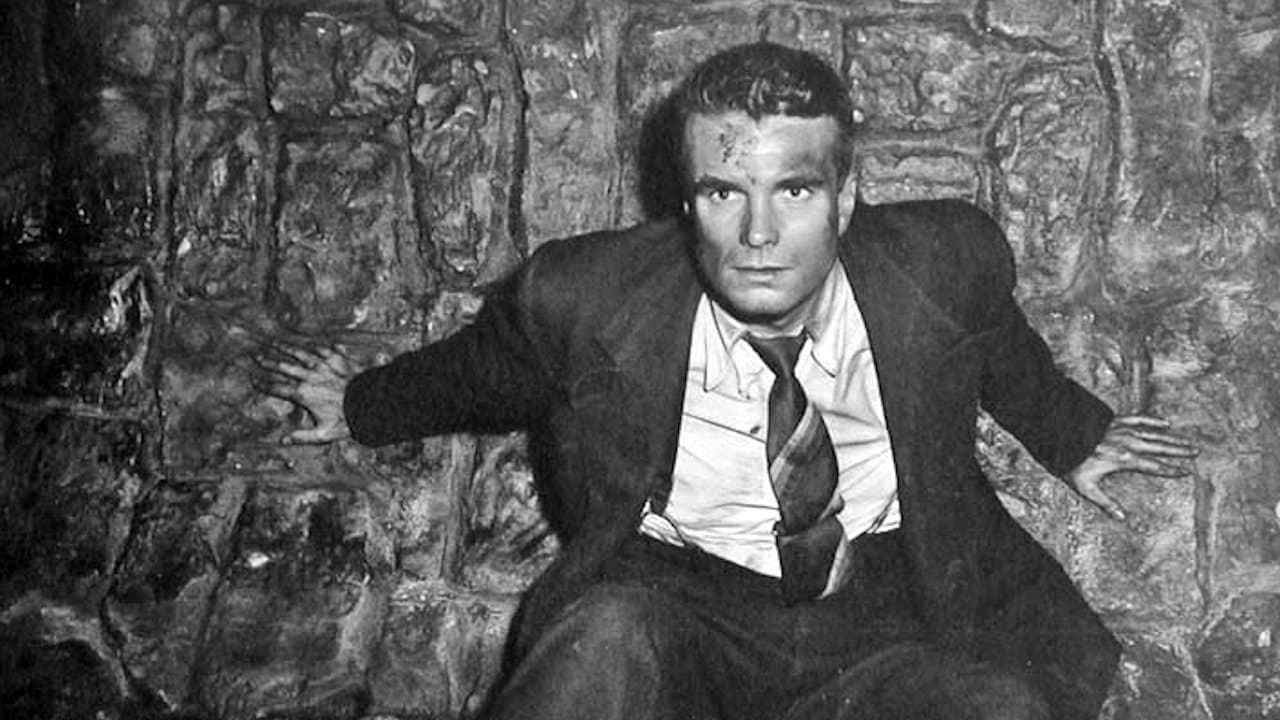
This Side of the Law – scene
The Drawing Room Confrontation Two Women, One Lie

Carl E. Guthrie frames the scene with both women in the same room but on opposing sides of the frame, the architecture of the Taylor house dividing the shot with a vertical element – a doorframe or a column – that literalizes the division between them. Light falls from a single practical source at the left edge of the composition, leaving Nadine in relative darkness and catching Evelyn's face at an angle that does not quite illuminate it. The camera holds in a mid-shot, refusing the close-up that would resolve ambiguity; we read expressions at a distance, as Cummins himself must.

The scene does the film's central argumentative work: it establishes that Cummins is not the primary agent in the room. He is present, physically between the two women, but the exchange proceeds as though his capacity for independent action has already been assessed and discounted. Noir's recurring proposition – that a man of limited means who accepts money under false pretenses has already surrendered his autonomy – is stated here not in dialogue but in the geometry of the shot.

Visual Language

The Cinematography

🎞️
Carl E. Guthrie – Director of Photography

Carl E. Guthrie's work on This Side of the Law is studio noir in the disciplined, unglamorous sense: low-key lighting deployed not as atmosphere for its own sake but as a practical correlate to the story's moral structure. Guthrie, a Warner Bros. contract cinematographer with a workmanlike reputation, uses shadow to designate withholding rather than threat – characters move in and out of light in proportion to what they are choosing to conceal. Interior spaces are constructed with a density that makes the Taylor estate feel layered rather than merely large; rooms contain rooms, and the camera tends to discover depth rather than assert it. There is little location work here; the film is almost entirely studio-bound, which Guthrie turns to advantage by controlling the light sources with precision, using practical lamps to anchor scenes that might otherwise feel artificial. The visual language is consistent with the film's argument: a world of enclosed spaces where legibility is a liability and shadow is not menacing but simply habitual.

In the Catalogue

Themes & Motifs

Availability

Where to Watch

Also in the Directory

See Also