Films People Pull a Fast One Night Beat Reading Room On TV Shop
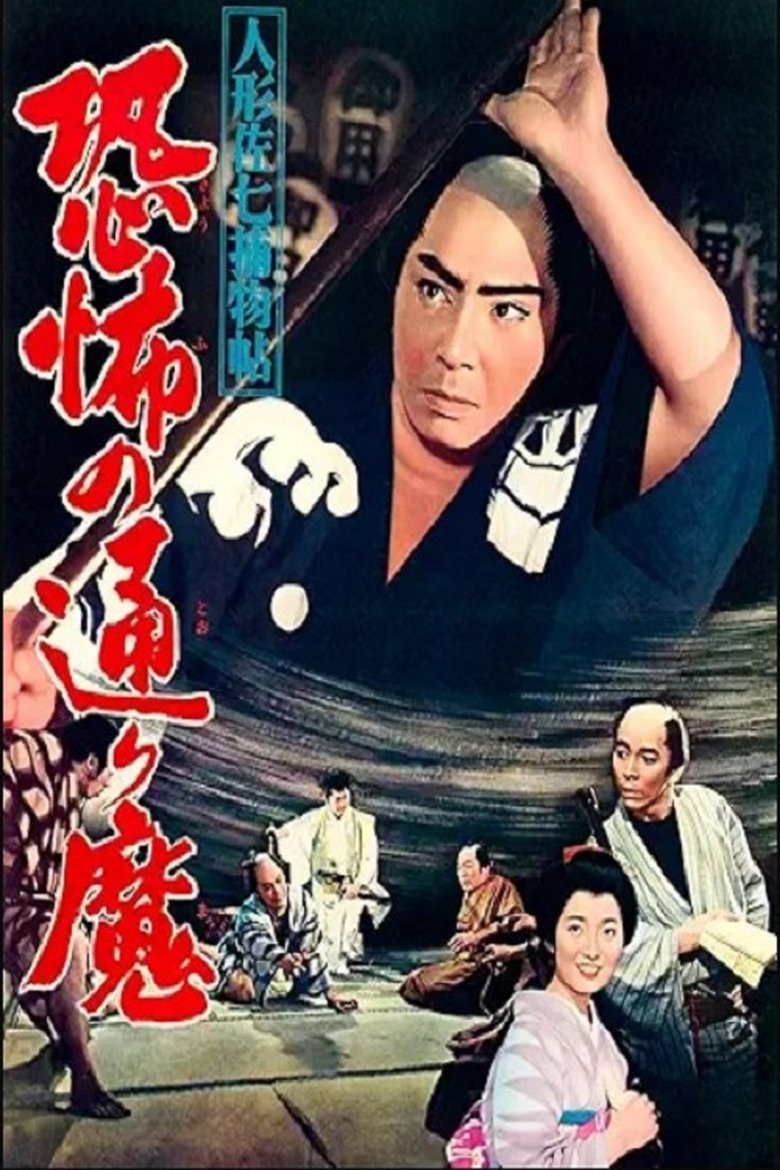
Terror Street 1961
1961 Toei Company
★★★☆☆ Notable
Film Noir · 61 minutes · Black & White

Terror Street

Directed by Junji Kurata
Year 1961
Runtime 61 min
Studio Toei Company
TMDB
"On a street where trust is currency, everyone is already overdrawn."

In the crowded backstreets of a postwar Japanese city, a man is drawn into a web of criminal obligation after witnessing an act of violence he cannot report and cannot ignore. The city itself functions as a trap – narrow alleys, shuttered storefronts, the persistent hum of a society rebuilding itself on foundations that are not entirely clean. The film establishes its protagonist as an ordinary man whose ordinariness is precisely his vulnerability.

As the investigation around the original crime tightens, allegiances that seemed fixed begin to shift. Figures who presented themselves as allies reveal conditional loyalties, and the protagonist finds that his attempts to remain neutral have already compromised him. The criminal network operating beneath the city's commercial surface is not a distant abstraction but something woven into the fabric of daily exchange – debts, favors, silence traded for safety.

Terror Street works within the tradition of the urban crime film but inflects it with the particular pressures of early-1960s Japan – a society caught between rapid modernization and the unprocessed weight of the recent past. Toei's genre programmers understood that noir's essential geometry, the lone individual encircled by systemic corruption, translated across cultural contexts without losing its force.

Classic Noir

Terror Street arrives near the end of Toei's first sustained engagement with hard-edged crime cinema, a cycle that drew on American noir conventions while remaining rooted in specifically Japanese social anxieties. At sixty-one minutes, the film operates with the economy of a B-picture, and Junji Kurata directs with a matter-of-fact efficiency that suits the material: no sequence outstays its purpose, no scene exists for atmosphere alone. What the film reveals about its era is the degree to which postwar Japanese genre cinema had absorbed the structural pessimism of American noir – the corrupt institution, the expendable individual, the city as moral environment – and was beginning to redirect that pessimism toward domestic targets. The criminal syndicate here is not an exotic intrusion but an extension of legitimate commerce, which gives the film a sociological edge that outlasts its modest production scale. As a representative Toei programmer it sits below the landmark works of the cycle, but it documents a formative moment in Japanese genre cinema with clarity and without pretension.

– Classic Noir
3 ★★★☆☆ Notable
Credits

The Crew

DirectorJunji Kurata
ScreenplayShinji Kessoku
MusicKuniteru Matsuno
Performances

The Cast

Close Reading

The Signature Scene

Terror Street – scene
The Alley Confrontation Shadows Closing from Both Sides

The camera holds at a low angle in a narrow passage between two buildings, the walls pressing close enough that the frame itself feels constricted. Light enters from a single source at the far end of the alley – a street lamp or the open mouth of an adjacent road – throwing the figures in the foreground into near-silhouette. The composition uses the geometry of the space deliberately: there is no lateral exit visible, only the depth of field receding toward that distant brightness, which reads less as escape than as exposure.

The scene crystallizes the film's central argument about the urban environment as a structure that eliminates choice. The protagonist is not ambushed in darkness but in a corridor of directed light, visible from both ends, belonging to neither. It is a spatial rendering of his situation throughout the film – a man who believed that staying between factions conferred safety, discovering that the middle ground is simply the place where both sides can see you most clearly.

Visual Language

The Cinematography

🎞️
Director of Photography – Director of Photography

The cinematographer of Terror Street remains unconfirmed in available records, a gap that is itself telling – Toei's efficient production apparatus of the early 1960s cycled through contract technicians at a pace that did not always preserve attribution. What the photography demonstrates, regardless of its author, is a working fluency with low-key lighting adapted to location interiors: the underexposed ceiling, the single practical lamp used as a motivated source, the deliberate suppression of fill light in scenes of confrontation. Lens choices favor moderate wide angles that keep environments in frame with characters, a choice that serves the film's argument about place as determinant. The city is not backdrop but co-protagonist – its architecture of dead ends and compressed passages doing narrative work that dialogue is not asked to repeat. Shadow work in the alley sequences shows particular care, deploying cast shadows not decoratively but functionally, as indices of threat that arrive before their sources do. The visual language is disciplined rather than inventive, which is the appropriate register for this kind of film.

In the Catalogue

Themes & Motifs

Availability

Where to Watch

Also in the Directory

See Also