Films People Pull a Fast One Night Beat Reading Room On TV Shop
Teenage Doll 1957
1957 Woolner Brothers Pictures
★★★☆☆ Notable
Film Noir · 71 minutes · Black & White

Teenage Doll

Directed by Roger Corman
Year 1957
Runtime 71 min
Studio Woolner Brothers Pictures
TMDB 5.5 / 10
"A girl on the run discovers that the streets belong to whoever survives the night."

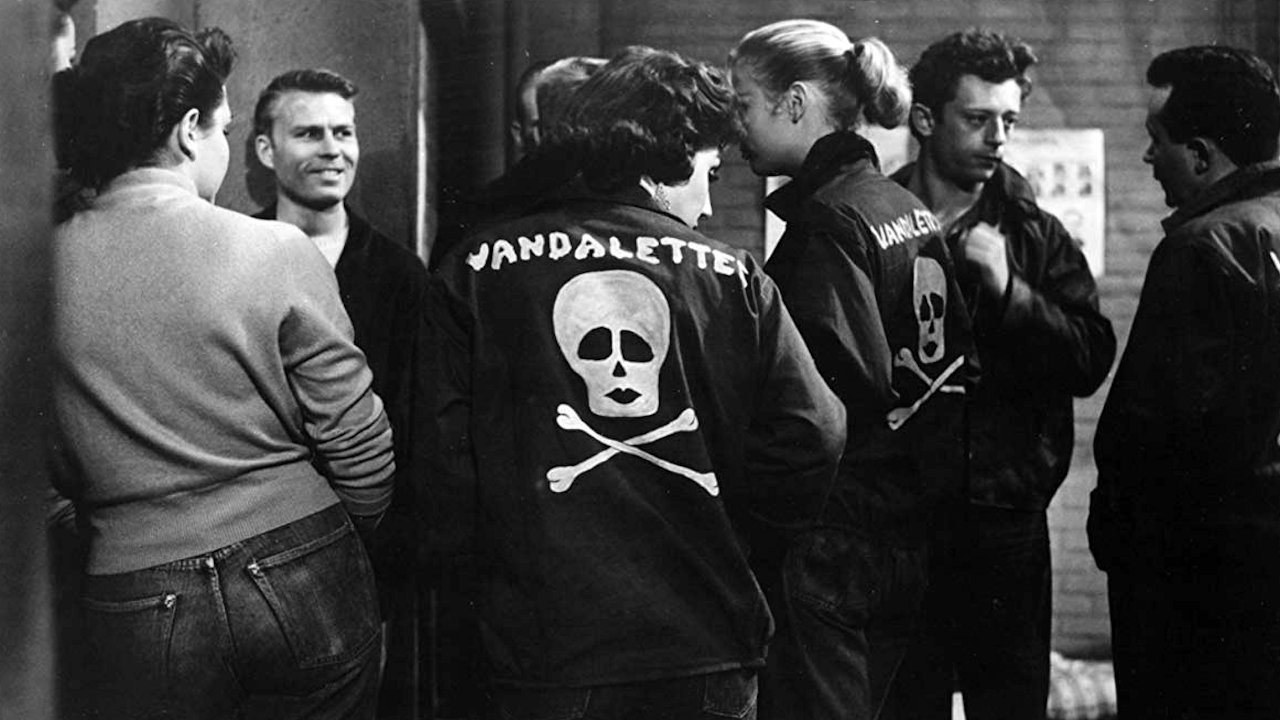
Barbara Bonney is a teenage outsider caught between two worlds in the back streets of Los Angeles. When a member of a rival girl gang turns up dead, Barbara becomes the prime suspect – hunted by the Black Widows, the all-female gang that claims the dead girl as one of their own. With her boyfriend Eddie unable or unwilling to shield her, Barbara has nowhere to run that the city will not eventually close off.

The Black Widows, led by the cold and calculating Helen, tighten their pursuit through the night. Allegiances among the girls – May, Betty, Janet, Lori, Eva – shift and fracture under pressure, each member carrying her own grievance, her own fear, her own reason to either protect Barbara or deliver her. Eddie moves between loyalty and self-preservation, and the adults who might intervene are conspicuously absent.

Corman frames the story as a one-night manhunt compressed into seventy-one minutes, using the gang milieu as a lens on postwar urban anxiety and the particular vulnerability of young women navigating a world indifferent to their survival. The film belongs to the cycle of juvenile delinquency pictures that ran through the late 1950s, but its concentration on female agency and female violence gives it a texture those cycle films rarely achieve.
Classic Noir

Teenage Doll sits at the intersection of two exploitation currents – the juvenile delinquency picture and the low-budget noir – and Corman, working with Woolner Brothers on a shoestring, understands that the overlap is where the film earns its authority. The screenplay refuses the standard moral framework in which transgressive youth is explained and corrected; instead, the gang hierarchy functions as a parallel social order with its own codes, its own punishments, and its own logic of loyalty. What the film reveals about 1957 is the degree to which the postwar promise of prosperity had not reached the streets it depicts. The women here are not corrupted innocents – they are inhabitants of a world that was never arranged for their benefit. Fay Spain as Helen brings a controlled menace that would not be out of place in a harder, more expensive production, and Corman, characteristically, knows when to keep the camera still and let performance carry the weight. At seventy-one minutes, nothing is wasted.

– Classic Noir
3 ★★★☆☆ Notable
Credits

The Crew

DirectorRoger Corman
ScreenplayCharles B. Griffith
CinematographyFloyd Crosby
MusicWalter Greene
EditingCharles Gross Jr.
ProducerRoger Corman
Performances

The Cast

Close Reading

The Signature Scene

Teenage Doll – scene
The Warehouse Confrontation Helen Holds the Room

Corman and Floyd Crosby light the warehouse interior with a single dominant source set high and to one side, casting long diagonals across the concrete floor and leaving the far corners in near-total darkness. Helen stands at the center of the frame while the other girls arrange themselves at unequal distances, the composition suggesting a hierarchy that language has not yet confirmed. Crosby holds a medium shot long enough that the stillness itself becomes a form of pressure.

The scene turns on the question of who in the group will act and who will hesitate, and the staging makes that question visible before anyone speaks. Helen's authority is spatial as much as verbal – she occupies the light, and the girls who doubt her are pushed toward shadow. It is a precise articulation of the film's central argument: that power in this world is not granted but held, and holding it requires the willingness to be seen.

Visual Language

The Cinematography

🎞️
Floyd Crosby – Director of Photography

Floyd Crosby, who had shot High Noon five years earlier and would become Corman's most reliable collaborator through the early 1960s, brings a discipline to Teenage Doll that the budget does not obviously invite. Working largely on location in the streets and interiors of Los Angeles, Crosby uses available architecture to generate shadow structures rather than constructing elaborate lighting setups. Wide-angle lenses on confined sets exaggerate depth and make rooms feel simultaneously cramped and exposed – a spatial tension that mirrors Barbara's situation throughout the night. Street sequences are underlit by design, the darkness functional rather than merely atmospheric, communicating the absence of institutional protection. When Crosby does use a strong key light, it tends to isolate a single face, and that isolation carries moral weight: to be seen clearly in this film is to be judged. The visual language throughout serves Corman's core preoccupation – a world in which the social contract has been quietly suspended.

In the Catalogue

Themes & Motifs

Availability

Where to Watch

Also in the Directory

See Also