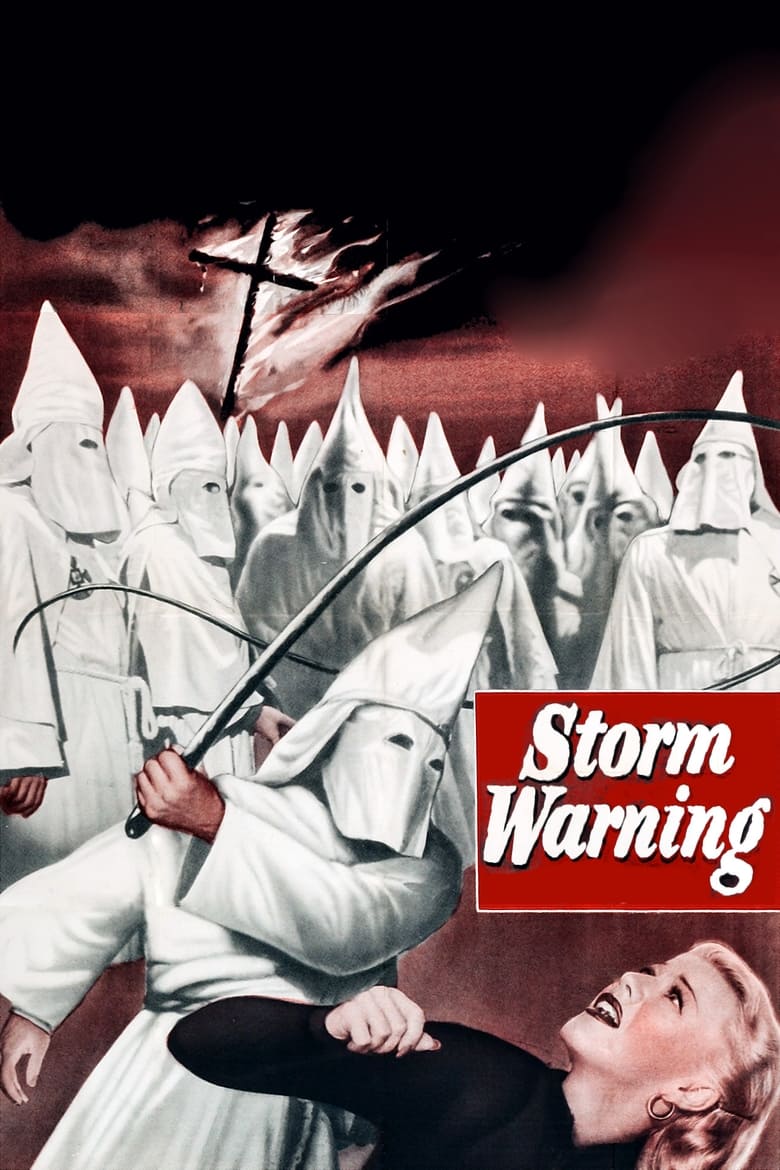
Marsha Mitchell, a New York fashion model traveling by bus through the American South, misses her connection in the small town of Rockpoint and decides to look up her younger sister Lucy, whom she has not seen in years. Arriving late at night, Marsha witnesses a Ku Klux Klan killing in the street outside the local jail. In the confusion, she takes shelter with a couple she does not yet recognize: Lucy Rice and her husband Hank.
Morning brings a brutal complication. Hank Rice is one of the Klansmen Marsha saw at the murder. Lucy, pregnant and dangerously devoted to her volatile husband, pleads with Marsha to say nothing. District Attorney Burt Rainey, who has been working to break the Klan's hold on Rockpoint, presses Marsha to testify. Marsha is caught between loyalty to her sister, fear of Hank's capacity for violence, and the moral weight of what she witnessed. The film turns on this triangle of coercion, with Hank tightening his grip on both women as the trial approaches.
Storm Warning occupies an unusual position within the noir cycle: it grafts the genre's characteristic architecture of entrapment and moral paralysis onto an explicit critique of organized racial terror, giving familiar noir mechanics – the compromised witness, the corrupt community, the closing net – a political edge that few studio productions of the period were willing to sustain. The film's tension derives less from who committed the crime than from whether anyone will pay for it.
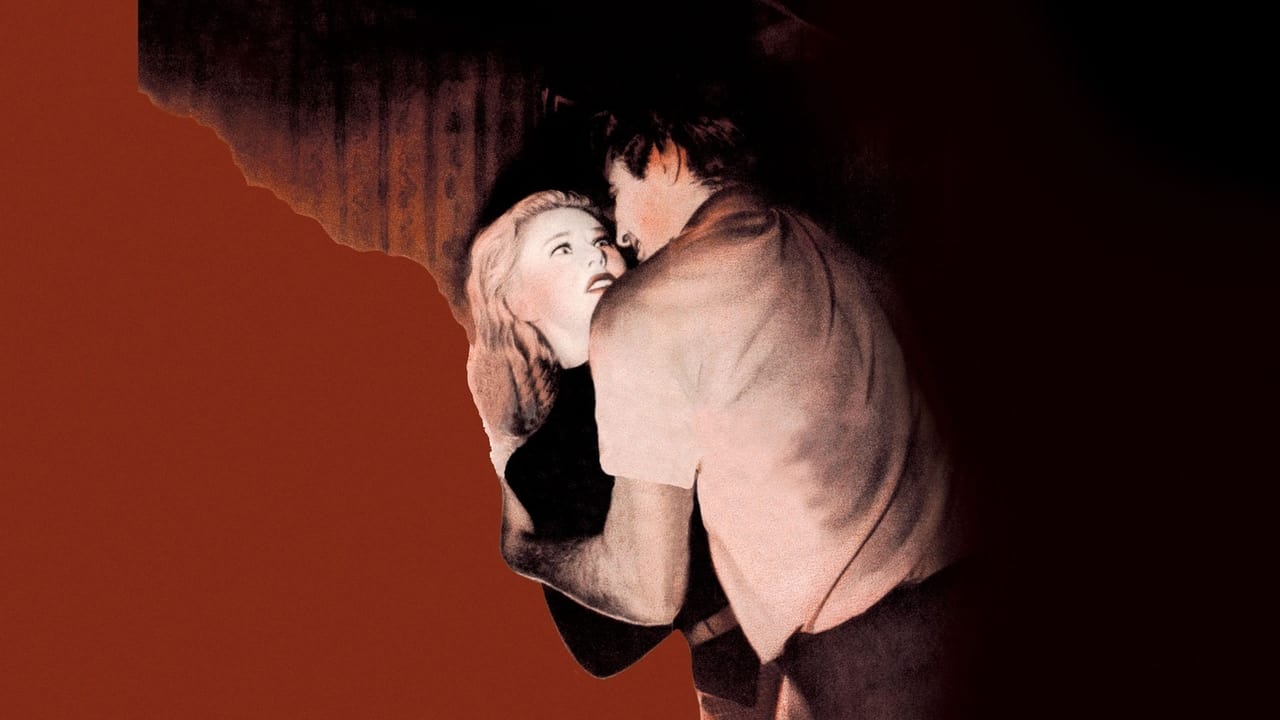
Storm Warning is a film that earns its discomforts. Warner Bros. and screenwriters Daniel Fuchs and Richard Brooks constructed a KKK thriller that used noir's grammar of constriction and moral compromise to address political subject matter largely avoided by Hollywood at the time. The casting cuts against type in productive ways: Ginger Rogers, typically associated with lightness and wit, brings a worn credibility to Marsha's ordeal, and Steve Cochran's Hank Rice is among the more convincing portraits of domestic menace in the cycle. Ronald Reagan's DA is the film's least interesting figure – a mouthpiece for civic virtue – but the screenplay is smart enough to keep him at the margins of the real drama. What the film achieves is a demonstration of how community complicity functions: not through overt conspiracy but through small decisions to look away. Stuart Heisler directs without flourish, which serves the material well. The film's limitations are real – its treatment of race is filtered entirely through white experience – but within those limits it is precise, purposeful, and harder to dismiss than its reputation suggests.
– Classic Noir
Carl E. Guthrie shoots the night exterior in high-contrast black and white, letting the torches of the robed figures burn as isolated points of light against a dark street that offers no depth or escape. When Marsha presses herself against a wall to watch, Guthrie cuts between her illuminated face – caught in reflected torch-glow, eyes wide and still – and the figures in the street, whose hoods reduce them to pure silhouette. The frame is composed to deny her any lateral exit; architecture and shadow press inward from both sides.
The scene establishes the film's central argument about witnessing. Marsha has seen something she cannot unsee, and the visual logic of the sequence – the light that finds her face while the killers remain anonymous shapes – marks her as irrevocably implicated. She is not a bystander who can walk away. The torch-glow that illuminates her is the same light cast by the crime, and the film will spend the rest of its running time exploring what it costs a person to carry that kind of involuntary knowledge in a place that demands forgetting.
Carl E. Guthrie's cinematography on Storm Warning works in the tradition of Warner Bros. social realism without abandoning the genre's appetite for shadow. Shooting largely on studio sets dressed to suggest a generic Southern town, Guthrie keeps his lighting schemes low and directional, allowing walls and doorframes to produce hard shadows that subdivide the frame and compress the characters' apparent freedom of movement. The domestic interiors of the Rice house are lit to feel simultaneously ordinary and threatening – overhead practicals augmented by side-light that carves Cochran's face into planes of authority and menace. Guthrie avoids the expressionist extremity of German-influenced noir in favor of a flatter, more documentary register that suits the film's political intent: the horror here is not exotic but institutional, embedded in recognizable American spaces. Where the cinematography most clearly serves the story's moral logic is in its consistent treatment of Marsha's point of view – she is almost always lit to be visible, readable, exposed, while the forces that surround her retain the privilege of shadow.
TCM holds Storm Warning in regular rotation and is the most reliable source for a clean, uncut broadcast print; streaming access is available via the TCM app with a cable authentication or Max bundle.
MaxSubscriptionAvailable through Max as part of the Warner Bros. classic library; the streaming transfer is serviceable, though no restoration has been confirmed for this title.
Archive.orgFreeAvailability on Archive.org is uncertain and should be verified; any copy present would likely be a public-domain dupe of variable quality rather than an authoritative print.