Films People Pull a Fast One Night Beat Reading Room On TV Shop
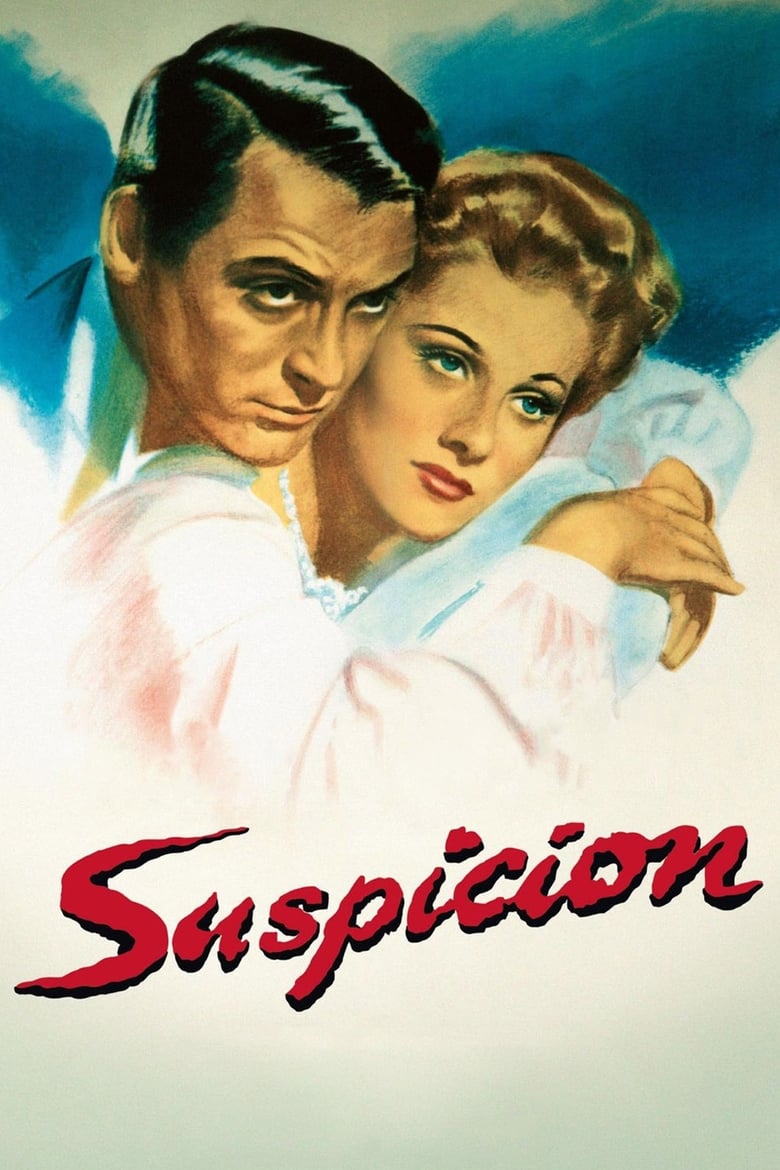
Suspicion 1941
1941 RKO Radio Pictures
★★★☆☆ Notable
Film Noir · 99 minutes · Black & White

Suspicion

Directed by Alfred Hitchcock
Year 1941
Runtime 99 min
Studio RKO Radio Pictures
TMDB 7.1 / 10
"A woman marries a charming stranger and spends her nights counting the ways he might kill her."

Lina McLaidlaw, a reserved and bookish young woman from a respectable English family, meets John 'Johnnie' Aysgarth on a train – a reckless, magnetic man with no visible income and a talent for spending money he does not have. Against her parents' measured disapproval, she marries him, persuaded less by certainty than by the force of his personality and her own longing to escape a quiet, diminished life.

As the marriage settles into routine, Lina begins to register the gaps in Johnnie's accounting of himself: missing money, dissolving business schemes, a close friend whose sudden death raises questions no one seems eager to answer. Each small discovery reconfigures what came before it, and Lina finds herself constructing, almost against her will, a theory of her husband as a man capable of murder – with herself as the intended victim.

Hitchcock works the film firmly within the tradition of the domestic thriller, where the home itself becomes the site of dread and the spouse becomes the unknowable other. The suspense operates not through violence but through inference and atmosphere, placing Suspicion alongside Gaslight and Sleep My Love as studies in the particular terror of a woman who cannot trust the person she has chosen to trust most.

Classic Noir

Suspicion arrives at an awkward moment in Hitchcock's relationship with his source material and his studio. The Francis Iles novel from which it derives resolves without ambiguity: the husband is a poisoner. RKO's insistence on preserving Cary Grant's screen likability forced an ending that many critics, then and since, have found evasive to the point of dishonesty. That compromise is real, and it marks the film. Yet to dismiss Suspicion on those grounds is to overlook what it achieves in the preceding ninety minutes – a sustained portrait of a woman whose intelligence and fear are in constant negotiation with her desire. Joan Fontaine, who won the Academy Award for the role, does not play Lina as a passive victim; she plays her as a woman who watches, deduces, and chooses to remain even as her conclusions darken. The film belongs to that postwar lineage of narratives about women trapped in households that may or may not be hostile, and it is honest enough about female interiority to remain, despite its compromised ending, a document worth reckoning with.

– Classic Noir
3 ★★★☆☆ Notable
Credits

The Crew

DirectorAlfred Hitchcock
ScreenplayAlma Reville
CinematographyHarry Stradling Sr.
MusicFranz Waxman
EditingWilliam Hamilton
Art DirectionVan Nest Polglase
CostumesEdward Stevenson
ProducerHarry E. Edington
Performances

The Cast

Close Reading

The Signature Scene

Suspicion – scene
The Bedroom Staircase The Luminous Glass of Milk

Johnnie ascends a darkened staircase carrying a glass of milk on a small tray, the frame held in a high-angle long shot that reduces him to a silhouette moving through shadow. Hitchcock and Stradling positioned a small light source inside the glass itself – a practical effect that makes the milk glow with an unnatural, concentrated luminosity against the surrounding dark. The camera tracks slowly as he climbs, the light never wavering, drawing the eye to the one object in the frame that seems to pulse with intention.

The scene is the film's thesis made visible: the question of whether what appears nourishing might in fact be lethal. Fontaine's Lina lies waiting, her gaze fixed on the approaching light, and the viewer is placed precisely in her position – unable to read the bearer, able only to watch the object he carries. It is a formal argument about the limits of knowledge within intimacy, rendered in a single, unhurried composition that does more work than any line of dialogue in the film.

Visual Language

The Cinematography

🎞️
Harry Stradling Sr. – Director of Photography

Harry Stradling Sr. shoots Suspicion in the deep, burnished chiaroscuro of RKO's studio productions of the period, but his most purposeful choices are the ones that isolate Lina within her own domestic space. Interior rooms are lit to suggest enclosure rather than comfort – window light arrives at angles that stripe rather than illuminate, and the shadows behind Fontaine's face are rarely fully resolved. Stradling favors moderate telephoto framings that flatten depth slightly, pressing the walls of the McLaidlaw home and later the Aysgarth cottage inward around the characters. The luminous glass of milk sequence is exceptional in part because it inverts the usual logic: here the light source is the object of dread rather than a source of clarity. Stradling's broader contribution is to make the English countryside and its respectable interiors feel faintly wrong – not through distortion but through the suppression of warmth, a palette that registers surfaces without revealing what lies beneath them.

In the Catalogue

Themes & Motifs

Availability

Where to Watch

Also in the Directory

See Also