Films People Pull a Fast One Night Beat Reading Room On TV Shop
Sunset Blvd. 1950
1950 Paramount Pictures
★★★★★ Essential
Film Noir · 110 minutes · Black & White

Sunset Blvd.

Directed by Billy Wilder
Year 1950
Runtime 110 min
Studio Paramount Pictures
TMDB 8.3 / 10
"A dead man floats in a Hollywood swimming pool and begins to explain how he got there."

Joe Gillis is a screenwriter running out of road. Behind on rent, out of ideas, and ducking repo men on the freeways of Los Angeles, he turns down a driveway on Sunset Boulevard to hide his car and finds himself inside the decaying estate of Norma Desmond, a silent-film star who has not worked in two decades and does not fully acknowledge that the world has moved on without her. The house is maintained by her taciturn butler Max, and its only other inhabitant is a pet chimpanzee recently buried in the garden. Norma believes she is preparing a comeback. She needs someone to shape her sprawling manuscript about Salome into a shooting script. Joe, with few alternatives and a weakness for comfort, agrees to stay.

What begins as a mercenary arrangement hardens into something more dangerous. Norma becomes possessive, then obsessive, surrounding Joe with gifts and dependency until he is effectively her prisoner in silk. When he makes contact with the outside world – specifically with Betty Schaefer, a young script reader at Paramount who sees genuine talent in his earlier work – he finds himself dividing his nights between the airless mansion on the boulevard and the honest, collaborative work he had originally come to Hollywood to do. The two worlds cannot coexist. Norma's hold on Joe is partly financial and partly psychological; she has constructed a reality in which she remains the center of everything, and Max, who was once her director and her husband, sustains the illusion rather than shatter it.

Sunset Blvd. operates simultaneously as a Hollywood autopsy and a noir study in entrapment. The film frames its narrative as a retrospective confession from a man already dead, a structural device that removes any possibility of escape and shifts the genre's usual dramatic tension from survival to inevitability. Wilder places his doomed protagonist not in the shadows of the criminal underworld but in the gilded wreckage of the dream factory itself, arguing that Hollywood's capacity for self-delusion is its own variety of violence.
Classic Noir

Sunset Blvd. occupies a position in the noir canon that is both central and anomalous. It observes every generic obligation – the femme fatale, the compromised man, the fatal miscalculation – while systematically relocating those conventions inside the film industry that produced them, producing a critique that is structural rather than merely satirical. Billy Wilder and Charles Brackett understood that Hollywood's machinery of illusion and its tendency toward predatory relationships were not incidental features but defining ones. Gloria Swanson's performance as Norma Desmond is not camp; it is precise. She plays a woman whose grip on reality has been eroded by decades of industry abandonment, and the film treats that erosion with more severity than pity. William Holden's Joe Gillis is noir's complicit everyman at his most lucid – a man who sees exactly what is happening to him and continues anyway. That combination of clear sight and paralysis is the film's most honest argument about the cost of surviving in a town built on fabrication.

– Classic Noir
5 ★★★★★ Essential
Credits

The Crew

DirectorBilly Wilder
ScreenplayCharles Brackett
CinematographyJohn F. Seitz
MusicFranz Waxman
EditingArthur P. Schmidt
Art DirectionHans Dreier
CostumesEdith Head
ProducerCharles Brackett
Performances

The Cast

Close Reading

The Signature Scene

Sunset Blvd. – scene
Norma's Private Screening Room She Watches Herself Watch

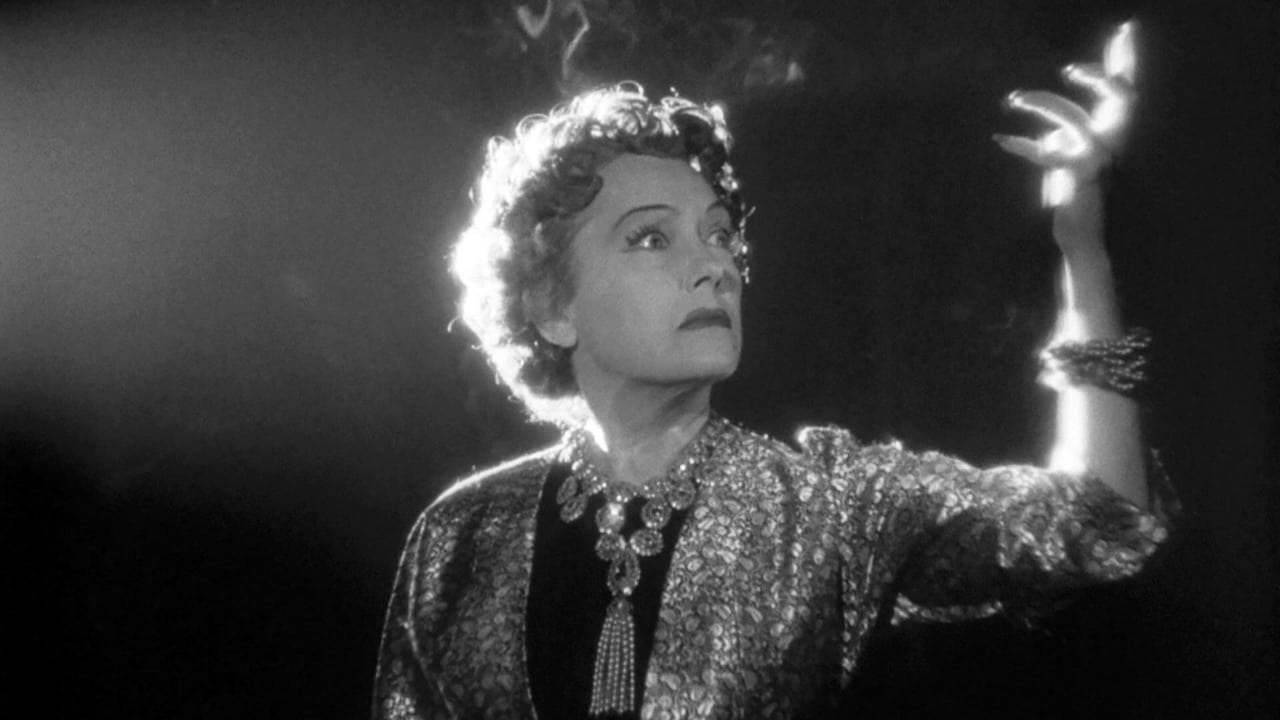
Wilder and cinematographer John F. Seitz frame the projection screening with deliberate inversion: the camera focuses not on the silent film playing but on Norma's face as she watches it, lit solely by the reflected light bouncing back off the screen. The result is a reversal of the usual cinematic contract. We become the audience watching an audience. Seitz holds the shot long enough for the flickering light to animate Norma's expression through a sequence of emotions – pride, hunger, something resembling grief – while the room around her remains in near-total darkness, collapsing the distinction between the woman and the image she is worshipping.

The scene encodes the film's central argument in a single composition: Norma Desmond is trapped inside her own reflection, deriving identity from footage that is fixed in time while the living world around her continues to move. Joe sits beside her in the dark, already understanding he is an accessory to her self-mythology rather than a participant in anything real. The light that makes her visible is borrowed from a past she cannot relinquish, and the darkness around both of them is the present, pressing in.

Visual Language

The Cinematography

🎞️
John F. Seitz – Director of Photography

John F. Seitz had already shot Double Indemnity with Wilder six years earlier, and Sunset Blvd. represents the fullest expression of their shared visual logic. Seitz favors deep-focus compositions that keep the Desmond mansion's baroque interiors oppressively present in the background even during close dialogue, so that the house functions as a character exerting continuous pressure. His lighting for the interior sequences uses high-contrast single-source setups that carve shadows into walls and faces alike, coding Norma's world as a place where reality has already partially dissolved. The famous opening pool shot – photographed from beneath the water's surface looking up at Joe's floating body – required Seitz to build a specialized underwater rig, and the distortion it introduces establishes immediately that this is a story told from beyond ordinary perspective. Location shooting on Sunset Boulevard and at Paramount's actual lot grounds the fantasy in recognizable geography, sharpening rather than softening the film's moral argument that the rot is not somewhere else but here, inside the machine.

In the Catalogue

Themes & Motifs

Availability

Where to Watch

Also in the Directory

See Also