Films People Pull a Fast One Night Beat Reading Room On TV Shop
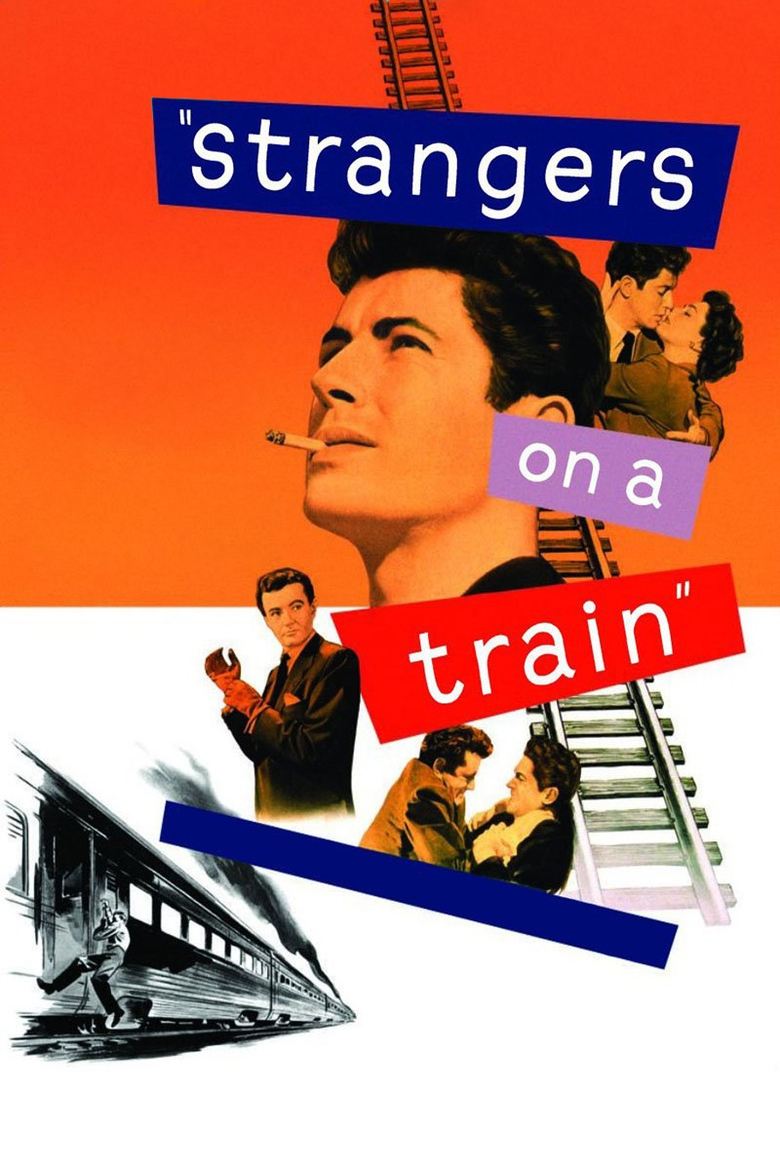
Strangers on a Train 1951
1951 Warner Bros. Pictures
★★★★★ Essential
Film Noir · 101 minutes · Black & White

Strangers on a Train

Directed by Alfred Hitchcock
Year 1951
Runtime 101 min
Studio Warner Bros. Pictures
TMDB 7.7 / 10
"Two strangers share a train, a scheme, and a fate neither can outrun."

Tennis pro Guy Haines boards a Washington-bound train hoping to secure a divorce from his estranged wife Miriam so he can marry Anne Morton, daughter of a prominent senator. On that same train he encounters Bruno Antony, a wealthy, insinuating stranger who has clearly researched Guy's life in detail. Over lunch, Bruno proposes what he frames as a logical exchange: he will kill Miriam if Guy will kill Bruno's overbearing father. Each man, Bruno reasons, will have committed the perfect crime – no motive, no connection, no evidence.

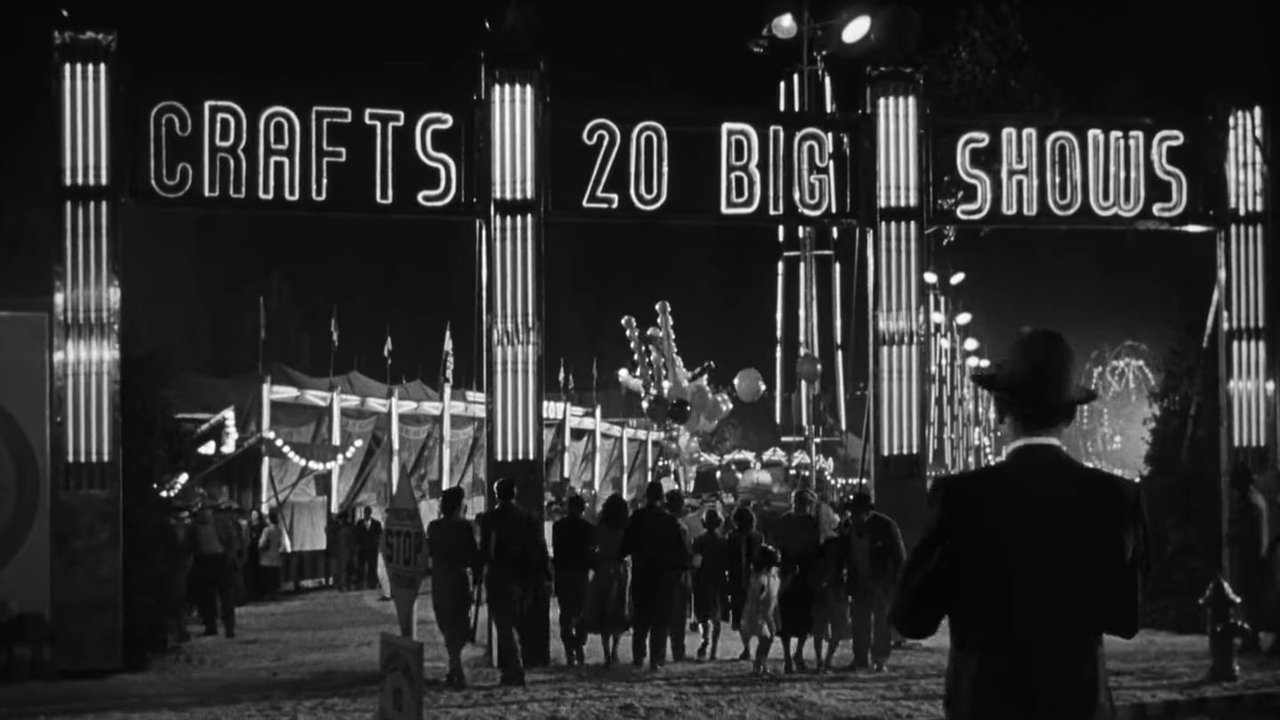
Guy dismisses the proposal as the fantasy of an unbalanced mind and thinks nothing more of it – until Miriam turns up strangled at a fairground amusement park. Bruno, having held up his end of an arrangement Guy never agreed to, now expects reciprocation, and begins applying pressure on Guy's professional and political ambitions with methodical patience. Guy finds himself entangled in a crime he did not commit, unable to prove his innocence without implicating himself in knowledge of the scheme, while Anne and her father sense that something has shifted irrevocably in the man they trust.

Strangers on a Train operates as a noir of transferred guilt and psychological doubling rather than one of criminal procedure or urban corruption. The film draws its tension not from the mechanics of detection but from the spectacle of a respectable man discovering how thin the membrane is between his own suppressed desires and the violence enacted in his name. It belongs to a strain of postwar American noir preoccupied with the complicity lurking inside ordinary ambition.
Classic Noir

Hitchcock adapted Patricia Highsmith's debut novel at a moment when noir was consolidating its grammar, and Strangers on a Train stands as one of the genre's most precise studies of moral contamination. What the film understands – and what elevates it above the thriller category – is that Bruno Antony is not simply a villain but a projection: the id of a man too cautious to acknowledge what he wants. Robert Walker's performance is the film's center of gravity, a portrait of psychopathic charm that anticipates later American cinema's interest in the articulate, educated killer. Farley Granger's deliberate blandness as Guy serves the film's argument rather than undermining it; his passivity is the point. Shot by Robert Burks in deep, architecturally controlled shadow, the film uses spatial geometry – parallel lines, mirrored compositions, converging angles – to enforce its thesis that these two men occupy the same moral coordinates. It is a film less concerned with crime as event than with guilt as condition, and that preoccupation places it squarely within noir's most serious ambitions.

– Classic Noir
5 ★★★★★ Essential
Credits

The Crew

DirectorAlfred Hitchcock
ScreenplayCzenzi Ormonde
CinematographyRobert Burks
MusicDimitri Tiomkin
EditingWilliam H. Ziegler
Art DirectionTed Haworth
CostumesLeah Rhodes
ProducerAlfred Hitchcock
Performances

The Cast

Close Reading

The Signature Scene

Strangers on a Train – scene
The Fairground Strangling Reflected Murder in Glasses

As Bruno follows Miriam through the fairground's Tunnel of Love and out onto the island known as Magic Isle, Hitchcock and Burks withhold direct coverage of the killing itself. Instead, the strangulation is shown in reflection – caught in one lens of Miriam's dropped glasses, the image convex and distorted, the struggling figures rendered miniature and remote. The frame tilts slightly as the glasses settle on the grass, and the reflected action plays out in silence against the ambient noise of the park. Light from the fairground rides catches the lens at intervals, giving the image an intermittent, dreamlike flicker.

The choice to show murder as a reflection is not an evasion but a statement. Miriam's glasses become a surrogate eye, and the distortion of the lens suggests that what we are watching is already at one remove from reality – a crime that exists, for Guy, only in rumor and implication, yet which will define everything that follows. The convex reflection compresses both killer and victim into a single curved surface, anticipating the film's recurring argument that Bruno and Guy share a frame they cannot escape.

Visual Language

The Cinematography

🎞️
Robert Burks – Director of Photography

Robert Burks, working here on the first of his eleven collaborations with Hitchcock, brings a geometric intelligence to the cinematography that mirrors the film's moral logic. He favors deep-focus compositions that keep foreground and background in simultaneous tension, allowing Bruno to haunt the edges of frames ostensibly belonging to Guy. The Washington locations – Union Station, the Jefferson Memorial, the National Mall – are shot with an institutional coldness that strips them of grandeur; these are civic spaces that offer no sanctuary. Studio interiors, particularly the Antony mansion, are lit to emphasize vertical shadow, confining characters within columns of darkness that suggest prison architecture. Burks uses a wide-angle lens for Bruno's close-ups, subtly distorting his face and lending his persuasions an unsettling physical proximity. The climactic carousel sequence, shot with undercranked cameras and extreme low angles, transforms mechanical motion into something approaching nightmare – centrifugal force made visible as moral chaos. Throughout, shadow falls not on guilt but on aspiration.

In the Catalogue

Themes & Motifs

Availability

Where to Watch

Also in the Directory

See Also