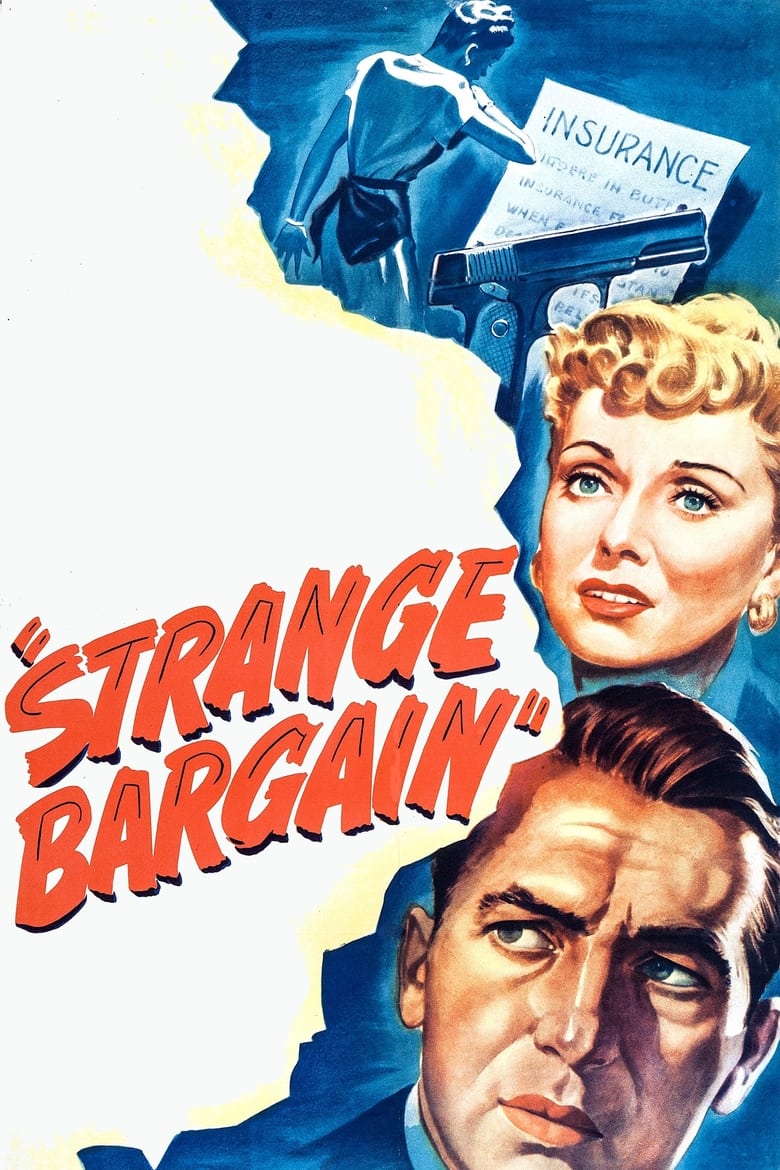
Sam Wilson, a mild-mannered bookkeeper at a failing Los Angeles firm, is called into the office of his employer, Malcolm Jarvis, and offered an extraordinary proposition. Jarvis, ruined by debt and unwilling to face further humiliation, intends to take his own life that evening and asks Sam to make the death appear as murder – a deception that would allow the insurance policy to pay out to Jarvis's wife, Edna. Desperate himself, facing unemployment and a family he cannot support, Sam reluctantly agrees. When he returns to the Jarvis home the following morning to arrange the scene, he finds the study empty and the body gone.
What should have been a simple, if morally compromised, act of loyalty becomes something far more dangerous. A homicide investigation opens, and Sam finds himself shadowed by Detective Richard Webb, whose attention is quiet but persistent. Sam's wife Georgia, played with clear-eyed intelligence by Martha Scott, senses that her husband is concealing something, and the domestic space becomes its own pressure chamber. Meanwhile the question of what actually happened to Malcolm Jarvis – whether he died by his own hand, or someone else's – pulls Sam deeper into a situation he never fully understood when he agreed to enter it.
Strange Bargain operates at the quieter, more procedural end of noir, less interested in violence or femmes fatales than in the corrosive weight of a single bad decision. The film traces how ordinary complicity, undertaken for sympathetic reasons, strips a man of the ability to speak plainly to anyone around him. It belongs to a minor but consistently interesting strand of postwar noir concerned with the economic vulnerability of the white-collar worker – the man in the office whose respectability is always one paycheck away from collapse.
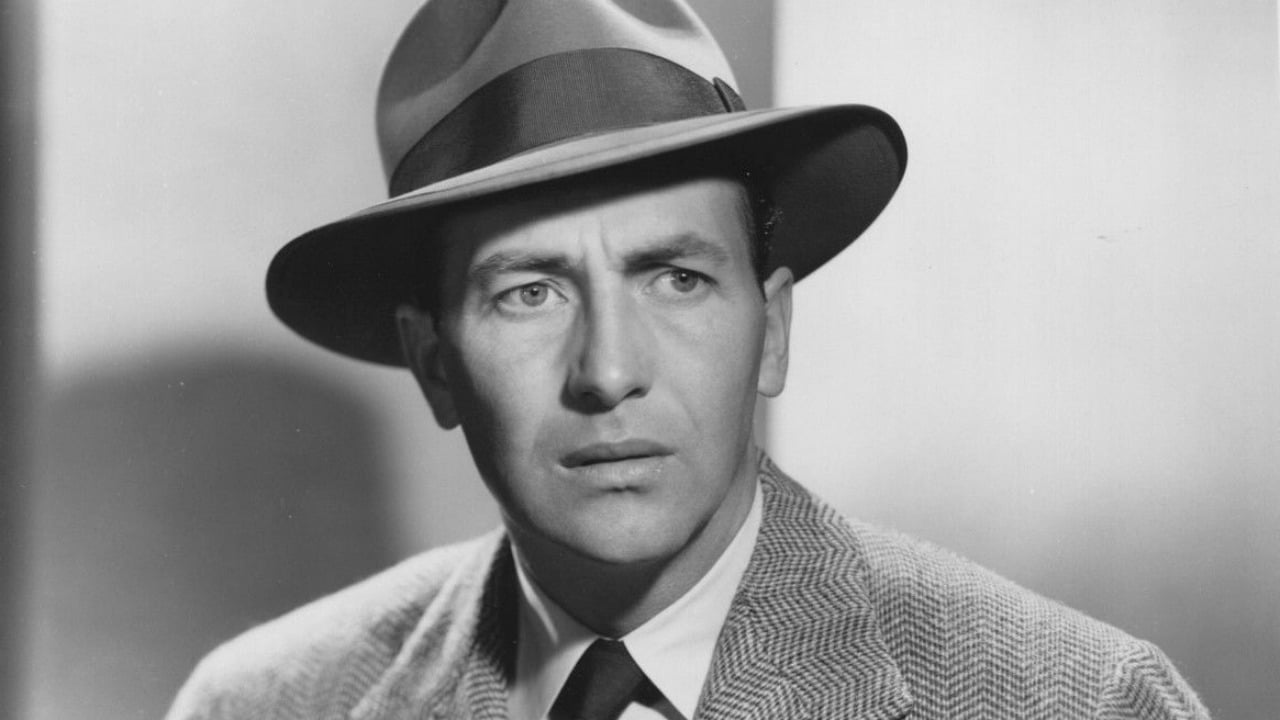
Strange Bargain is a modest, disciplined picture that earns its place in the noir catalogue not through flamboyance but through the precision of its moral architecture. Will Price, working from a tight script, keeps the film focused on its central irony: a man cannot prove his innocence without confessing to a crime he did actually commit, however benign his intentions. Jeffrey Lynn's performance as Sam Wilson is carefully underplayed, the character's decency made more damning by the ease with which he agrees to Jarvis's scheme. Harry Morgan brings an unsettling stillness to the detective role, and Katherine Emery's Edna Jarvis carries a grief that resists simple reading. The film reflects a specific postwar anxiety about the precariousness of middle-class stability and the way institutions – insurance companies, police departments, employers – hold power over individuals who have little recourse. At 68 minutes it makes no wasted moves, and Friedrich Hollaender's score exercises a restraint that serves the material well.
– Classic Noir
Sam enters the Jarvis study expecting to arrange a tableau he has been rehearsing mentally since the night before. Harry J. Wild's camera holds the room from the doorway at first, the frame crowded with the furniture of a prosperous life now in disorder – the desk lamp still burning against daylight, a glass left at an angle that reads as either placed or dropped. When Sam crosses to where Jarvis should be, the camera follows at shoulder height, refusing to cut away or prepare the viewer with a reverse angle. The empty chair is simply there, undramatic, and the light from the window falls across it without ceremony.
The scene's power lies in what it withholds. Sam's face registers confusion before fear, and that order matters – this is a man whose moral calculus has been built on a fixed set of variables, and the absence of the body does not immediately register as danger but as wrongness, a clerical error in the universe. The film's central argument arrives here without announcement: the bargain Sam thought he had made was never the real one, and the room's mundane emptiness is a more effective image of entrapment than any shadowed alley could provide.
Harry J. Wild, one of RKO's most reliable cinematographers of the period, brings to Strange Bargain a visual language suited to its domestic and institutional settings rather than the expressionist extremes more commonly associated with noir. Wild works predominantly with mid-range lenses that flatten spatial depth only slightly, keeping the viewer inside the same compressed middle-class interiors that confine the characters. Shadow work is present but never decorative – darkness falls where it would plausibly fall in a real room, through Venetian blinds or from practicals just out of frame, rather than being imposed for atmosphere. Exterior scenes use available location light in ways that root the film in recognizable Los Angeles geography without opening into the nocturnal city poetry of a more ambitious production. This restraint is a deliberate choice that reinforces the film's moral logic: Sam Wilson's world is not the world of extraordinary evil but of ordinary light, ordinary rooms, ordinary consequence.
Tubi has carried a number of RKO catalogue titles from this period and is the most likely free streaming source for this film, though availability should be confirmed.
Archive.orgFreeAs a 1949 RKO production whose copyright status warrants checking, Archive.org may host a public domain print, though image quality will vary by source.
TCMBroadcast / Subscription (Max)TCM periodically programs minor RKO noirs in themed blocks; checking their schedule or the Max library is advisable for a broadcast-quality presentation.