Films People Pull a Fast One Night Beat Reading Room On TV Shop
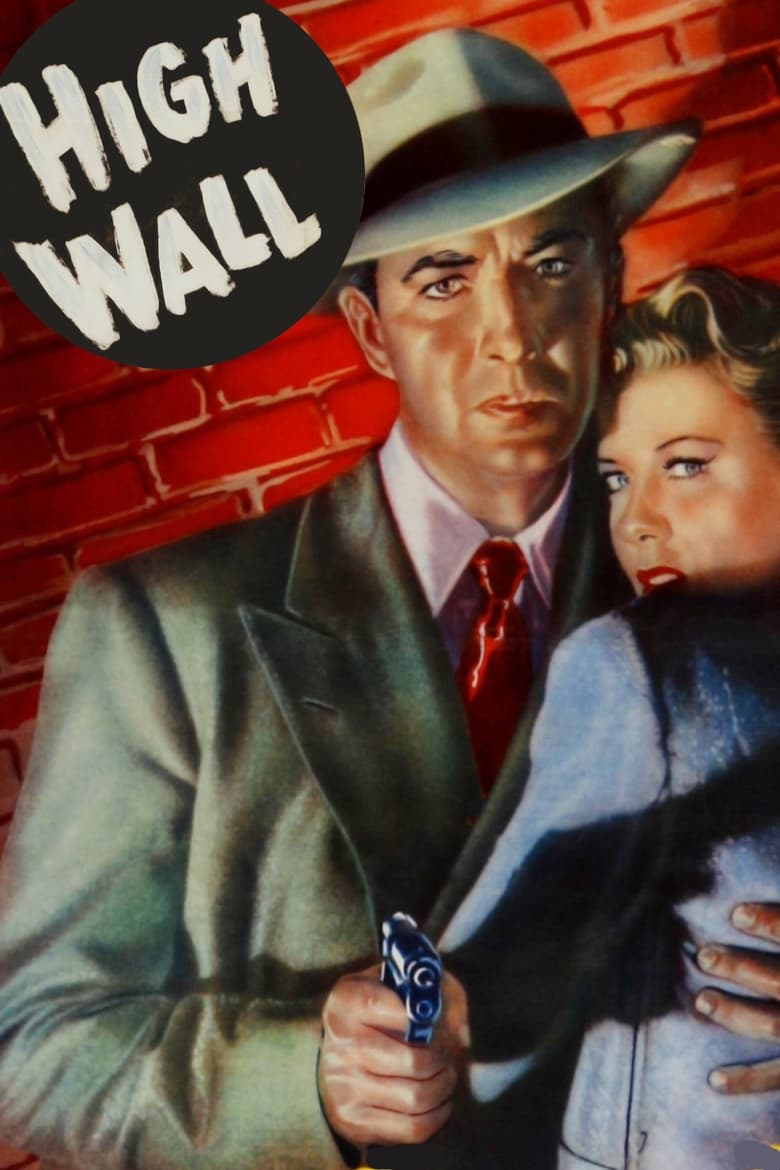
High Wall 1947
1947 Metro-Goldwyn-Mayer
★★★☆☆ Notable
Film Noir · 99 minutes · Black & White

High Wall

Directed by Curtis Bernhardt
Year 1947
Runtime 99 min
Studio Metro-Goldwyn-Mayer
TMDB 6.4 / 10
"A man who cannot remember the night his wife died may be the only one who knows the truth."

Steven Kenet (Robert Taylor), a World War II veteran still carrying the psychological wreckage of combat, returns home to find his wife Helen (Dorothy Patrick) entangled with her employer, the wealthy religious publisher Willard Whitcombe (Herbert Marshall). When Helen is found strangled and Steven is discovered unconscious at the scene, he is charged with her murder. His wartime head injury has left him with a condition that suppresses memory under extreme stress, and he cannot account for what happened. Committed to a state psychiatric facility rather than standing trial, he is placed under the care of Dr. Ann Lorrison (Audrey Totter), who begins to probe the gaps in his recollection.

Dr. Lorrison's clinical interest in Kenet gradually shades into something more personal, complicating her professional judgment at precisely the moment when the stakes are highest. Kenet, convinced that Whitcombe is the actual killer and that his own guilt is a convenient legal resolution, pushes for sodium pentothal treatment to recover the suppressed memory. The hospital administration and the district attorney's office, represented by the calculating Wallace (John Ridgely), resist any procedure that might reopen a case already considered closed. Whitcombe himself moves through the narrative with the controlled civility of a man who has learned to use respectability as cover.

High Wall belongs to the cycle of postwar noir that turned psychiatric medicine into both a dramatic mechanism and a cultural mirror. The film's central question – whether a damaged man can trust his own mind enough to prove his innocence – places it alongside a cluster of mid-1940s pictures that used amnesia and institutional confinement as metaphors for the veteran's estrangement from civilian life. The resolution depends not on detection in any conventional sense but on the body's involuntary testimony, retrieved under chemical pressure in a clinical setting that noir renders deeply ambiguous.
Classic Noir

High Wall occupies a specific and instructive position within the MGM noir cycle: produced with the studio's characteristic production gloss but driven by subject matter that strains against that gloss at every turn. Curtis Bernhardt, a German émigré director with a reliable feel for psychological instability, manages the tension between institutional setting and interior dread with more consistency than the film is usually credited for. Robert Taylor, not a natural noir presence, plays Kenet's passivity as something close to dissociation, which turns out to be precisely appropriate. Audrey Totter, far more at ease in the genre, brings a restrained intelligence to Dr. Lorrison that keeps the film from collapsing into melodrama. Herbert Marshall's Whitcombe is the film's most carefully calibrated creation: a man whose surface decency is never abandoned even when his guilt becomes apparent, making him an unsettling study in how postwar respectability could serve as concealment. The psychiatric framework, drawn partly from the era's genuine fascination with returning veterans and mental illness, gives the film a documentary undertow that prevents it from being merely a courtroom procedural in clinical clothing.

– Classic Noir
3 ★★★☆☆ Notable
Credits

The Crew

DirectorCurtis Bernhardt
ScreenplayLester Cole
CinematographyPaul Vogel
MusicBronislau Kaper
EditingConrad A. Nervig
Performances

The Cast

Close Reading

The Signature Scene

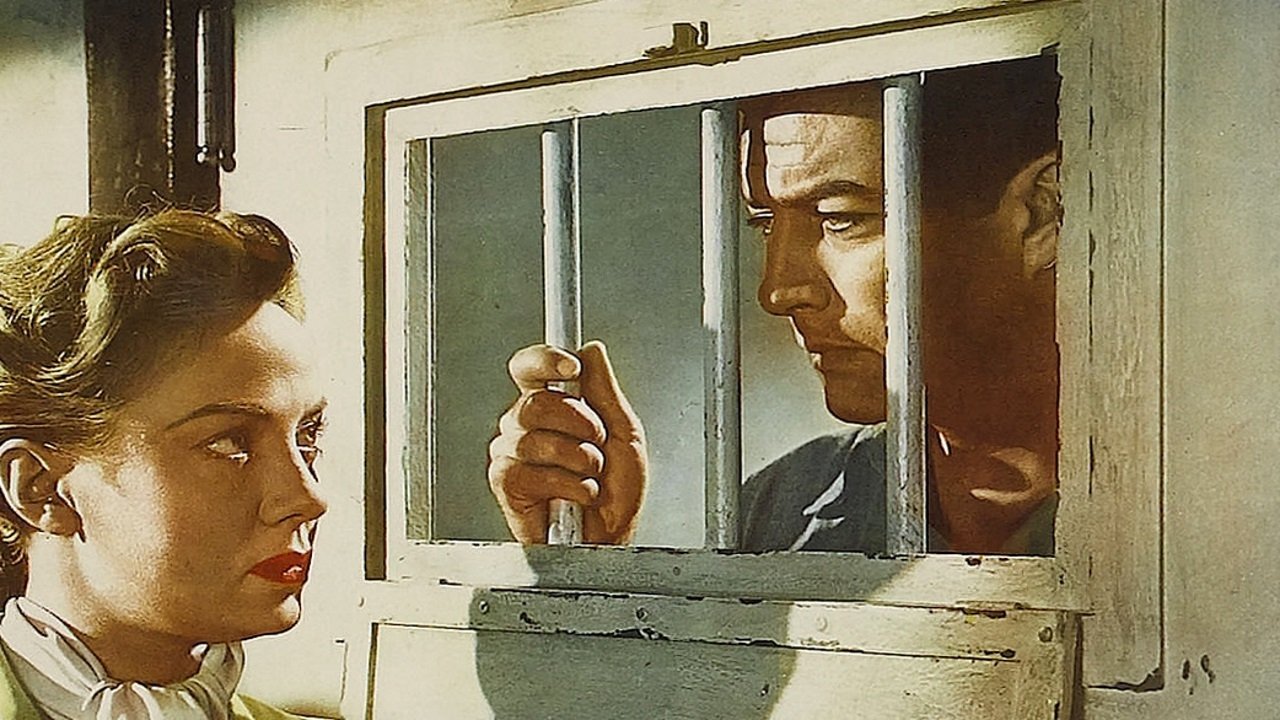
High Wall – scene
The Sodium Pentothal Sequence Memory Retrieved Under Pressure

The camera holds close on Taylor's face as the drug takes effect, the lighting stripped back to a single source that isolates his features against an undifferentiated darkness. Paul Vogel keeps the frame tight, denying the viewer the spatial comfort of the hospital room that has been established in earlier scenes. As the recovered memory begins to play out, Bernhardt cuts between Kenet's slackened face and fragments rendered in a slightly higher contrast than the surrounding film – a visual grammar that distinguishes involuntary recollection from willed narrative.

The scene's argument is that the truth, in this world, cannot be reached by will or reason alone: it requires chemical intervention, institutional permission, and the presence of a woman whose professional role and personal feeling have become inseparable. That the resolution arrives not through investigation or confession but through a medically supervised submission to unconsciousness says something precise about what the film believes about postwar masculinity – that the veteran's body holds evidence his mind has been trained to suppress, and that recovering it is a form of surrender rather than triumph.

Visual Language

The Cinematography

🎞️
Paul Vogel – Director of Photography

Paul Vogel's cinematography on High Wall works within the constraints of MGM's studio system while consistently finding ways to push those constraints toward unease. Shooting entirely on controlled interiors, Vogel uses the hospital's corridors and treatment rooms as an architecture of confinement, deploying deep shadows along institutional walls that transform a place of healing into something closer to a holding facility. His lighting setups frequently place Taylor in partial darkness even in scenes that nominally occur in daylight, suggesting a man who cannot fully emerge from his own interior shadow. The close-up work during the pentothal sequence relies on a shallow depth of field that blurs the clinical apparatus around Kenet into irrelevance, making the face the only legible terrain. Vogel does not reach for expressionist excess – the MGM house style resists it – but he finds a quieter, more insinuating form of visual pressure that suits the film's argument: that institutional spaces, however brightly maintained, are places where a certain kind of truth is forcibly extracted.

In the Catalogue

Themes & Motifs

Availability

Where to Watch

Also in the Directory

See Also