Films People Pull a Fast One Night Beat Reading Room On TV Shop
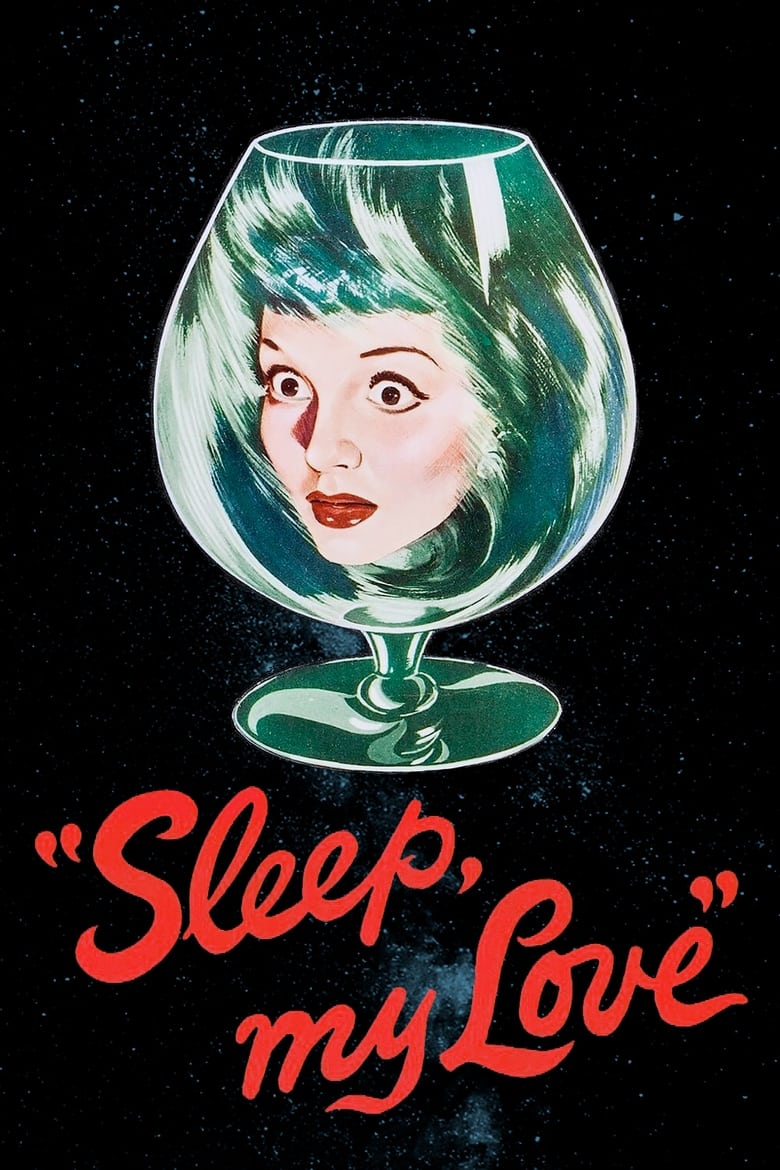
Sleep My Love 1948
1948 Triangle Productions
★★★☆☆ Notable
Film Noir · 97 minutes · Black & White

Sleep My Love

Directed by Douglas Sirk
Year 1948
Runtime 97 min
Studio Triangle Productions
TMDB 6.3 / 10
"A wife wakes on a train with no memory of how she got there – and a husband with every reason to keep it that way."

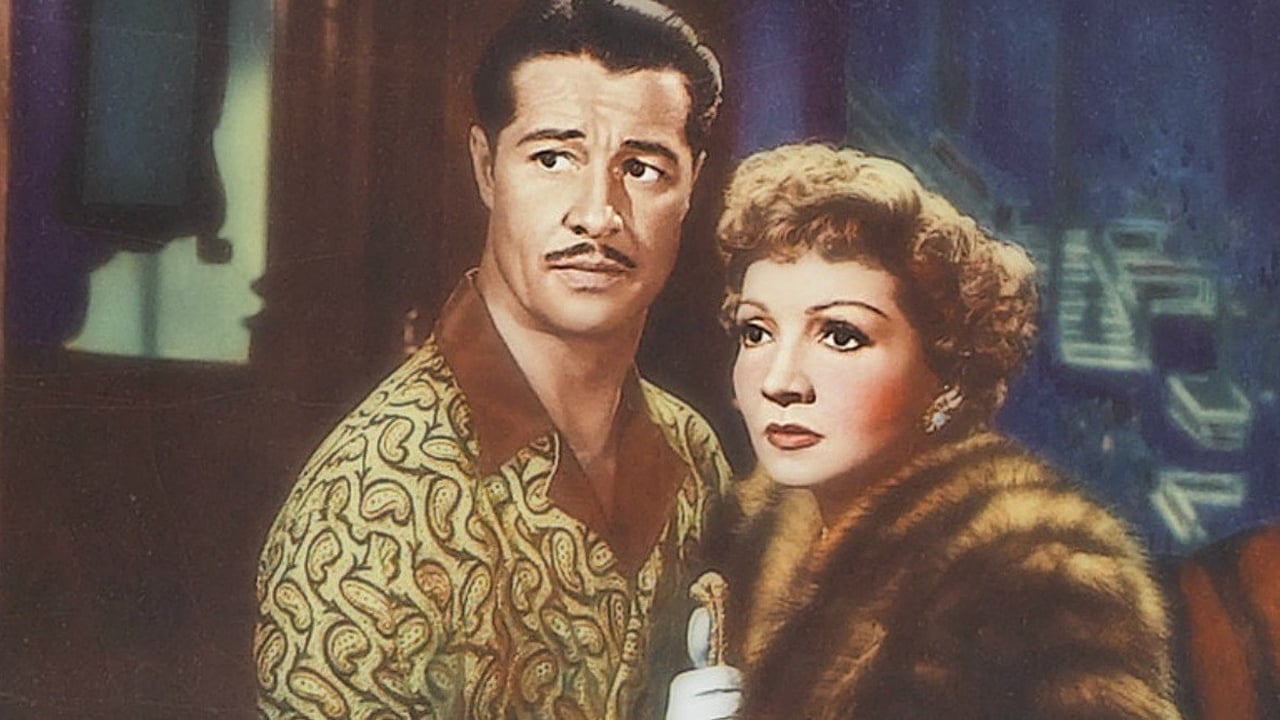
Alison Courtland wakes aboard a Boston-bound train in the small hours, disoriented and without any account of how she came to be there. She is a wealthy New York socialite married to Richard Courtland, a man of surface charm and considerable means. A chance encounter with Bruce Elcott, a straightforward young businessman, brings her home – but the episode refuses to resolve itself into mere sleepwalking, and Alison's unease about her own household begins to harden into something she cannot yet name.

Richard is not what he presents. Behind the domestic façade he maintains for Alison's benefit, he is conducting an affair with Darlene, an actress he intends to install in Alison's place – and her money. To that end, he has enlisted the services of Charles Vernay, a photographer with a sideline in hypnosis and pharmaceutical suggestion, and a compliant physician named Dr. Rhinehart. The scheme is patient and systematic: Alison is being conditioned, episode by episode, toward an apparent breakdown or worse, while Richard's associate Jimmie Lin moves quietly at the edges of the plot.

Sleep My Love belongs to the cycle of postwar domestic-threat pictures – sometimes called the 'gaslight' subgenre – in which the home itself becomes the site of psychological warfare and the husband the most dangerous figure in a woman's life. Sirk, still finding his footing in Hollywood after his German career, turns the material toward a critique of bourgeois marriage and inherited wealth that would become more overt in his later work. The film holds its menace in the gap between Alison's cultivated composure and the machinery operating just beneath her perception.
Classic Noir

Sleep My Love arrives at an instructive moment – early enough in Douglas Sirk's American career that the ironic detachment of his later melodramas is not yet fully armored, late enough that his instinct for using domestic comfort as a vehicle for dread is already present. The film draws on the Gaslight template but distributes its unease more broadly: the conspiracy against Alison is not the work of one obsessive husband alone but a small industry of accomplices, each motivated by money or dependency. Don Ameche, cast sharply against his amiable screen persona, brings a controlled menace to Richard Courtland that the script alone does not quite earn. Claudette Colbert's performance is disciplined rather than spectacular – she conveys a woman whose class-formed composure is simultaneously her greatest defense and the thing most easily weaponized against her. The film does not reach the formal ambition of Secret Beyond the Door or the social precision of Sirk's Universal period, but it remains a lucid example of the era's preoccupation with marriage as a site of institutional violence.

– Classic Noir
3 ★★★☆☆ Notable
Credits

The Crew

DirectorDouglas Sirk
ScreenplayLeo Rosten
CinematographyJoseph A. Valentine
MusicRudy Schrager
EditingLynn Harrison
Art DirectionWilliam Ferrari
ProducerRalph Cohn
Performances

The Cast

Close Reading

The Signature Scene

Sleep My Love – scene
The Darkroom Séance Light Through the Lens

Vernay's session with Alison is staged in a space defined by controlled darkness interrupted by directed light. Joseph A. Valentine positions the camera at a slight low angle, giving Coulouris's Vernay a physical dominance that reads as procedural rather than theatrical. The light source – a focused lamp trained on Alison's face – isolates Colbert in a pool of white while the surrounding frame recedes into charcoal. The composition is deliberately clinical: this is not the expressionist shadow-play of German Universals but something colder, suggesting a laboratory rather than a nightmare.

The scene encodes the film's central argument with precision. Hypnosis here is not supernatural but bureaucratic – a technique applied by a man of small means in service of a man of large ones. Alison's vulnerability is not weakness but the product of trust, of the reasonable assumption that the institutions surrounding her – marriage, medicine, domestic life – are not instruments of her destruction. Valentine's frame offers no melodramatic distortion; the horror is in the ordinaries of the setup, which is exactly where Sirk locates it.

Visual Language

The Cinematography

🎞️
Joseph A. Valentine – Director of Photography

Joseph A. Valentine, whose career ran from the silent era through Universal's prestige productions of the 1940s, brings a precise, studio-controlled aesthetic to Sleep My Love that resists the more expressionistic tendencies of the gaslight cycle. His lighting setups favor motivated sources – practical lamps, windows, the constrained glow of domestic interiors – rather than the oblique key-light arrangements common to harder-edged noir. The effect is a surface of normalcy from which shadow periodically intrudes rather than a world already claimed by darkness. This serves Sirk's moral logic directly: Alison's world looks correct, well-appointed, plausibly safe. Valentine uses shallow staging within the Courtland home to enforce a sense of enclosure without recourse to obvious distortion, and his handling of the location work – the train sequence that opens the film – deploys available-light contrast to mark the outside world as genuinely different in texture from the controlled interiors Richard has constructed. The cinematography does not announce the film's menace; it withholds it, which is the more unsettling choice.

In the Catalogue

Themes & Motifs

Availability

Where to Watch

Also in the Directory

See Also