Films People Pull a Fast One Night Beat Reading Room On TV Shop
Shadow of a Woman 1946
1946 Warner Bros. Pictures
★★★☆☆ Notable
Film Noir · 78 minutes · Black & White

Shadow of a Woman

Directed by Joseph Santley
Year 1946
Runtime 78 min
Studio Warner Bros. Pictures
TMDB 4.5 / 10
"A new marriage, a dead wife's shadow, and a husband whose kindness may be the most dangerous thing about him."

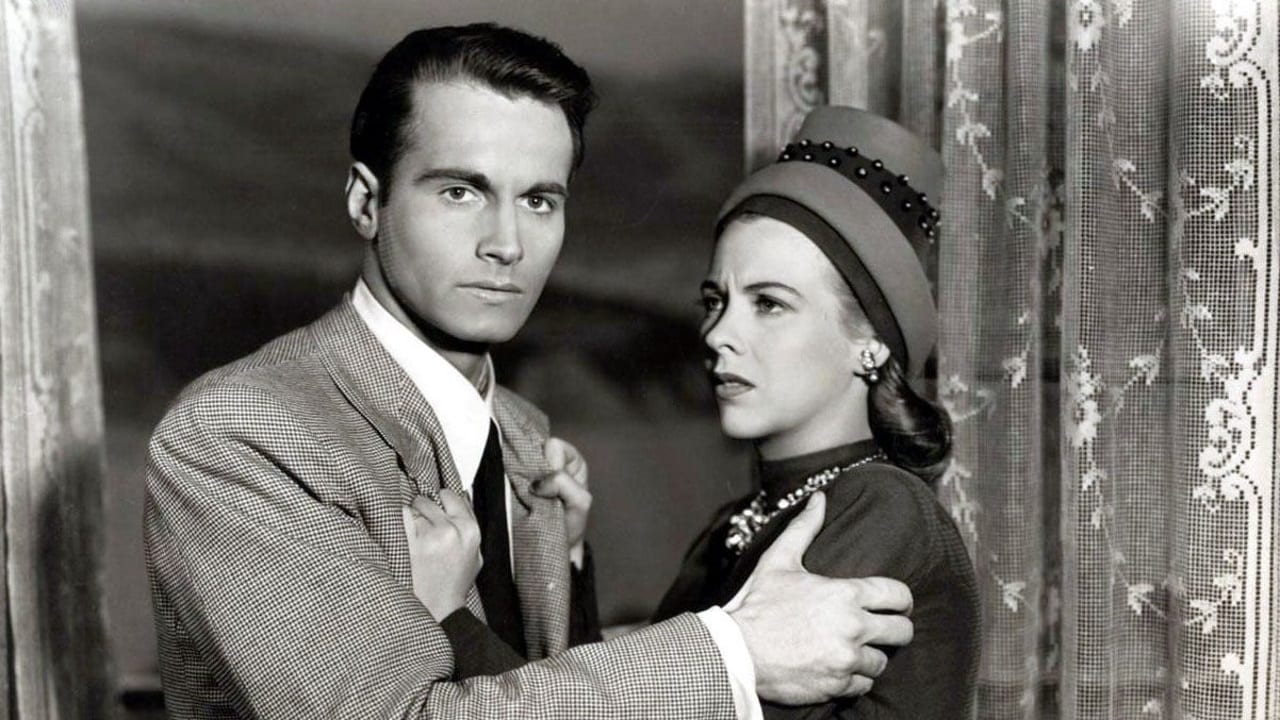
Brooke Gifford arrives in a small California coastal community and falls quickly under the spell of Dr. Eric Ryder, a charming and attentive physician with a lakeside practice. Their courtship is swift, their marriage swifter, and Brooke enters what appears to be an ideal life – a comfortable home, a devoted husband, and a quiet remove from the world. Almost immediately, however, small disturbances accumulate: a child who watches Eric with unreadable eyes, a housekeeper whose loyalty feels more like surveillance, and the conspicuous absence of information about Eric's first wife, Louise.

When Brooke learns that Louise died under circumstances never fully explained, and that a local lawyer named David MacKellar has been quietly investigating Eric on her behalf, the architecture of the marriage begins to shift. Eric's tenderness starts to read as control; his explanations arrive just slightly too smoothly. MacKellar, operating at the edges of Brooke's new life, represents the possibility that she has married a man capable of murder – and that she may be positioned to become his next convenient loss. The film turns on Brooke's effort to know, and on the cost of knowing.

Shadow of a Woman places itself within the postwar cycle of domestic suspense that Warner Bros. mined with some consistency in the mid-1940s, films in which the home is not a refuge but a trap and marriage is the mechanism of danger rather than its antidote. The picture belongs to a recognizable strain – the endangered wife thriller, allied to Hitchcock's Rebecca and Suspicion – but pursues its logic with a workmanlike directness that keeps the tension functional if not transcendent.
Classic Noir

Shadow of a Woman is a competent entry in the endangered-wife cycle that proliferated at American studios in the years immediately following the war, when anxiety about domesticity and male authority found a reliable genre home. Joseph Santley directs without personal signature but with professional control, and the film's 78-minute economy serves it: there is no room for the pacing to sag. Helmut Dantine is effective casting precisely because his European handsomeness carries an inherent ambiguity – the face that reads as cultivated can also read as cold. Andrea King anchors the picture with a performance that does not tip into helplessness; Brooke is a woman reasoning under duress, not merely reacting to it. The film does not locate any new moral territory within the genre, but it executes the established terms honestly, and its portrait of a woman isolated inside a marriage that may be lethal captures something real about the period's contradictions around female autonomy and domestic idealization. As a document of Warner Bros.' mid-tier noir production, it is instructive.

– Classic Noir
3 ★★★☆☆ Notable
Credits

The Crew

DirectorJoseph Santley
ScreenplayC. Graham Baker
CinematographyBert Glennon
MusicAdolph Deutsch
EditingChristian Nyby
Art DirectionHugh Reticker
CostumesMilo Anderson
ProducerWilliam Jacobs
Performances

The Cast

Close Reading

The Signature Scene

Shadow of a Woman – scene
The Lakeside Study The Locked Door at Night

Cinematographer Bert Glennon positions his camera low in the hallway as Brooke approaches Eric's study late at night, the corridor light falling in a hard diagonal that leaves the door itself in near-darkness. The frame compresses the space – walls close on either side, the ceiling pressing down – so that Brooke's progress toward the door reads less as movement than as constriction. When she stops and places her hand against the wood, Glennon holds the shot without cutting, the stillness doing what dialogue cannot.

The scene makes explicit what the film has been constructing obliquely: the locked room as the marriage's true center, the place where Eric's other life – his past, his guilt, his capacity for harm – is filed away and unavailable. Brooke's hand on the door is the film's central gesture, the moment where curiosity and dread become the same impulse, and where the domestic space finally reveals its nature as enclosure rather than shelter.

Visual Language

The Cinematography

🎞️
Bert Glennon – Director of Photography

Bert Glennon, whose career ran from silent-era Westerns through the classical Hollywood studio system, brings to Shadow of a Woman a controlled, shadow-conscious visual strategy suited to the film's domestic claustrophobia. Working on Warner Bros. studio sets rather than location, Glennon exploits the artificial environment deliberately: the interiors of the Ryder house are lit to emphasize depth and recession, with practical sources – lamps, fireplaces, a single overhead fixture – casting pools that leave significant portions of each frame unilluminated. His lens choices favor moderate focal lengths that neither flatten space nor exaggerate it, keeping the geometry of the rooms legible even as shadows complicate their moral reading. The lake exterior sequences are handled with a cooler, more diffuse light that makes the landscape feel indifferent rather than threatening – a useful contrast to the concentrated danger inside the house. Glennon's work here does not call attention to itself, which is precisely the point: the menace arrives through accumulation rather than expressionist statement.

In the Catalogue

Themes & Motifs

Availability

Where to Watch

Also in the Directory

See Also