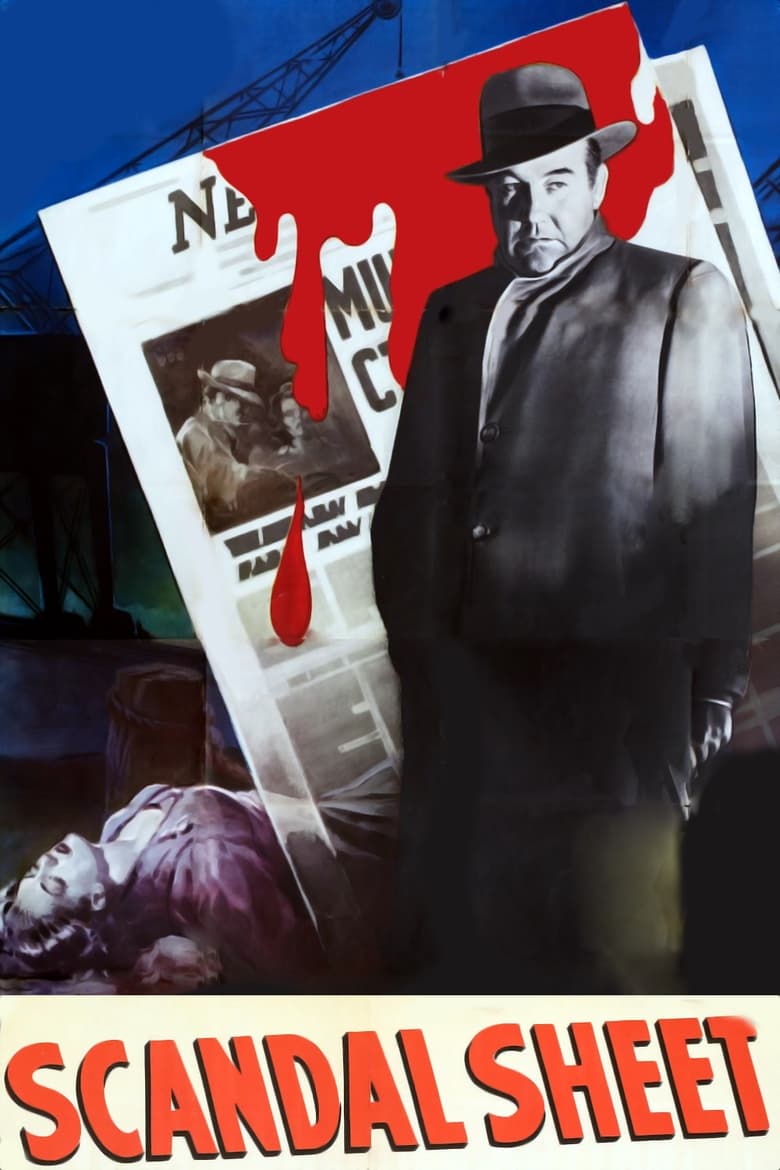
Mark Chapman is the hard-driving editor of the New York Express, a tabloid he has built into a circulation powerhouse by trafficking in scandal and human ruin. His young star reporter, Steve McCleary, and the paper's photographer Julie Allison operate under Chapman's demanding command, chasing the lurid stories their editor demands. When Chapman's estranged wife Charlotte Grant surfaces at a lonely-hearts dance and threatens to expose his past, a violent confrontation ends in her death – and Chapman finds himself in the position every journalist fears: he is the story.
Determined to contain the damage, Chapman does what comes naturally to him, manipulating the investigation from his own city desk. He assigns McCleary to cover the murder, calculating that a reporter with no knowledge of the victim's connection to his editor will follow the evidence without finding the truth. The calculation proves wrong. McCleary is thorough, and Julie's instincts begin to pull her toward conclusions that Chapman cannot permit. The paper's machinery of exposure, which Chapman has always wielded against others, slowly turns on its architect.
Scandal Sheet belongs to a strand of noir concerned less with criminals in the conventional sense than with institutional corruption – the ways in which power, ambition, and the daily mechanics of a profession can normalize moral erosion until a single act of violence crystallizes what a man has become. Karlson keeps the pressure on the procedural elements without releasing the audience from the psychological trap at the film's center.
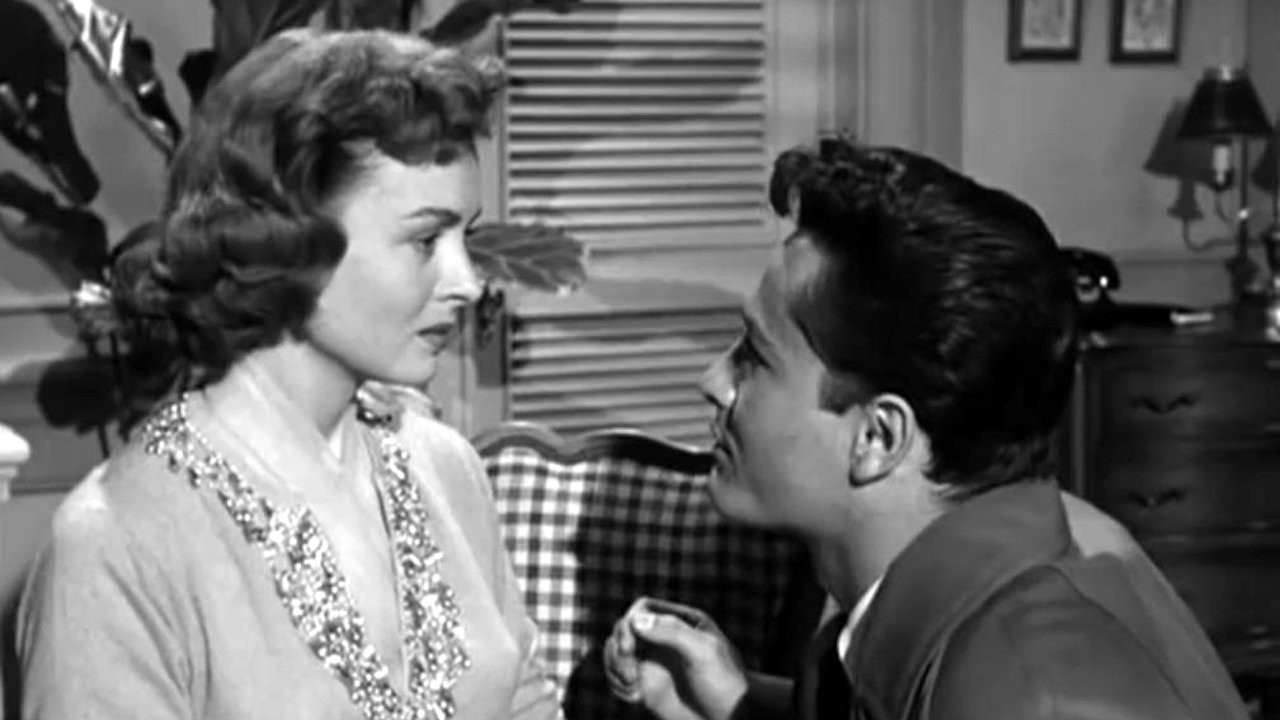
Phil Karlson was a director who understood that menace could be embedded in routine, and Scandal Sheet is one of his more controlled demonstrations of that understanding. Broderick Crawford, still carrying the weight of Willie Stark from All the King's Men two years earlier, brings a comparable mixture of blunt authority and cornered desperation to Chapman – a man who has so thoroughly confused ruthlessness with competence that he cannot distinguish self-preservation from editorial judgment. The film adapts Samuel Fuller's novel The Dark Page and retains something of Fuller's preoccupation with journalism as a moral vacuum dressed in civic clothes. What makes the film durable is its structural irony: the investigative apparatus Chapman has built becomes the instrument of his exposure. Burnett Guffey's photography keeps the newsroom plausible and unglamorous, and the supporting performances, particularly Rosemary DeCamp as the doomed Charlotte, prevent the film from collapsing into mere mechanism. At 82 minutes it does not overstay.
– Classic Noir
Karlson and Guffey stage the scene in a low-ceilinged rented hall where the overhead lights are practical and unsparing, eliminating the romantic shadow work that might soften what follows. The camera holds on Crawford in medium shot as Charlotte approaches, and Guffey's framing places him against a wall of faces – strangers who register as witnesses before they register as people. When the two move to a stairwell, the lighting narrows to a single source from above, cutting sharp shadows across Crawford's face and leaving DeCamp in comparative flatness, which has the effect of making her seem already insubstantial, already at a disadvantage.
The scene establishes the film's central argument in physical terms: Chapman has spent his career using light – the public glare of newsprint – as a weapon, yet here, under light he cannot control, he is exposed and panics. The killing that follows is not premeditated in any conventional sense; it is the reflex of a man who has never developed any instrument for dealing with situations he cannot edit. The stairwell becomes a precise visual correlative for the moral narrowing the film has been tracking from its opening frames.
Burnett Guffey, one of Columbia's most consistently reliable cinematographers of the period, brings to Scandal Sheet the same documentary instinct he would later apply to more celebrated projects. He shoots the newsroom in wide-angle setups that emphasize depth and lateral movement, making the floor feel like a working environment rather than a set – linotype machines, copy desks, and galley proofs occupy the background with the authority of things that actually exist. Where the film turns inward and psychological, Guffey tightens his compositions and raises contrast, using single-source practicals to carve faces rather than illuminate them. The street sequences at night employ wet pavement reflections sparingly, without the decorative excess that weakens lesser noir photography. Throughout, the lighting functions as a moral index: open, flat illumination attends the public world of journalism, while the scenes of concealment and guilt are shot in geometries of shadow that suggest enclosure and diminishing options. The visual language earns its meanings rather than simply illustrating them.
The most reliable source for a properly transferred print with contextual programming; check current availability as rotation schedules vary.
TubiFreeA free ad-supported option that has carried the film intermittently – transfer quality is variable but acceptable for a first viewing.
Archive.orgFreePublic domain versions may be available; quality is inconsistent and should be treated as a fallback rather than a preferred source.