Dutch (Spencer Tracy) is a sardine fisherman and small-time schemer working the San Pedro waterfront, convinced that one sharp deal will lift him clear of the life he has. Hattie (Jean Harlow) is a cannery worker with sharper instincts than Dutch allows himself to notice – she sees through his bluster but falls for the man beneath it anyway. Their courtship is conducted in the register of argument, each one measuring the other for weakness.
When Dutch gets tangled with Nick (Joseph Calleia), a syndicate figure operating along the docks, the film's center of gravity shifts from romance to ruin. A labor dispute, a bad investment, and a string of poor judgments push Dutch toward a kind of moral free fall, while Hattie – more pragmatic, more clear-eyed – is left to reckon with what loyalty to a man like Dutch actually costs. The supporting figures, including the weary Lil (Una Merkel) and the watchful Flytrap (Victor Kilian), sketch a community in which everyone is one bad season from the edge.
Riffraff sits at the boundary between the pre-Code working-class melodrama and the harder-edged crime pictures that would follow in the late 1930s. It lacks the cynical economy of true noir, but its portrait of economic precarity, compromised men, and women who absorb the consequences of masculine failure gives it a persistent undertow. The waterfront setting and the syndicate pressures place it in recognizable noir territory, even if MGM's instinct for resolution softens what darker studios might have left unresolved.
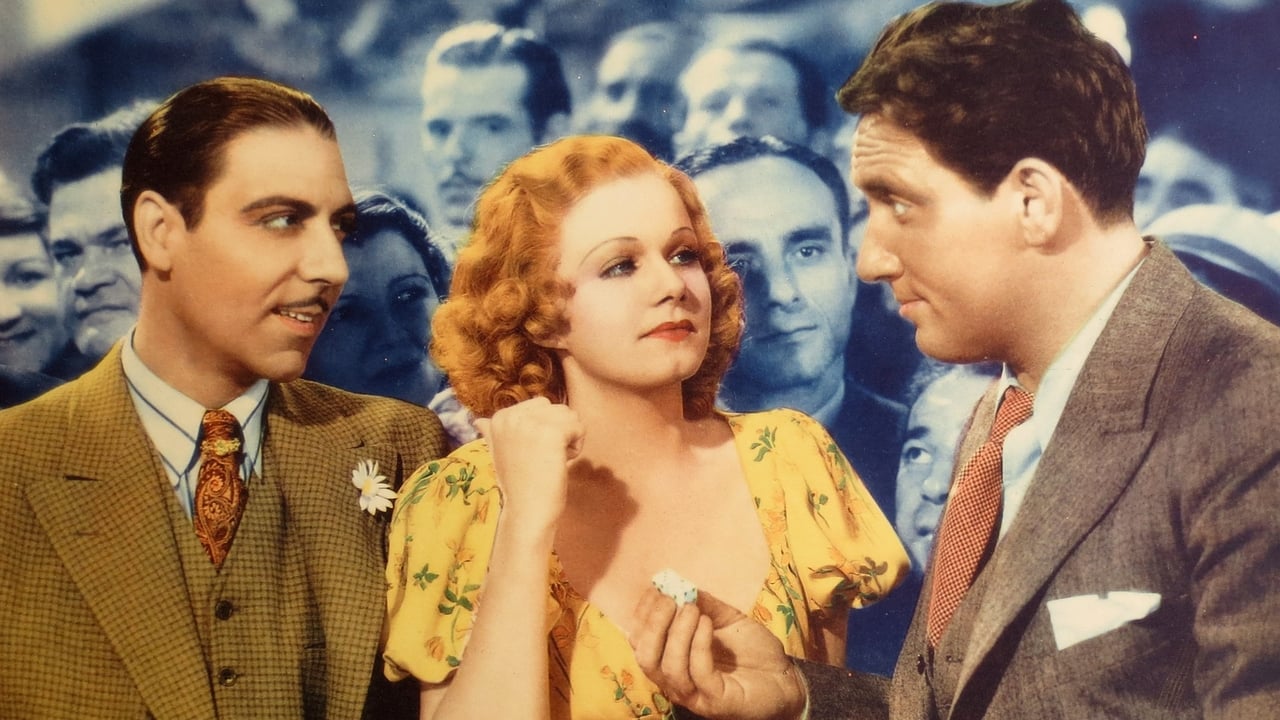
Riffraff is not a comfortable fit in the noir canon, and that discomfort is itself instructive. MGM in 1936 was still committed to a kind of optimism that the genre would later systematically dismantle, and J. Walter Ruben's direction reflects the studio's preference for emotional resolution over moral ambiguity. Yet the film's materials – waterfront labor, syndicate pressure, a man who mistakes confidence for competence – are thoroughly noir in their substance. Tracy brings genuine weight to Dutch, playing the character's self-deception without tipping into caricature. Harlow, often underestimated as a dramatic performer, finds something harder and more specific in Hattie than the role strictly requires: a woman who understands exactly what she is choosing and chooses anyway. The film reveals the era's transitional anxiety about working-class masculinity, at a moment when the Depression had made the self-made-man mythology look increasingly fragile. It earns its place in the catalogue as evidence of how noir sensibility could infiltrate even the most commercially cautious studio product.
– Classic Noir
Ray June frames the cannery in long industrial perspective, the overhead lights casting flat, workmanlike illumination that offers no shadows to hide in. The machinery runs in the background as a constant, indifferent presence. When the camera closes on Harlow's face, it is without the glamour lighting MGM typically afforded her – the key light is harder, the fill reduced, so that the contours of her expression carry the scene rather than her star image.
The scene establishes what the film keeps returning to: Hattie's clarity versus Dutch's obstinate self-regard. She is positioned in the frame at the same level as the equipment around her, not elevated by camera angle or lighting treatment, which has the effect of grounding her intelligence in material reality. The argument she makes in this space – about work, about risk, about what men refuse to see – is the film's central argument, made before the plot has confirmed it.
Ray June was a competent studio craftsman rather than a stylist, and on Riffraff that pragmatism serves the film's working-class texture better than a more expressive approach might have. Shooting on MGM's controlled studio environments, June resists the temptation to beautify the waterfront and cannery sets with atmospheric shadow play. Lighting setups tend toward the functional – motivated sources, moderate contrast – which gives the film a visual honesty unusual for MGM product of the period. Where the cinematography becomes quietly interesting is in the treatment of Harlow: June repeatedly denies her the soft-focus, high-key glamour lighting that was standard for female stars of her standing, instead letting harder light model her face in a way that supports Harlow's more naturalistic performance choices. The effect is minor but cumulative. It signals, without insisting, that this is a world in which appearance and reality are in closer alignment than the studio's usual output would suggest.
TCM holds deep MGM catalog rights and remains the most reliable broadcast source for Riffraff in a properly transferred print; check the schedule or the Max bundle for on-demand access.
MaxSubscriptionWarner Bros. Discovery's streaming library includes substantial MGM pre-war titles through the TCM integration; availability may vary by region and rotation.
Archive.orgFreePublic domain or freely circulating prints occasionally appear here, though transfer quality is inconsistent and cannot be verified against a restored source.