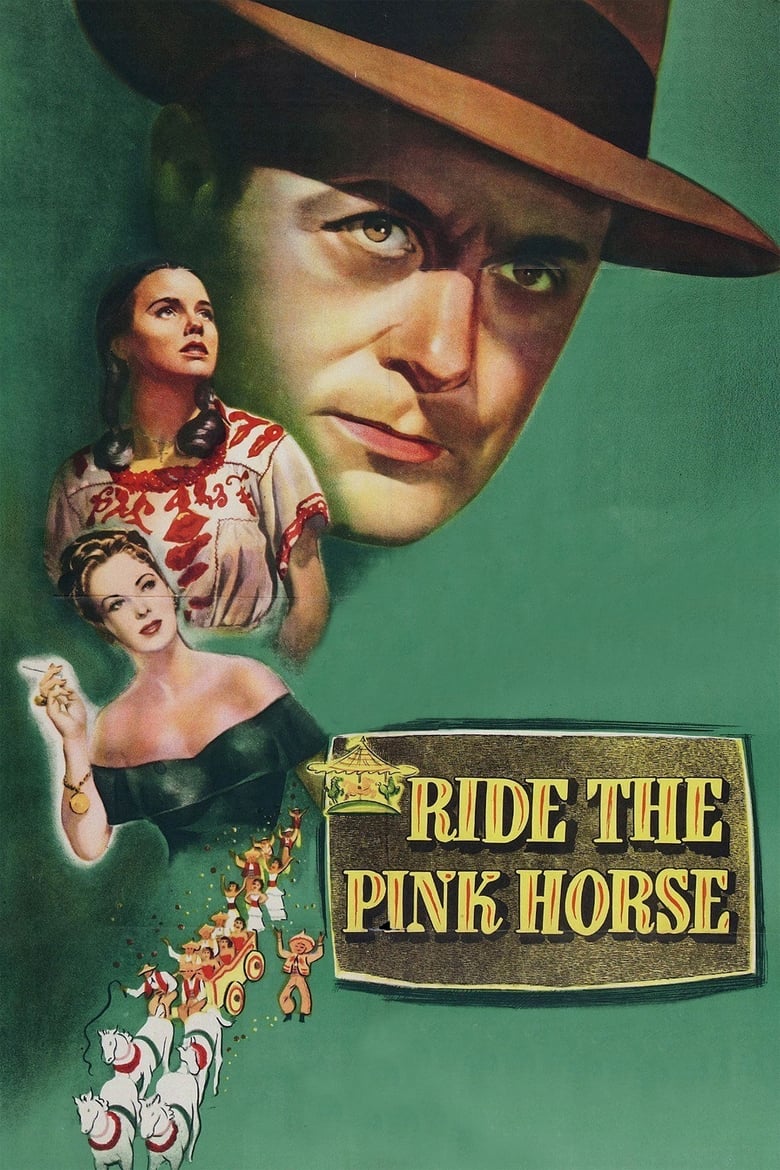
Lucky Gagin, a hard-edged World War II veteran, arrives in the New Mexico fiesta town of San Pablo carrying a blackmail letter and a score to settle with Frank Hugo, a corrupt political fixer whom Gagin holds responsible for the murder of a friend. Gagin's plan is blunt: extort Hugo for the dead man's money and walk away. What he finds instead is a town in the grip of a festival, its streets loud with carnival noise that provides cover for darker transactions. Two figures attach themselves to him almost immediately – Pila, a young Pueblo girl who senses his danger and extends a quiet, instinctive loyalty toward him, and Marjorie Lundeen, Hugo's polished associate whose motives remain carefully obscured.
Hugo, protected by money and political connections, moves through the fiesta with the confidence of a man who has never been held accountable for anything. His associate Bill Retz shadows Gagin, and the pressure tightens as Gagin's leverage begins to erode. Pila's attachment to Gagin draws her into hazard she cannot fully comprehend, while Marjorie's interest in him shifts between genuine sympathy and self-interest in ways the film refuses to resolve cleanly. A federal agent named Jonathan circles the situation, representing an institutional authority that Gagin distrusts as reflexively as he distrusts everyone else. Allegiances are conditional, and the film makes no effort to pretend otherwise.
Ride the Pink Horse occupies an unusual position within postwar American noir, set not in a rain-slicked city but in an open, festive landscape that proves no less dangerous for its color and noise. Based on Dorothy B. Hughes's 1946 novel, the film uses its southwestern setting to examine what a returning veteran carries home when the war ends – not triumph but a corrosive need to settle accounts by any means available. The moral architecture is neither simple nor comfortable, and the film's refusal to grant Gagin easy heroism distinguishes it from the more conventional revenge pictures of its era.
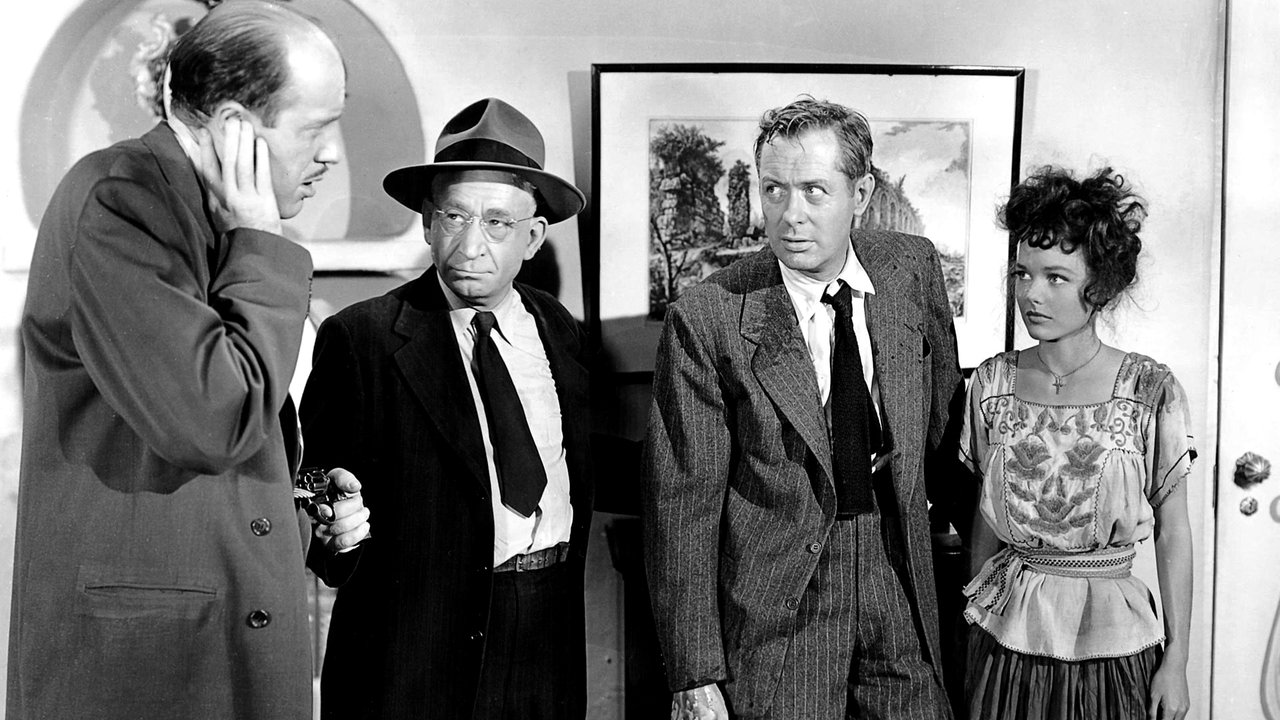
Ride the Pink Horse is one of the more neglected films in the Universal International noir cycle, and its neglect is partly a consequence of its strangeness. Robert Montgomery, directing himself for the second time, strips his protagonist of almost every sympathetic quality noir conventionally extends to the veteran-as-avenger. Gagin is not merely hard; he is obtuse, coercive, and frequently wrong. Montgomery's direction is assured in its use of location exteriors – the San Pablo fiesta provides a genuinely disorienting backdrop, carnival movement and ritual color working against the moral bleakness of the story. Thomas Gomez's Pancho, the operator of the town's decrepit carousel, is the film's most fully realized creation: warm, shrewd, and bound by a code of hospitality that shames the Anglo characters around him. Wanda Hendrix's Pila operates as something close to a moral witness, her silence and steadiness a counterweight to Gagin's aggression. The film reveals a postwar America in which the returned soldier has been given no adequate language for what he wants, and so reaches for the only one he knows.
– Classic Noir
Russell Metty lights the carousel sequence with a restless, low-key approach that keeps the painted horses half in shadow even as they turn through the frame. The camera follows the lateral movement of the ride rather than cutting against it, so the viewer is caught in the same repetitive circuit as Gagin, unable to find stable ground. Torchlight and festive lanterns provide the nominal illumination, but Metty resists filling the frame; darkness persists at the edges and between the horses, and the faces of the figures on the platform are periodically swallowed by shadow as they rotate away from the light source.
The scene concentrates the film's central argument about sanctuary and its limits. Pancho offers the carousel as protection – a place Hugo's men will not breach during the fiesta – and for a moment the film allows the possibility that ritual and communal space can hold violence at bay. But the protection is provisional and the horses keep circling, going nowhere. Gagin cannot accept shelter without suspicion, and his inability to stop calculating his position even inside a gesture of genuine kindness is the film's clearest statement about what the war has cost him.
Russell Metty's cinematography on Ride the Pink Horse resists the studio-bound expressionism typical of Universal noir in this period. Shooting on location in Santa Fe, Metty integrates actual fiesta crowds, adobe architecture, and open night skies into a visual grammar that denies Gagin the enclosed, traceable world a city would provide. The threat cannot be cornered because the space itself refuses enclosure. Metty uses medium-wide compositions more than the tight angles common to urban noir, which has the effect of isolating the protagonist within a landscape rather than trapping him within a corridor. His lighting in the night sequences draws from practical sources – torches, lanterns, a single bulb above a cantina door – rather than constructing the high-contrast geometry of studio work, and this restraint gives the shadows a less theatrical quality, as though darkness here is simply the absence of light rather than a moral condition being illustrated. The result is a visual logic that matches the film's argument: there is no architecture of fate holding Gagin in place, only his own refusal to leave.
The most reliably curated source for this title, likely presenting a clean transfer suited to appreciating Metty's location photography.
TubiFreeAvailable as of recent cataloguing, though transfer quality varies; a serviceable option if no subscription service carries it at time of viewing.
Archive.orgFreeA public domain version exists in the Internet Archive collection; image quality is inconsistent but the film is fully viewable at no cost.