Films People Pull a Fast One Night Beat Reading Room On TV Shop
Red Light 1949
1949 Roy Del Ruth Productions
★★★☆☆ Notable
Film Noir · 83 minutes · Black & White

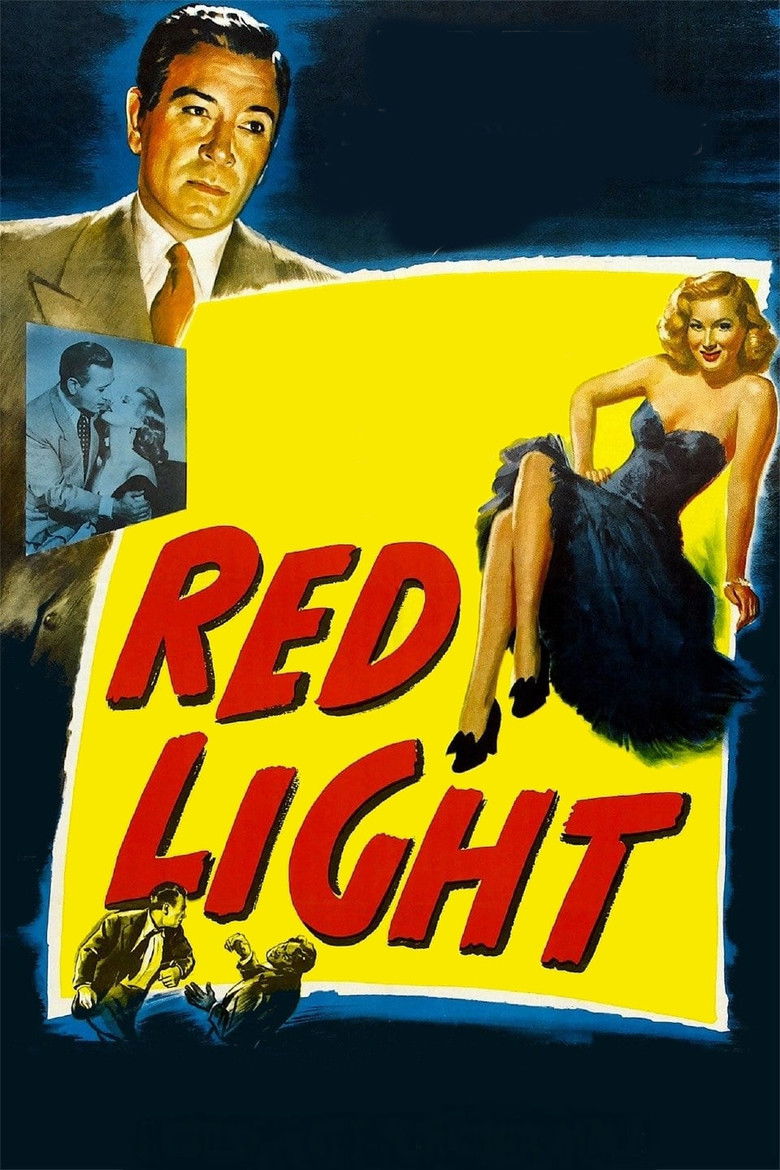
Red Light

Directed by Roy Del Ruth
Year 1949
Runtime 83 min
Studio Roy Del Ruth Productions
TMDB 5.9 / 10
"A dead man's Bible holds the only witness to his killer – if anyone lives long enough to read it."

Johnny Torno (George Raft) is a trucking company owner whose younger brother, Father Jess Torno (Arthur Franz), a military chaplain newly returned from Korea, is shot dead in a hotel room by a hired killer working for Nick Cherney (Raymond Burr), a racketeer with a grudge against Johnny. Before he dies, Father Jess hides a crucial piece of evidence – a room number – inside a Gideon Bible. Johnny, consumed by guilt and a cold desire for retribution, sets out to identify the murderer before the police can close the case on their own terms.

Johnny's investigation draws in Carla North (Virginia Mayo), a woman with her own ambiguous connection to Cherney's world, and Warni Hazard (Gene Lockhart), a nervous, compromised figure whose loyalties shift under pressure. Detective Strecker (Barton MacLane) watches from the institutional margins, neither obstructing nor enabling Johnny's private pursuit of justice. Cherney, played by Raymond Burr with the particular brand of cold menace he was refining across several films of the period, maneuvers to stay ahead of both the law and the man he has wronged.

Red Light operates along the fault line that noir repeatedly traces between legitimate justice and the individual's compulsion to settle accounts personally. The film uses its trucking-industry milieu and postwar setting to ground an essentially moral fable – a man of commerce drawn into violence partly of his own making – while the hidden Bible introduces a theological undertow that distinguishes the picture from more straightforwardly cynical genre entries.
Classic Noir

Red Light arrives at an interesting pressure point in late-1940s noir, where the genre's moral ambiguities were beginning to acquire more explicit ethical framing without entirely abandoning their shadows. Roy Del Ruth, a studio craftsman rather than a stylist, keeps the machinery clean and functional. George Raft, whose career was by this point running on genre credibility rather than range, suits Johnny Torno well enough: the character's emotional opacity reads as contained grief rather than limitation. Raymond Burr, still five years from his definitive turn in Rear Window, delivers the more interesting performance – Cherney is calculating rather than theatrical, which gives the film's central antagonism a specific gravity. The Gideon Bible conceit is genuinely unusual for the genre, embedding a religious motif that the film handles with restraint, stopping short of overt allegory. Dimitri Tiomkin's score reinforces the film's tendency toward solemnity. Red Light will not reorder anyone's understanding of noir, but it earns its place as a competent, occasionally distinctive entry from the cycle's productive middle years.

– Classic Noir
3 ★★★☆☆ Notable
Credits

The Crew

DirectorRoy Del Ruth
ScreenplayGeorge Callahan
CinematographyBert Glennon
MusicDimitri Tiomkin
EditingRichard V. Heermance
Art DirectionFrank Paul Sylos
ProducerRoy Del Ruth
Performances

The Cast

Close Reading

The Signature Scene

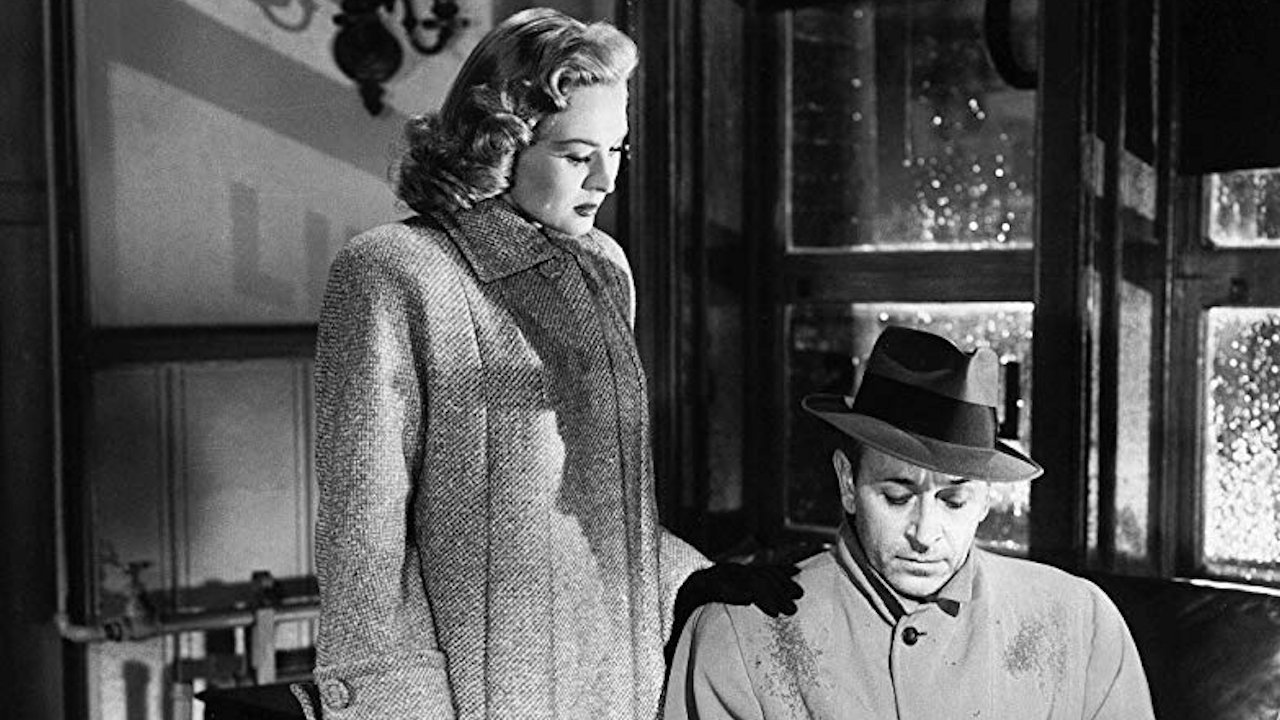
Red Light – scene
The Hotel Room Search Light Falling on Scripture

Bert Glennon lights the hotel room with a single dominant source from the bedside lamp, leaving the corners in soft graduated shadow. The camera holds on the Bible's closed cover before tracking slowly as Johnny's hands move across it – the frame narrow, the depth of field shallow enough to isolate the object from its surroundings. When the relevant page is found, Glennon cuts to a near-overhead angle that flattens the image, making the text look less like evidence than inscription.

The scene argues quietly for the film's central proposition: that the sacred and the criminal occupy the same physical space, that a murdered priest's final act was not prayer but the concealment of a number that will send a man toward vengeance. The Bible functions here not as comfort but as instrument, and the care with which Glennon photographs it implies a weight the narrative will spend the rest of its running time trying to discharge.

Visual Language

The Cinematography

🎞️
Bert Glennon – Director of Photography

Bert Glennon, whose career stretched back to silent cinema and included work with John Ford, brings a disciplined economy to Red Light that suits Del Ruth's unfussy direction. The film is largely studio-bound, and Glennon uses that control deliberately – high-contrast interiors built around single practical sources, with fill light kept sufficiently low that faces frequently carry split shadow. His work on the trucking yards and the hotel corridors favors long lenses that compress figures against backgrounds, reducing available escape routes within the frame itself. There is no baroque excess here: the shadow work is purposeful rather than decorative, used to mark moral position as much as atmosphere. Characters in full light tend to be operating transparently; those in partial shadow are concealing something. It is a legible grammar rather than a complex one, but Glennon executes it with the confidence of someone who understands that cinematographic clarity and moral clarity are not the same thing, and that the space between them is where noir lives.

In the Catalogue

Themes & Motifs

Availability

Where to Watch

Also in the Directory

See Also