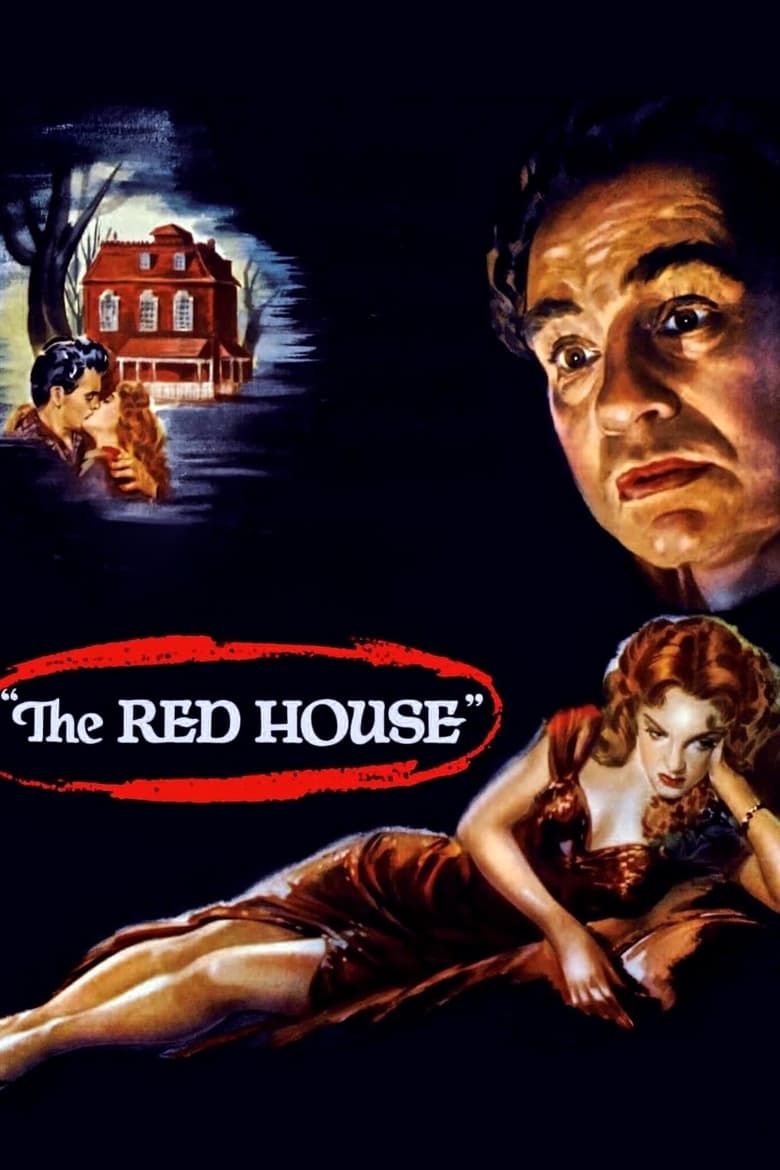
On a rural farm in the American South, Pete Morgan – a one-legged, brooding farmer played by Edward G. Robinson – takes on a young field hand named Nath Storm. Pete and his sister Ellen, an austere and watchful woman portrayed by Judith Anderson, share the property with Pete's adopted daughter Meg. The farm sits at the edge of Oxhead Woods, a stretch of forest that Pete forbids anyone to enter, warning that something terrible awaits anyone who crosses into it. Nath, curious and guileless, is drawn toward the mystery from the first days of his employment.
When Nath begins to hear screaming in the night from the direction of the woods – sounds Pete dismisses as the old red house that no longer stands – the young man's investigation sets off a chain of revelations. Teller, a violent drifter hired by Pete to keep trespassers out, and the local teenagers who ignore the warnings all find themselves entangled in a web that grows darker as its center approaches. Meg's quiet attachment to Nath and Nath's wandering attention toward the vivacious Tibby Renton complicate loyalties, while Ellen's cold vigilance over Pete suggests that she knows far more than she reveals.
Red House operates less as a conventional crime film than as a gothic psychological study rooted in guilt, obsession, and the violence that buried secrets require to stay buried. The woods stand in for the unconscious – a space where Pete's past trauma and moral transgression press steadily against the present until containment becomes impossible. The film belongs to a strain of rural noir that finds menace not in city streets or back alleys but in the American landscape itself, where isolation amplifies rather than conceals what has been done.
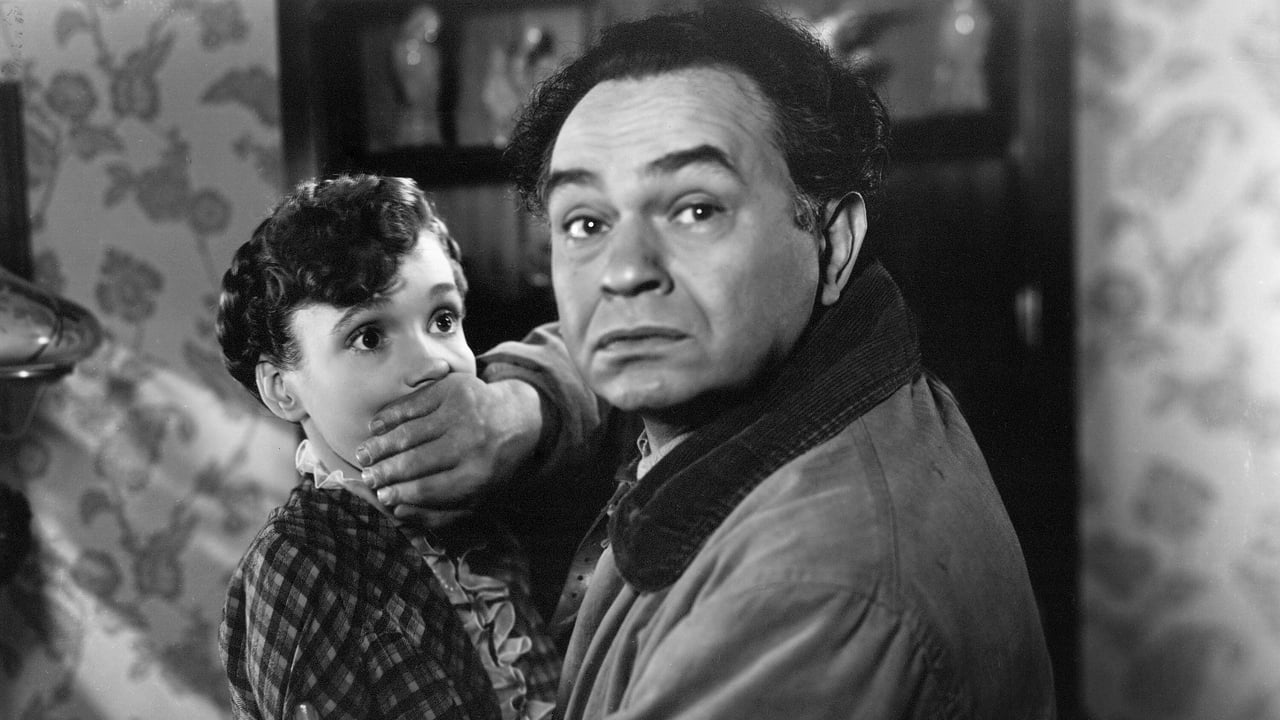
Red House occupies an unusual position in the noir canon: it achieves its atmosphere not through urban architecture or the conventions of the crime thriller but through landscape, psychology, and the controlled performance of a cast anchored by Robinson at his most internally fractured. Delmer Daves directs with a restraint that serves the material well – this is a film about pressure building beneath a surface rather than about action releasing it. Judith Anderson's Ellen is one of the period's most underexamined supporting performances: cold, complicit, and finally pitiable in her dependency. The film's treatment of guilt as a physical geography – literally mapped onto the land Pete owns and fears – anticipates later genre work on repression and rural dread. Miklós Rózsa's score, characteristically dense and unsettled, refuses to let any scene fully relax. Produced independently by Sol Lesser, the film had no major studio machinery smoothing its edges, and the result is correspondingly rougher, stranger, and more psychologically direct than much of the era's comparable output.
– Classic Noir
Bert Glennon frames Robinson against the dense verticality of the forest at night, the trees rendered as near-black columns that crowd the edges of the frame and compress the available light into a narrow corridor. The camera holds at a middle distance, refusing close-up reassurance, so that Pete's figure appears diminished by the landscape he claims to own. What illumination exists – pale, sourceless, consistent with studio-augmented location work – falls across his face at an angle that bisects it, leaving one half in shadow throughout. The composition is static where the character is desperate, the stillness of the frame a formal argument about entrapment.
The scene distills what the film has been constructing since its opening frames: that Pete is not a man haunted by a place but a man who has become the place, his guilt so thoroughly externalized into the woods that he cannot enter them without confronting the full weight of what he did. Robinson communicates this not through speech but through the quality of his movement – hesitant, compulsive, drawn forward against his will – and the scene makes clear that the film's real subject is not crime or detection but the failure of repression as a strategy for survival.
Bert Glennon's work on Red House is among the more disciplined examples of noir cinematography in the late-1940s independent sector. Shooting largely on studio-constructed sets dressed to suggest the rural South, with selective location augmentation for the forest sequences, Glennon uses deep shadow not as atmosphere but as moral notation: darkness accumulates around Pete in proportion to how close the narrative comes to his secret. His lens choices favor moderate focal lengths that keep characters legible within their environments rather than isolating them from context – this is a film about being trapped in a place, and Glennon's framing consistently enforces that geography. The interior scenes use single-source or strongly directional lighting that carves hard shadows from simple domestic spaces, turning a farmhouse kitchen or a bedroom doorway into a charged moral field. The woods sequences employ low-key setups that push the treeline toward abstraction, reducing a physical location to something closer to a psychological state. The result is a visual language precisely calibrated to a story in which landscape and interiority are the same thing.
The Criterion Channel periodically programs Robinson-era noir and independent productions of the 1940s; check current availability for a well-sourced transfer.
TubiFree (Ad-Supported)Tubi has carried Red House in a watchable public-domain print – sufficient for a first viewing though not archival quality.
Archive.orgFreeThe film exists in the public domain and Archive.org hosts multiple versions; quality varies by upload, so compare available options before committing to a print.