Films People Pull a Fast One Night Beat Reading Room On TV Shop
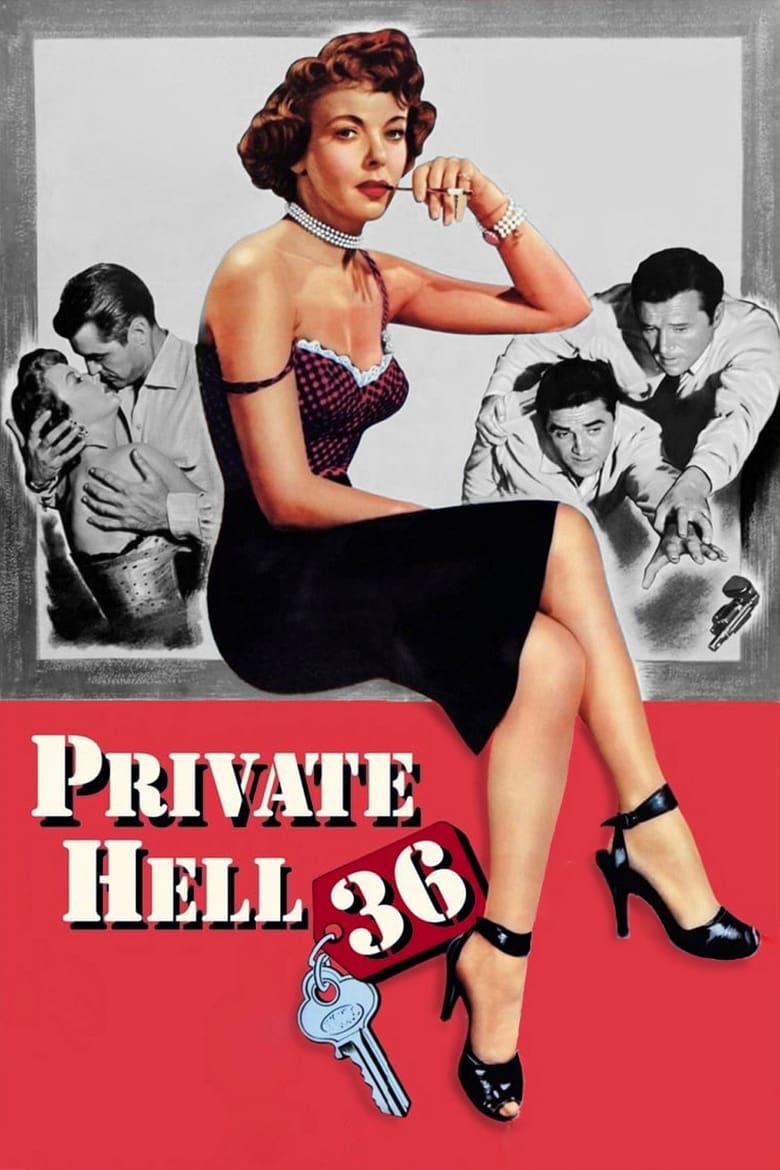
Private Hell 36 1954
1954 The Filmakers
★★★☆☆ Notable
Film Noir · 81 minutes · Black & White

Private Hell 36

Directed by Don Siegel
Year 1954
Runtime 81 min
Studio The Filmakers
TMDB 6.3 / 10
"Two detectives follow the money – and one of them doesn't stop."

When a murder victim is found carrying counterfeit bills in a Los Angeles elevator, Detectives Cal Bruner and Jack Farnham are assigned to trace the serial numbers back to their source. The investigation leads them to Lilli Marlowe, a nightclub singer who unknowingly passed one of the bills and agrees to help the department identify the distributor. Bruner is immediately drawn to her – she is worldly, self-possessed, and expensive in her appetites – while Farnham remains cautious, anchored to his pregnant wife Francey at home.

When the trail takes the detectives north and they recover a bag of stolen cash from a highway accident scene, Bruner makes a decision that splits the film's moral terrain in two: he pockets the money. Farnham, reluctant and compromised by his own financial pressures, is dragged into the cover-up. The stolen cash becomes both a nest egg and a noose. Lilli accepts Bruner's sudden generosity without asking its source, though she senses the weight it carries. Farnham watches his partner accelerate toward a destination he cannot name but already fears.

Private Hell 36 belongs to the strand of 1950s noir that turns the investigator inward, making the detective not the instrument of justice but its obstacle. The film is less interested in the original murder than in the slower crime that follows it – the theft of conscience, conducted in installments. Written by Collier Young and Ida Lupino, who also stars, the picture uses the procedural frame as a container for a study of masculine self-destruction and the women who must calculate their proximity to it.
Classic Noir

Private Hell 36 occupies a specific and undervalued position in the noir cycle: it is a studio-adjacent independent production – made through The Filmakers, the company Lupino ran with Collier Young – that matches the visual grammar of a major-label crime picture while pursuing subject matter the majors would have softened. The film's central corruption is not spectacular. Bruner does not kill for the money; he simply takes it, and then lives inside that decision. Steve Cochran carries this with a studied nonchalance that is more persuasive than obvious guilt would be. Ida Lupino's Lilli is not a femme fatale in the classical sense – she does not engineer anyone's destruction. She is, rather, a woman who has costed out her options with clear eyes, and the film regards her without condescension. Don Siegel's direction is functional rather than expressive, but Burnett Guffey's cinematography supplies an undertow of visual unease that the script earns. The film belongs to a moment when American genre cinema was examining institutional loyalty – the police, the partnership, the domestic contract – and finding each one available for betrayal.

– Classic Noir
3 ★★★☆☆ Notable
Credits

The Crew

DirectorDon Siegel
ScreenplayCollier Young
CinematographyBurnett Guffey
MusicLeith Stevens
EditingStanford Tischler
Art DirectionWalter E. Keller
ProducerCollier Young
Performances

The Cast

Close Reading

The Signature Scene

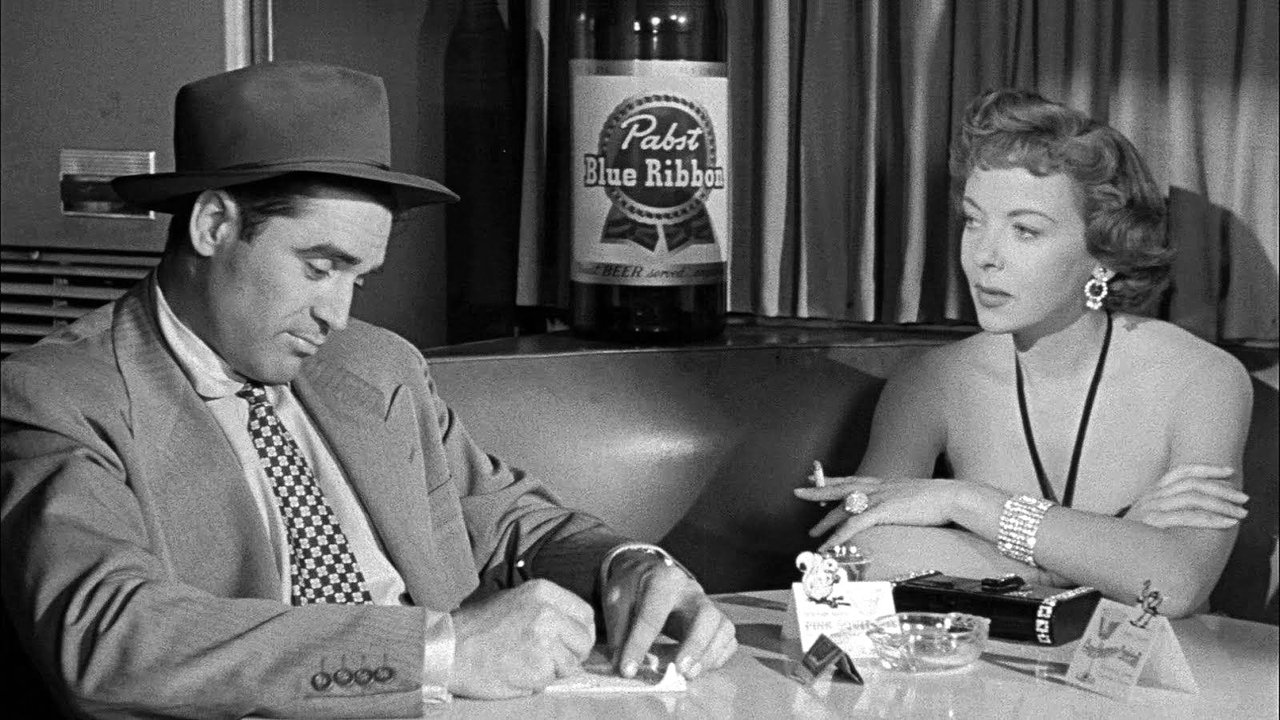
Private Hell 36 – scene
The Trailer Park – Private Hell 36 Money Counted in Dark

Guffey lights the interior of the cramped trailer with a single practical source – a bare overhead that bleaches the table surface and leaves the upper frame in soft shadow. The camera holds in a tight two-shot as Bruner and Farnham sit across the stolen cash. The money itself is almost white under the light, overexposed against the dim surround, a visual inversion that makes what should be desirable look clinical and dangerous. Siegel keeps the cutting slow; there is no urgency in the rhythm because the men have already made their choice. The frame feels sealed.

What the scene establishes is that the real crime has no single moment of commission – it is ratified in silence, in the counting, in Farnham's failure to speak. The trailer, numbered 36, gives the film its title and becomes its central symbol: a transient shelter, movable and impermanent, chosen precisely because no one would look for stolen money in a place that does not pretend to permanence. The scene argues that guilt is not an event but a condition one settles into, and that complicity is often simply the refusal to leave the room.

Visual Language

The Cinematography

🎞️
Burnett Guffey – Director of Photography

Burnett Guffey, who would later shoot Bonnie and Clyde and In Cold Blood, brings to Private Hell 36 a disciplined low-key approach rooted in the Columbia crime programmers he had been working through since the mid-1940s. His work here favors tight interiors with compressed depth – walls close in, ceilings are implied rather than seen, and background detail is suppressed to isolate faces in middle ground. Location footage in Los Angeles is integrated with studio material without obvious seams; Guffey calibrates the exterior daylight sequences so they carry a flat, enervating brightness rather than openness, reinforcing the sense that there is nowhere to go that offers relief. His shadow work is not theatrical – there are no expressionist diagonals for their own sake – but shadow accrues around Bruner across the film's second half as a visual record of his moral position. The cinematography serves the story's argument quietly: the frame becomes incrementally more enclosed as the men go deeper into their deception.

In the Catalogue

Themes & Motifs

Availability

Where to Watch

Also in the Directory

See Also