Films People Pull a Fast One Night Beat Reading Room On TV Shop
Price of Fear 1956
1956 Universal International Pictures
★★★☆☆ Notable
Film Noir · 79 minutes · Black & White

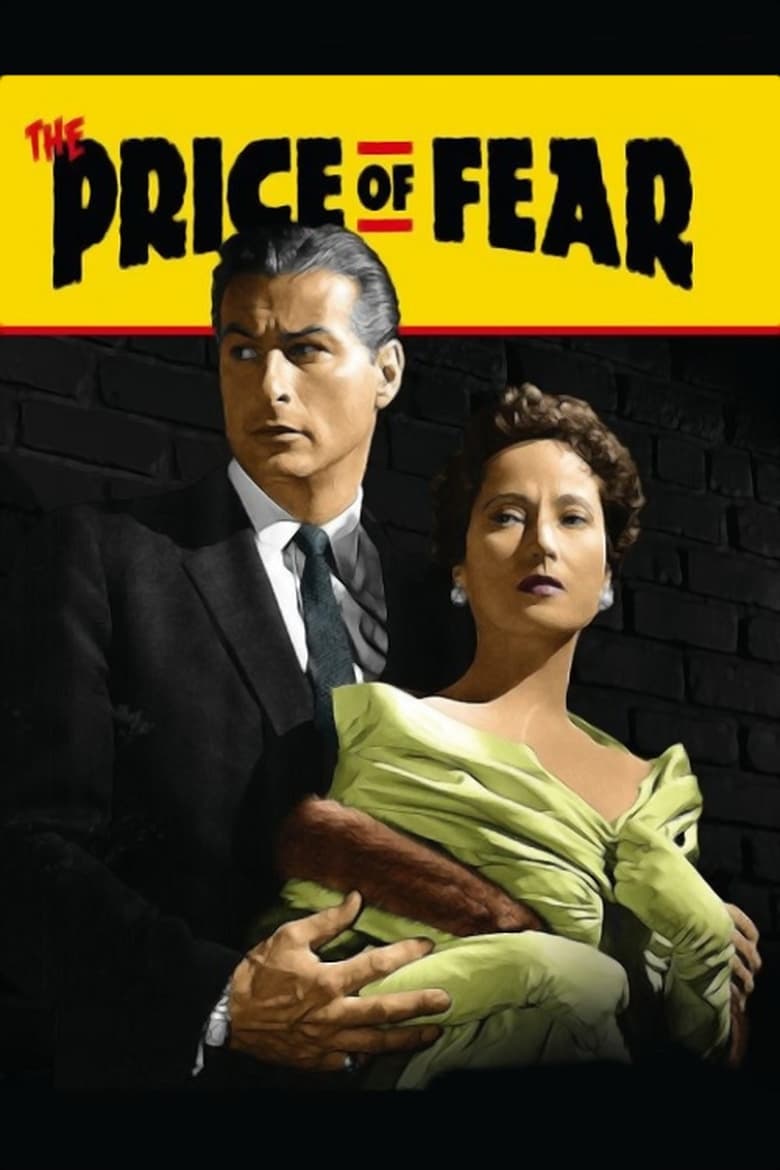
Price of Fear

Directed by Abner Biberman
Year 1956
Runtime 79 min
Studio Universal International Pictures
TMDB 5.9 / 10
"A hit-and-run death and a borrowed alibi pull two strangers into the same lie."

Jessica Warren (Merle Oberon) is a wealthy, self-possessed woman driving alone at night when her car strikes a man on a dark Los Angeles street. Panicked, she flees the scene. Dave Barrett (Lex Barker) witnesses the accident but, for reasons of his own, does not report what he saw. When the two meet by apparent coincidence, each recognizes the other as a potential instrument of salvation – or destruction.

The dead man, it emerges, is connected to a small-time syndicate operation run through the fringes of the city's gambling world. Frankie Edare (Warren Stevens) and Vince Burton (Phillip Pine) are aware that the accident was no ordinary mishap, and they intend to use that knowledge. Pete Carroll (Charles Drake), a man with competing claims on Jessica's future, and Nina Ferranti (Gia Scala), whose loyalties shift with the pressure applied to them, complicate an already unstable arrangement of mutual dependency and suppressed guilt.

Price of Fear works within the compact tradition of the mid-decade Universal International crime picture: tight running time, urban location work, and a moral architecture built on the proposition that concealment of one wrong generates the conditions for every subsequent one. The film is less interested in sensation than in the mechanics of culpability – how quickly a single act of cowardice forges a chain that neither party can easily break.
Classic Noir

Price of Fear occupies a quietly instructive position in the lower-to-mid tier of 1950s studio noir. Abner Biberman, better known as a character actor, directs with economy rather than distinction, but that economy is not without value: the film refuses the baroque expressionism that had already begun to feel formulaic by 1956 and instead pursues a subdued procedural tension. Merle Oberon, by this point past her peak commercial moment, brings a controlled anxiety to Jessica that the script does not always merit – she suggests depth the dialogue leaves unexplored. Lex Barker is credibly ambiguous as a man whose motivations remain opaque longer than convention usually permits. What the film captures, without quite articulating it, is the particular postwar unease of the prosperous American who discovers that comfort offers no insulation from consequence. Universal International's production infrastructure keeps the film technically respectable; its interest lies in what it inadvertently documents about the period's moral assumptions as much as in anything it deliberately argues.

– Classic Noir
3 ★★★☆☆ Notable
Credits

The Crew

DirectorAbner Biberman
ScreenplayRobert Tallman
CinematographyIrving Glassberg
EditingRay Snyder
Art DirectionAlexander Golitzen
CostumesJay A. Morley Jr.
ProducerHoward Christie
Performances

The Cast

Close Reading

The Signature Scene

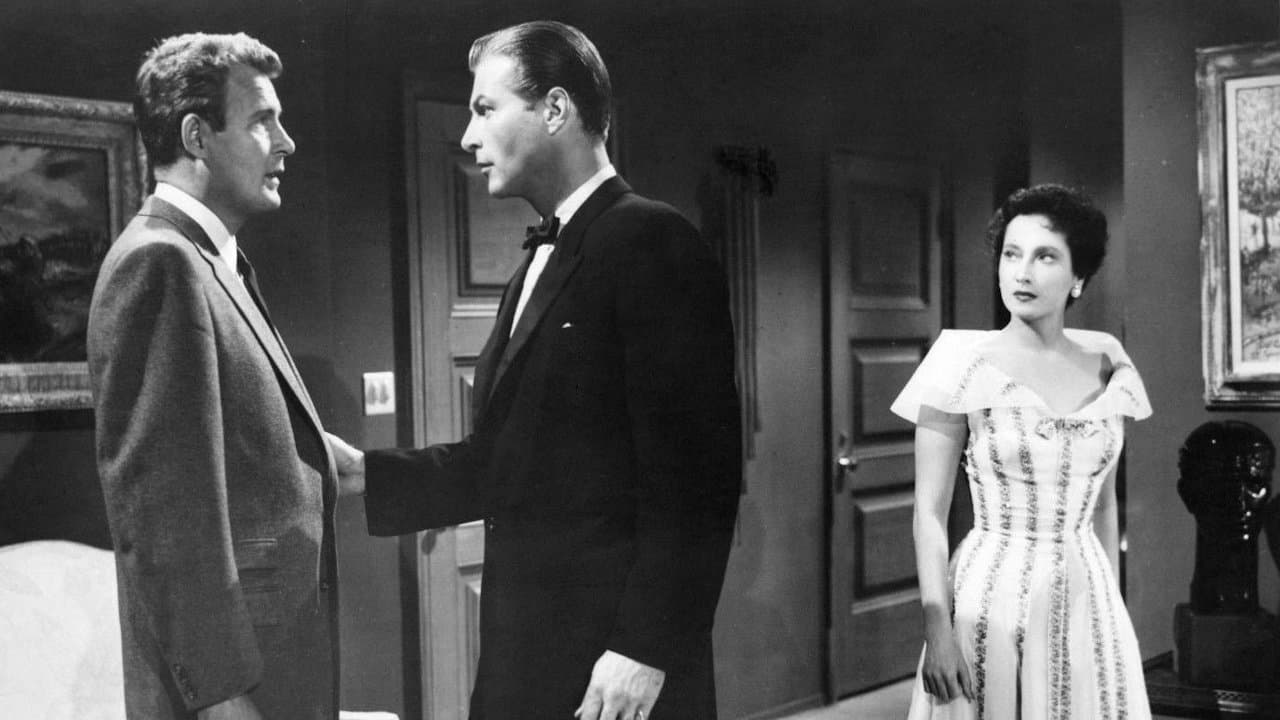
Price of Fear – scene
The Nighttime Confrontation Two Witnesses, One Silence

Biberman and cinematographer Irving Glassberg compose the encounter between Jessica and Dave in a shallow interior space lit from a single practical source at frame left, throwing the right half of each face into unresolved shadow. The camera holds at medium distance, declining the close-up that would invite easy sympathy; instead both figures remain slightly reduced by the frame, figures in a room that does not quite belong to either of them. Glassberg uses the window behind them as a secondary light source, a pale rectangle that flattens depth and removes the possibility of comfortable background.

The scene's formal restraint enacts its dramatic argument: neither character is granted the visual privilege of innocence, and the refusal of conventional shot-reverse-shot intimacy keeps their complicity in suspension. We cannot read the moment as alliance or as mutual threat, which is precisely the condition the film intends to sustain. What the composition reveals is that both characters have already made a choice they cannot unmake, and that the space between them is not negotiable distance but shared guilt taking up room.

Visual Language

The Cinematography

🎞️
Irving Glassberg – Director of Photography

Irving Glassberg, a reliable Universal contract cinematographer whose credits span comedy and crime with equal facility, brings to Price of Fear a restrained approach that suits the film's tonal register without elevating it. Working primarily on studio sets augmented by Los Angeles night location footage, Glassberg does not pursue the deep-shadow expressionism of classic noir's peak years; by 1956 that vocabulary had become available to parody, and the film implicitly acknowledges this by pulling back toward a flatter, more documentary-influenced greyness. Street sequences use available architectural shadow rather than constructed chiaroscuro, and interior scenes depend on practical-light motivation – lamps, windows – rather than theatrical key-fill arrangements. The effect is a visual world that feels inhabited rather than designed, which reinforces the film's interest in ordinary people caught in consequences rather than predetermined archetypes moving through a stylized landscape. The lens choices favor standard focal lengths that neither compress nor exaggerate spatial relationships, keeping moral ambiguity in the geography of the frame itself.

In the Catalogue

Themes & Motifs

Availability

Where to Watch

Also in the Directory

See Also