Films People Pull a Fast One Night Beat Reading Room On TV Shop
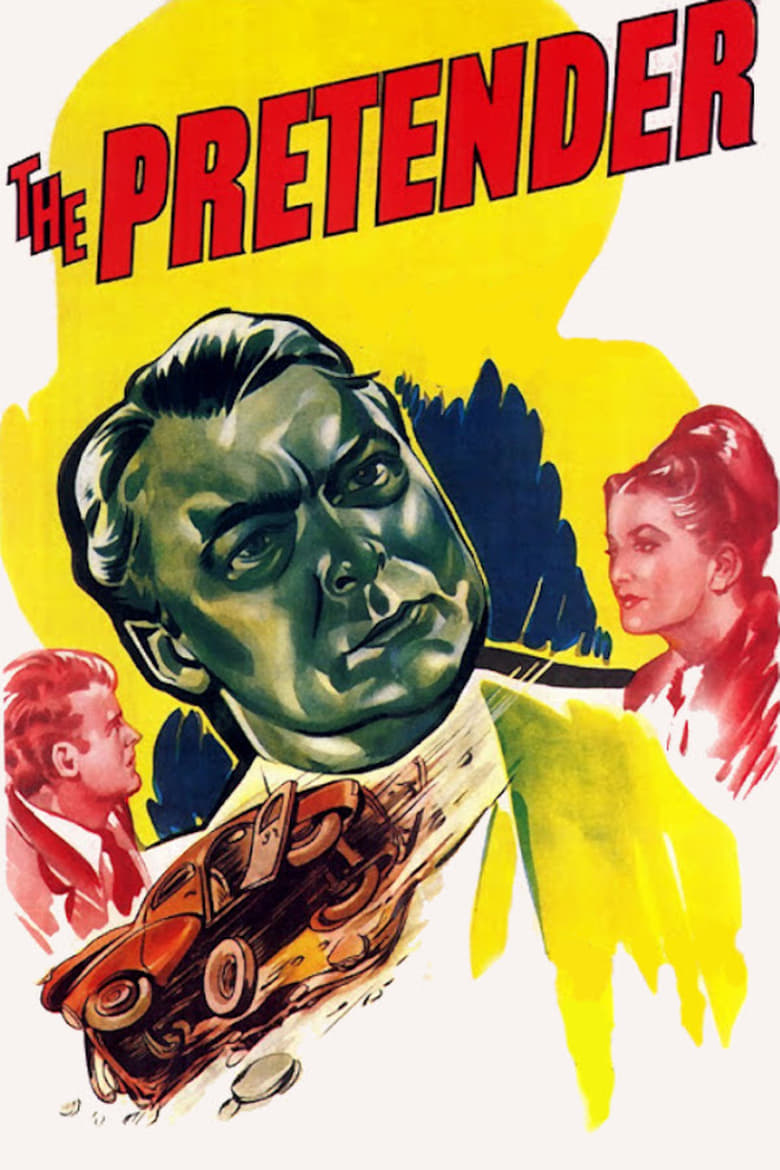
Pretender 1947
1947 W. Lee Wilder Productions
★★★☆☆ Notable
Film Noir · 69 minutes · Black & White

Pretender

Directed by W. Lee Wilder
Year 1947
Runtime 69 min
Studio W. Lee Wilder Productions
TMDB 5.8 / 10
"A man of means discovers that money, like patience, has a limit."

Kenneth Holden is a financially desperate investment manager who stands to inherit a fortune – provided he can outlast his wealthy employer's young wife, Claire Worthington, who is first in line for the estate. When the employer dies and Claire remarries the amiable Dr. Leonard Koster, Holden's prospects dim considerably. Calculating and cold beneath a polished exterior, Holden begins to plot a way to remove Claire from the equation and reclaim what he regards as rightfully his.

Holden's scheme draws him into contact with Victor Korrin, a small-time criminal operator, and Flo Ronson, a woman with her own angles to play. As Holden moves closer to arranging Claire's death, the layers of his deception multiply and the people he has recruited begin to develop interests that do not align with his own. Dr. Koster, meanwhile, remains an unknowing obstacle – decent, trusting, and therefore dangerous in ways Holden has not fully calculated.

Pretender belongs to the cycle of postwar noir built around the murderous schemer rather than the detective or the victim. It is less concerned with the mechanics of crime than with the psychology of a man who has confused financial ambition with moral entitlement, and who discovers, too late, that the machinery of a conspiracy is never fully within the architect's control.
Classic Noir

Pretender is a minor but instructive entry in the postwar noir cycle, produced independently by W. Lee Wilder – brother of Billy – on a budget that demanded efficiency from every department. Albert Dekker brings a quality of contained menace to Holden that the script does not always earn on the page; his performance works against sympathy in ways that keep the film from sliding into melodrama. The film's real claim on serious attention is John Alton's cinematography, which operates well above the material's station. Alton had not yet made the films – Raw Deal, T-Men, He Walked by Night – that would define his reputation, but Pretender shows him already deploying the extreme low-key lighting and compositional severity that would become his signature. At 69 minutes, the film is lean without being taut, and its resolution arrives more by procedural necessity than dramatic inevitability. What it documents, almost inadvertently, is the period's appetite for stories about men who mistake social position for personal worth.

– Classic Noir
3 ★★★☆☆ Notable
Credits

The Crew

DirectorW. Lee Wilder
ScreenplayDon Martin
CinematographyJohn Alton
ProducerW. Lee Wilder
Performances

The Cast

Close Reading

The Signature Scene

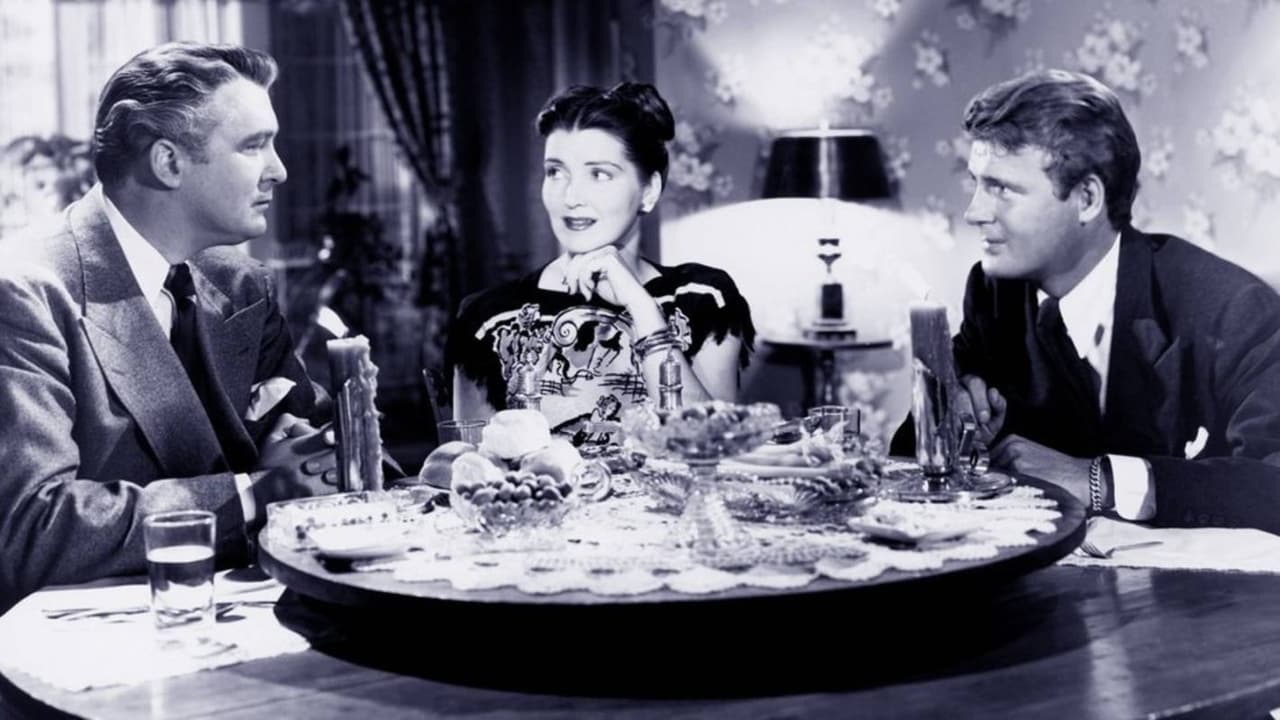
Pretender – scene
The Conspiracy Confirmed Shadow Falling Across Trust

Alton frames Holden in a shallow interior, the light source placed low and to one side so that his face is divided precisely between illumination and shadow – a compositional bluntness that in lesser hands would read as theatrical but here registers as moral cartography. The background is kept in near-total darkness, compressing the space around the character until the frame feels airless. When a second figure enters, Alton does not open the frame; instead the newcomer is absorbed into the same tight geography, becoming complicit simply by virtue of where the camera places them.

The scene argues, without dialogue, that Holden's world has contracted to the dimensions of his own scheming. There is no neutral space in the frame, no exit that the light acknowledges. Alton uses the physical environment not as atmosphere but as verdict – the darkness is not where Holden might end up, it is where he already is.

Visual Language

The Cinematography

🎞️
John Alton – Director of Photography

John Alton's work on Pretender is a demonstration of what a cinematographer can accomplish when studio constraints are reframed as formal discipline. Alton, credited here early in a run of low-budget independent productions that would precede his Republic and Eagle-Lion peak years, builds his lighting setups around single strong sources – practicals, desk lamps, windows reduced to slivers – that throw everything outside their radius into shadow. The effect is less expressionist than analytical: Alton uses darkness not decoratively but structurally, so that the moral position of a character can be read from where the light falls on their face. Studio interiors are shot as if they were locations, with ceilings present and walls enclosing rather than opening. There is no wasted fill light, no ambient comfort. The lens choices favor a slight compression that flattens depth and makes rooms feel like traps. Every visual decision in the film is consistent with a story about a man who believes he is operating in the open while in fact he has already been enclosed.

In the Catalogue

Themes & Motifs

Availability

Where to Watch

Also in the Directory

See Also