Films People Pull a Fast One Night Beat Reading Room On TV Shop
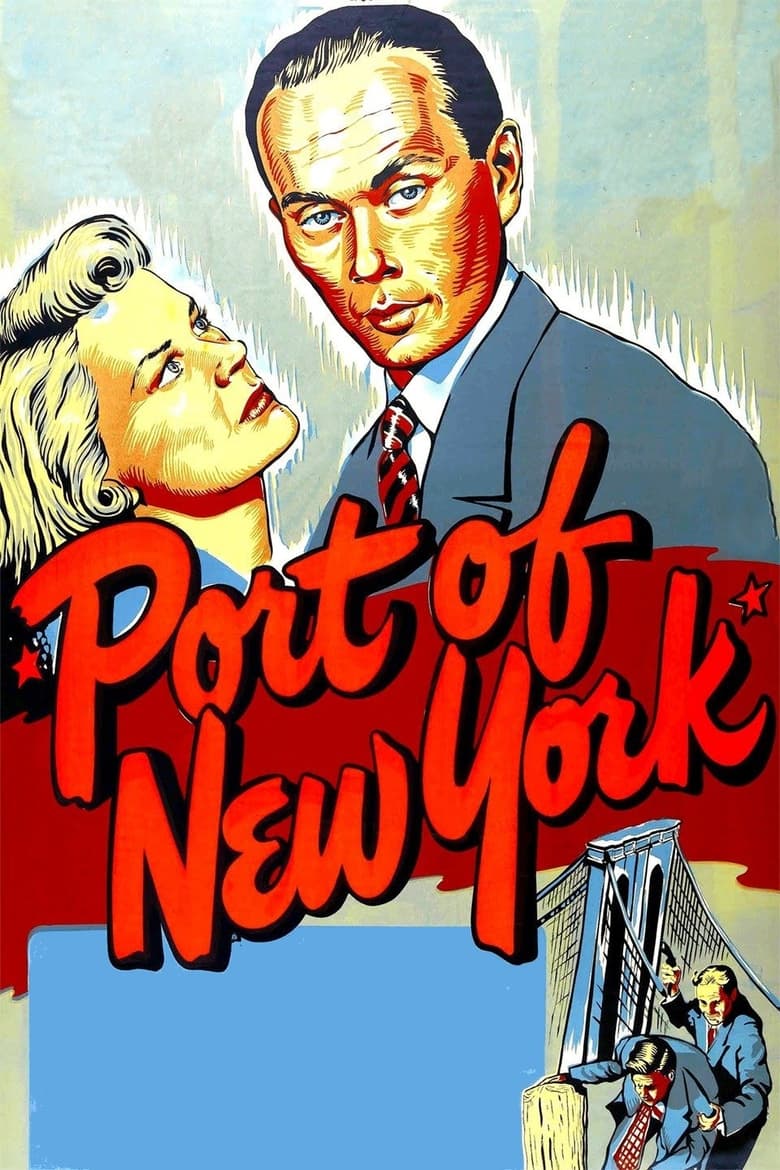
Port of New York 1949
1949 Samba Films
★★★☆☆ Notable
Film Noir · 82 minutes · Black & White

Port of New York

Directed by László Benedek
Year 1949
Runtime 82 min
Studio Samba Films
TMDB 4.9 / 10
"Narcotics move through New York's harbor like shadows – and the men who follow them pay in kind."

When a federal narcotics agent is killed aboard a ship entering New York harbor, Treasury agents Michael Waters (Scott Brady) and Jim Flannery (Richard Rober) are assigned to trace the smuggling network responsible. Their investigation draws in Toni Cardell (K.T. Stevens), a woman with connections to the underworld who becomes an uneasy ally as the case moves from the docks into the city's interior.

The trail leads to Paul Vicola (Yul Brynner), a coldly efficient syndicate figure who operates behind layers of intermediaries and legitimate fronts. As Waters presses deeper, the line between informant and accomplice grows unstable – Toni's loyalties remain opaque, and the agents find that the network they are dismantling has roots in places the law is slow to reach. Brynner's Vicola, in one of his earliest screen appearances, projects a menace that owes nothing to convention.

Port of New York belongs to the cycle of late-1940s procedural noirs that drew on documentary conventions – location shooting, semi-journalistic narration, institutional framing – to give criminal subject matter the texture of reportage. The film uses the harbor itself as moral geography: a threshold space where contraband, capital, and human vulnerability move through the same channels.
Classic Noir

Port of New York arrives at a precise moment in the procedural noir cycle, when studios were grafting the authority of the newsreel onto the mechanics of the crime picture. László Benedek, a Hungarian émigré working in the tradition of European realism, uses the New York waterfront not as backdrop but as argument – the docks are a system, and systems, the film insists, can be corrupted at any node. The film is most valuable today as an early showcase for Yul Brynner, whose Vicola operates on a frequency of controlled menace that the surrounding cast cannot quite match. George E. Diskant's photography keeps the location work honest while finding angles that isolate figures against industrial geometry. The film does not transcend its procedural bones, but it works them seriously, and its portrait of a narcotics syndicate embedded in the legitimate economy of a port city carries a sociological weight that outlasts the genre mechanics.

– Classic Noir
3 ★★★☆☆ Notable
Credits

The Crew

DirectorLászló Benedek
ScreenplayArthur A. Ross
CinematographyGeorge E. Diskant
MusicSol Kaplan
EditingNorman Colbert
Art DirectionEdward L. Ilou
ProducerAubrey Schenck
Performances

The Cast

Close Reading

The Signature Scene

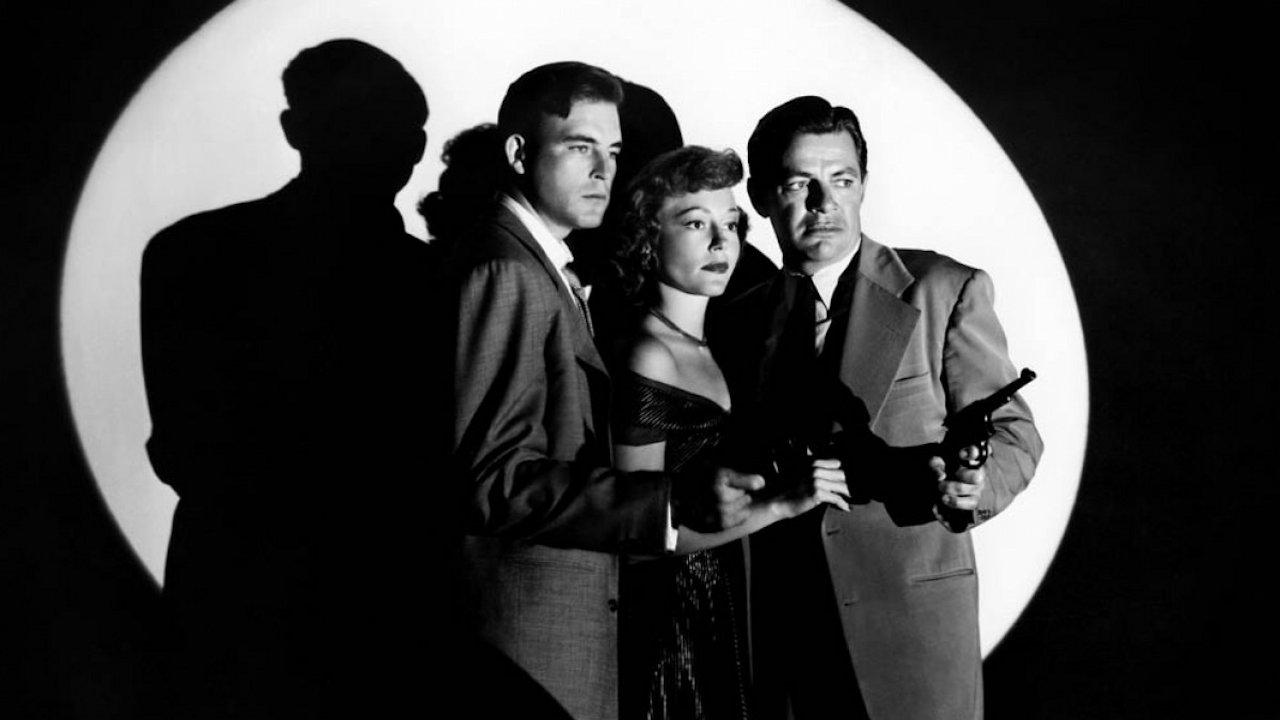
Port of New York – scene
The Dockside Confrontation Vicola in the Shadow

Diskant frames Brynner in a low-angle medium shot, the pier's overhead rigging cutting the background into angular segments that fall across the figure like bars. The key light is hard and lateral, carving the left side of his face into sharp relief while the right recedes into industrial shadow. The camera holds rather than cuts, allowing the stillness of the composition to generate its own pressure.

What the scene establishes is not danger in any kinetic sense but the particular threat of a man who does not need to move to occupy space. Vicola's power in the film is organizational – he is the point where money, product, and violence are coordinated – and Diskant's framing makes that structural authority visible. The harbor behind him is not atmosphere; it is evidence of what he controls.

Visual Language

The Cinematography

🎞️
George E. Diskant – Director of Photography

George E. Diskant, whose work on They Live by Night and Kansas City Confidential marks him as one of the period's most precise noir cinematographers, brings a disciplined eye to Port of New York's hybrid of location realism and studio-inflected shadow work. Shooting on the actual New York waterfront, Diskant uses available industrial architecture – gantries, warehouse walls, the geometry of moored vessels – as compositional material rather than mere setting. His lighting in the location sequences tends toward flat, hard sources that flatten depth and isolate figures against concrete and steel, a choice that reinforces the film's procedural logic: these are environments indifferent to individual fate. In the interior sequences, Diskant tightens the contrast range, using low-key setups that pull characters into partial darkness in ways that track their moral exposure. The consistency between the two registers – exterior realism and interior expressionism – gives the film a visual coherence that its narrative occasionally strains against.

In the Catalogue

Themes & Motifs

Availability

Where to Watch

Also in the Directory

See Also