Films People Pull a Fast One Night Beat Reading Room On TV Shop
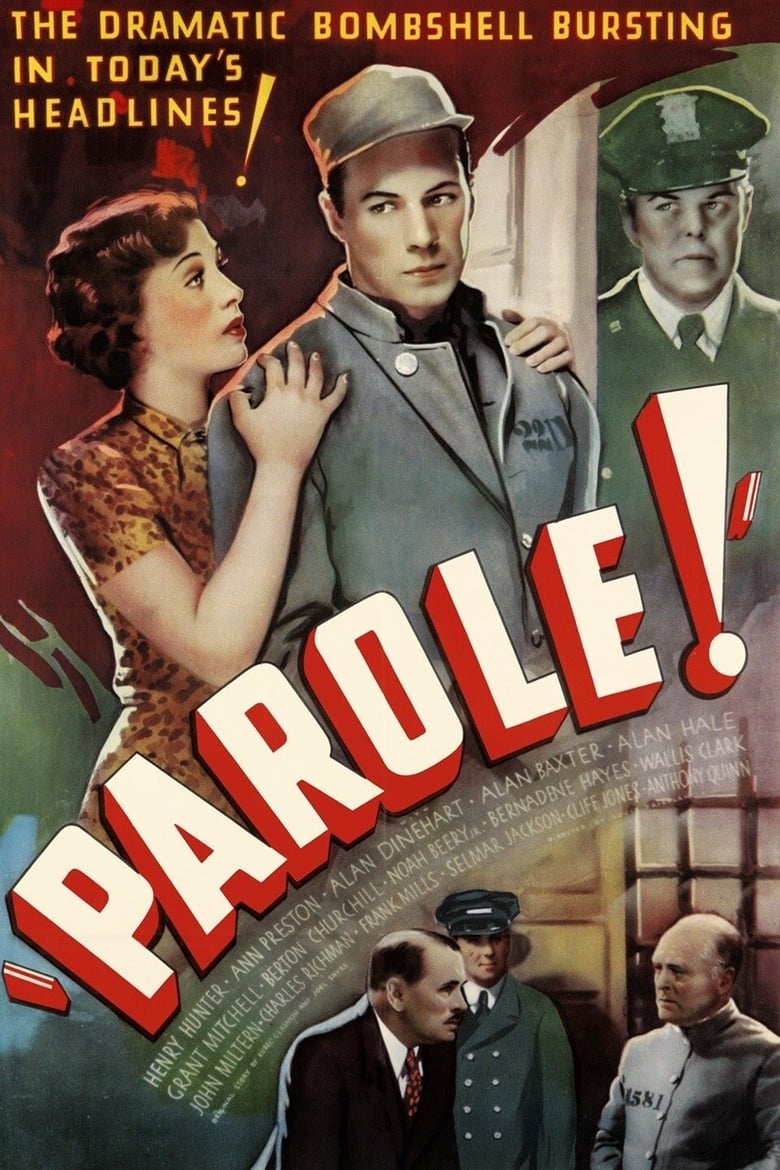
Parole 1936
1936 Universal Pictures
★★★☆☆ Notable
Film Noir · 67 minutes · Black & White

Parole

Directed by Lew Landers
Year 1936
Runtime 67 min
Studio Universal Pictures
TMDB 7.0 / 10
"A man walks out of prison into a city that has already decided his fate."

Russ Whalen is released on parole after serving time for a crime committed in the orbit of corruption he never fully understood. Returning to a world that views him with suspicion, he attempts to rebuild a legitimate life, drawn toward Frances Crawford, whose own family carries the weight of compromised men. The film establishes its central tension quickly: freedom on paper is not freedom in practice, and the conditions of parole function less as rehabilitation than as a leash held by those who profit from controlling former convicts.

Richard Mallard, a calculating figure with influence over the parole system, maneuvers to keep men like Russ indebted and useful. Russ finds himself pressed between Mallard's demands and the criminal world represented by Percy 'Okay' Smith, a small-time operator whose loyalties shift with opportunity. Frances's father Marty further complicates matters, his own compromised history entangling the domestic and the criminal in ways that make a clean exit from the underworld nearly impossible.

Parole operates within the B-picture tradition of the mid-1930s social-problem film, using the machinery of the justice system as its moral landscape. The film is less interested in crime as spectacle than in the bureaucratic and personal mechanisms that trap men between institutionalized authority and organized criminality, a tension that would define much of the noir cycle to follow.
Classic Noir

Parole belongs to that productive, underexamined seam between the pre-Code crime picture and the mature noir of the 1940s. Lew Landers, a reliable Universal contract director whose instincts ran toward efficiency over flourish, keeps the film moving at a pace that suits its 67-minute form, never allowing the social critique to congeal into lecture. The film's real subject is systemic entrapment: the parole apparatus here is not a corrective institution but a network of leverage points exploited by men like Mallard, whose respectability is the most dangerous thing about him. Alan Dinehart's performance carries this precisely, all surface affability and quiet menace. The casting of three Alans – Dinehart, Baxter, and Hale – gives the male world of the film an almost interchangeable quality, reinforcing the idea that Russ is surrounded by versions of the same threat wearing different faces. As a document of Depression-era anxiety about justice, recidivism, and the cynicism beneath civic institutions, Parole earns its place in the pre-noir canon.

– Classic Noir
3 ★★★☆☆ Notable
Credits

The Crew

DirectorLew Landers
ScreenplayHorace McCoy
CinematographyGeorge Robinson
Performances

The Cast

Close Reading

The Signature Scene

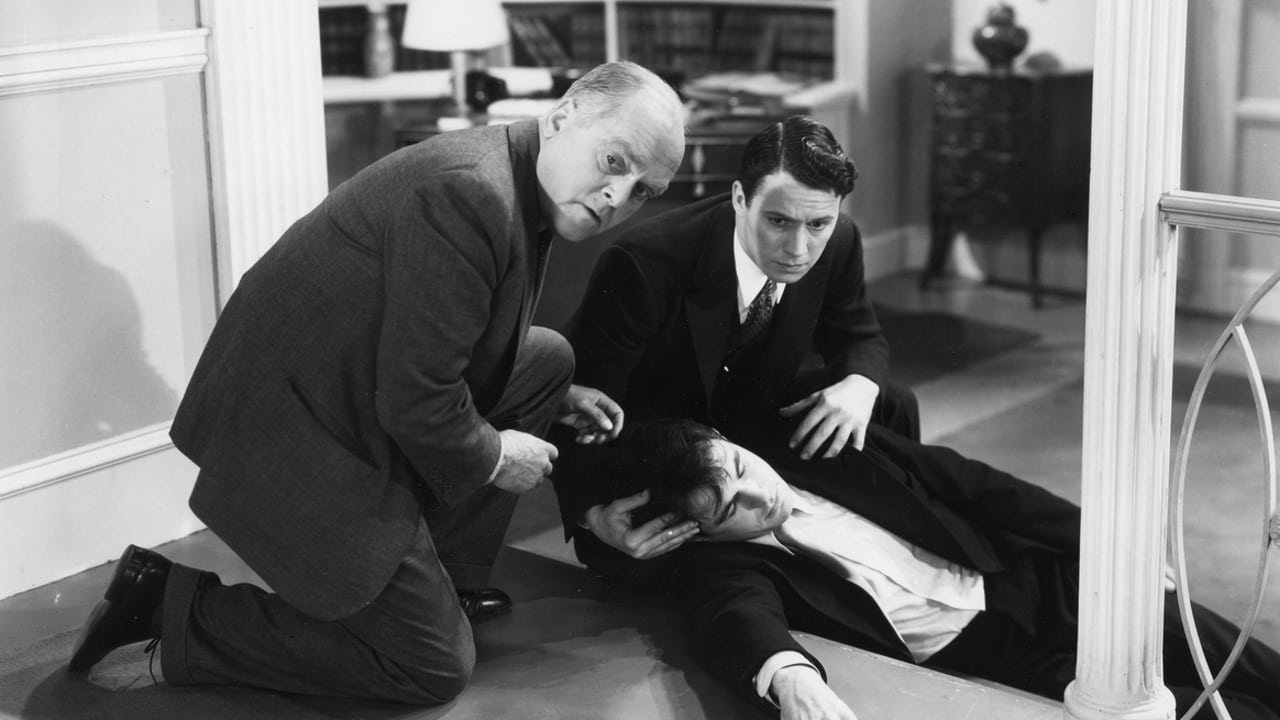
Parole – scene
The Parole Office Interview Authority Behind the Desk

George Robinson frames Mallard behind a wide institutional desk, the light source falling from a practical lamp at frame right, casting the authority figure in soft highlight while Russ stands in a middle-ground that keeps him slightly underlit. The composition places the desk as a physical and moral barrier, with negative space above Russ's head suggesting the ceiling pressing down. Robinson holds the two-shot long enough to let the geometry do the work, cutting to a close-up of Dinehart only when the implicit threat requires a face.

The scene crystallizes the film's argument: legitimate authority and criminal leverage are indistinguishable in practice, distinguished only by office furniture and the language of civic process. Russ's body language reads as controlled rather than submissive, a distinction the film will return to – the difference between a man who accepts a system and one who is simply waiting for the geometry to shift in his favor.

Visual Language

The Cinematography

🎞️
George Robinson – Director of Photography

George Robinson, who shot a substantial portion of Universal's horror and crime output during this period, brings to Parole a visual economy that suits the film's institutional subject matter. Working almost entirely on studio sets, Robinson constructs interiors that feel functional rather than stylized – offices, corridors, and domestic spaces lit with a directness that refuses the expressionist excess of the horror work he did elsewhere at the same studio. Shadow is used selectively rather than atmospherically, falling across faces at moments of moral ambiguity rather than as continuous texture, which keeps the film grounded in social realism while allowing individual compositions to carry genuine unease. The lens choices favor mid-range setups that position characters within their environments rather than isolating them, a choice that reinforces the film's interest in institutional entrapment over individual psychology. The visual language argues, quietly and consistently, that the spaces men occupy determine what is possible for them.

In the Catalogue

Themes & Motifs

Availability

Where to Watch

Also in the Directory

See Also